More and more residents of Małopolska in the CEEB database
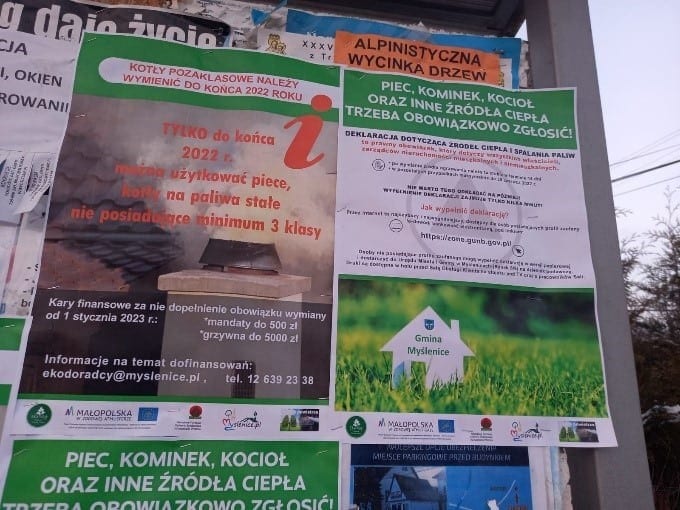
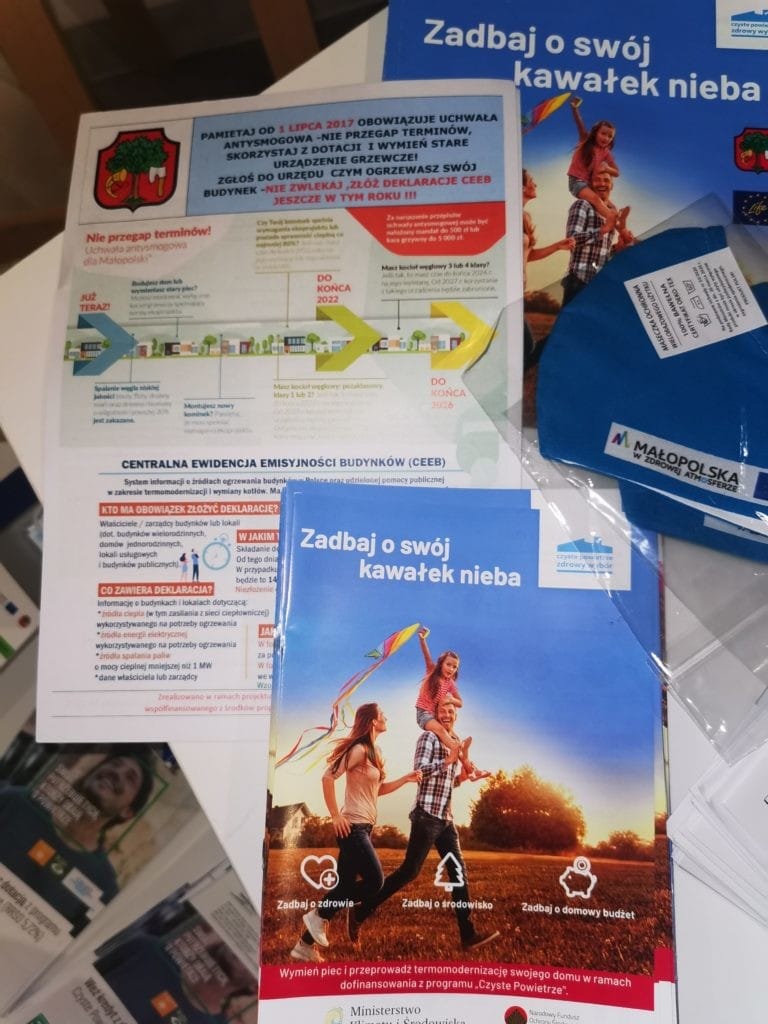
Property owners and managers should hurry up – by the end of June 2022, information about the method of heating the building must be submitted to the Central Emission Register of Buildings (CEEB). Those who fail to meet this obligation may be fined. The declaration can be submitted in person, at your municipality office or via the Internet.
Municipalities in Małopolska among the leaders of the ranking
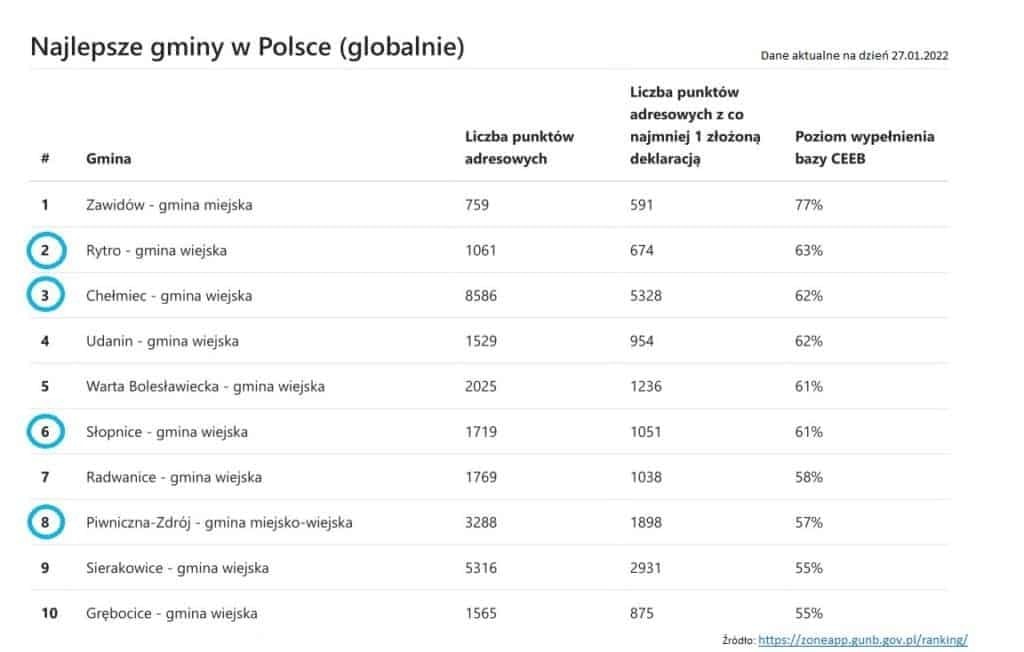
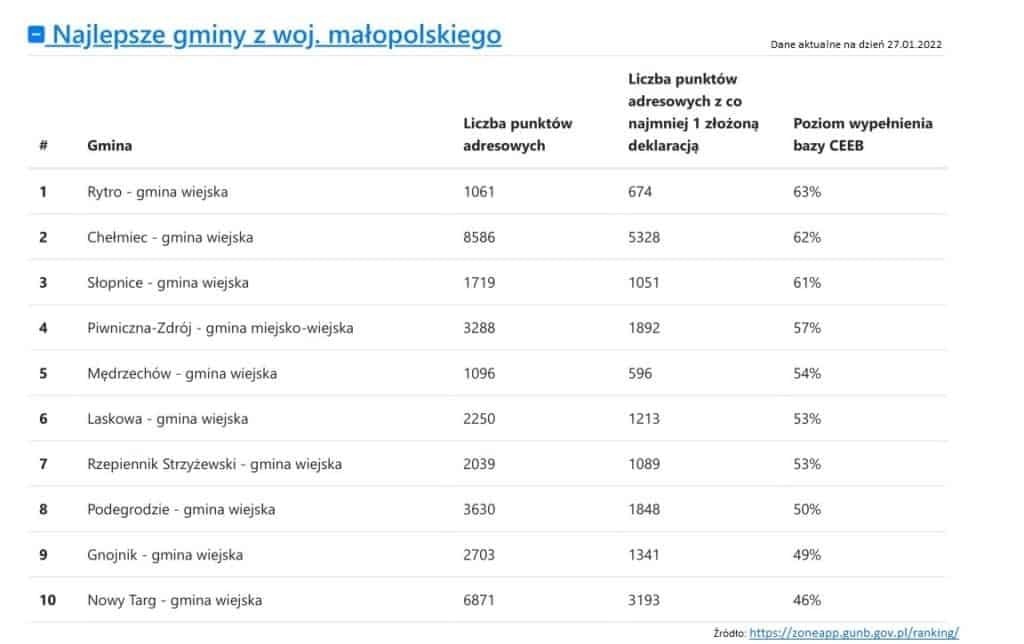
The Main Office of Construction Supervision has published a ranking of municipalities that are most efficient in completing the database. In the top ten were as many as 4 municipalities in Małopolska (data as of 27 January 2022). The following communes deserve to be distinguished: Rytro, Chełmiec, Słopnice and Piwniczna-Zdrój. Full completion of the database will allow for proper adjustment of activities aimed at the fight against smog.
A recipe for success
We decided to ask the representatives of the awarded municipalities what method they found to be effective in obtaining data from residents.
Słopnice Commune took advantage of the moment of changing the declaration of the fee for municipal waste management and on the occasion of signing new declarations, residents also filled out a declaration to CEEB.
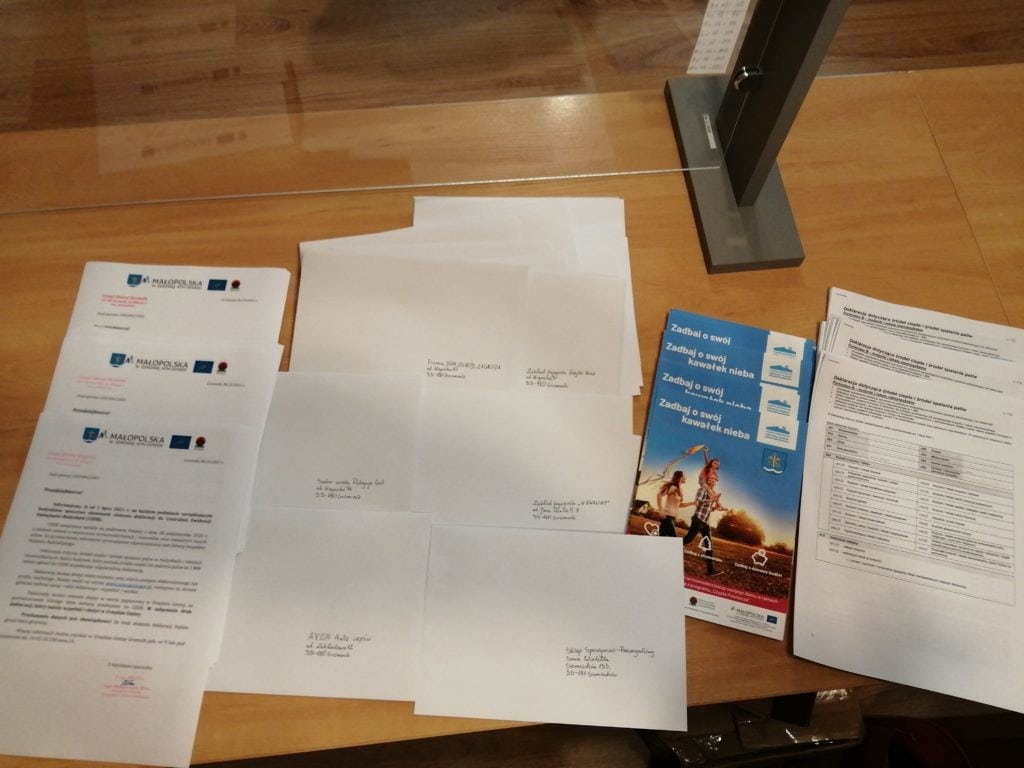
Particularly noteworthy is the idea of Chełmiec commune, which organized the action of delivering the declaration to all residents with the help of village leaders and persons recommended by them. After collecting the completed declarations, the commune officials efficiently entered them into the CEEB system
We have many residents in our municipality, so reaching everyone with information is not easy. Organizing the campaign with the declarations to CEEB required a lot of time and money from us. Making it easier for residents to access the so-called declarations has brought great results. – says Artur Boruta, the Secretary of Chełmiec Commune
In Piwniczna-Zdrój, declarations were sent in the form of unaddressed mail with the help of the Polish Post. It is a quick and relatively cheap way of reaching all residents. The support of local priests who announced information about the data collection to the CEEB database was also helpful.
The Rytro commune has focused on informing residents about the obligation to submit a declaration on its website and in social media. The information was also provided in paper form as official information from the commune head.
Importantly, in the above-mentioned cases, the vast majority of declarations was sent to the Central Office of Building Control through the commune offices. However, it is worth recalling that the declaration can also be submitted electronically via the website https://www.zone.gunb.gov.pl
An additional motivation to complete the CEEB declaration for all Małopolska residents should be the fact that in order to obtain a protective allowance from the governmental Anti-Inflation Shield, it is necessary to report your solid fuel heating sources to CEEB (as stated in the application) – for details it is worth asking your office municipalities or check on the government website.
More information about the Central Emission Register of Buildings can be found on the website of the Main Office of Building Supervision.
From January 25, 2022, new rules apply in the government’s Clean Air program. People with the lowest income, who will be able to obtain up to 90% of funding, will be covered with greater support.
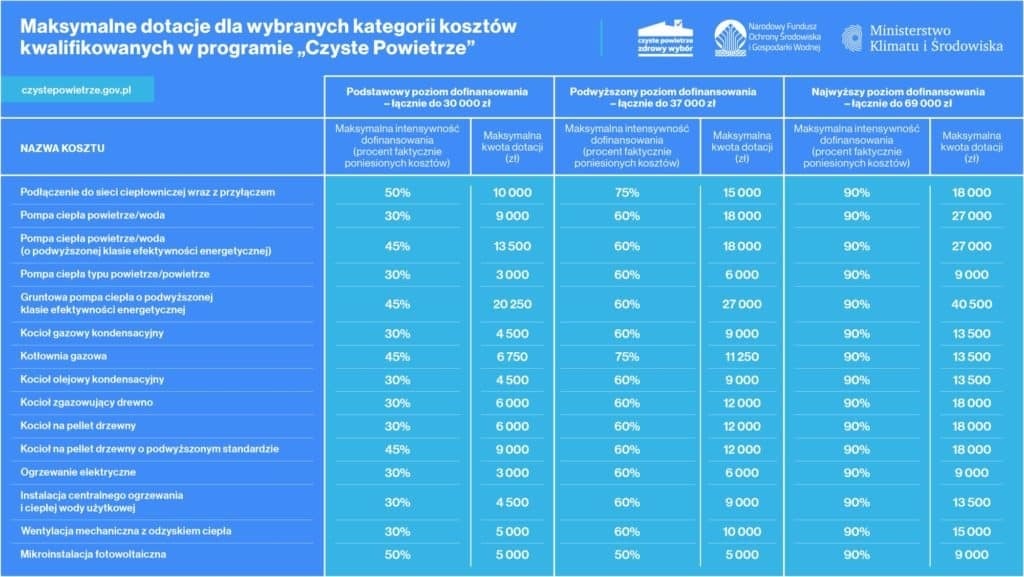
This year, the National Fund for Environmental Protection and Water Management (NFOŚiGW) intends to allocate as much as PLN 1.95 billion for the implementation of the “Clean Air” program. This amount allows the poorest people to replace an obsolete boiler to a greater extent. The subsidy can also finance building insulation or the purchase of new windows and doors. Who will receive the highest support in the amount of as much as 90% of the grant? According to the new rules of the program, these will be people with an income of up to PLN 900 per person in a multi-person household or, in the case of people living alone, up to PLN 1,260. The maximum amount of the subsidy may be as much as PLN 69,000. From this year, the possibility of determining the income criterion was introduced on the basis of the established right to receive a permanent, periodic, family allowance or a special care allowance.
People who achieve higher income can also count on funding. A basic subsidy of up to PLN 30,000 is intended for beneficiaries whose annual income does not exceed PLN 100,000. People with an average monthly salary of up to PLN 1,564 / person. in a multi-person household and up to PLN 2,189 / person in a one-person household, they can count on a subsidy of up to PLN 37,000.
More simplifications
The new scheme rules also introduce the possibility of combining Clean Air funding with municipal umbrella schemes where the applicant does not become the owner of the boiler until the end of the project lifetime. Additionally, it will be possible to extend the duration of the investment due to delays resulting from the postponement of the gas connection by the operator. From this year on, subsidies will also cover dual-fuel boilers fired with lump wood and pellets.
The National Fund for Environmental Protection and Water Management envisages further improvements, including providing funds before making the investment, as well as assisting applicants in preparation, implementation and settlement.
Shield allowance for 7 million households
People with the lowest incomes, apart from the increased co-financing under the Clean Air program, may also apply for a shielding allowance to energy, gas and food prices. As part of the cover allowance, the government offers support to nearly 7 million households and intends to allocate PLN 4.7 billion for this purpose. The allowance is paid by municipalities that will receive subsidies from the state budget. The amounts of the subsidies are as follows:
A one-person household will receive PLN 400/500 *, assuming that its income will not exceed PLN 2,100,
A farm of 2-3 people will receive PLN 600/750 *, assuming that the income will not exceed PLN 1500 per person per month,
A 4-5 person farm will receive PLN 850 / PLN 1062.50 *, assuming that the income will not exceed PLN 1500 per person per month,
A farm of 6 and more people will receive PLN 1150 / PLN 1437.50 * with the assumption that the income will not exceed PLN 1500 per person per month
Help in every municipality
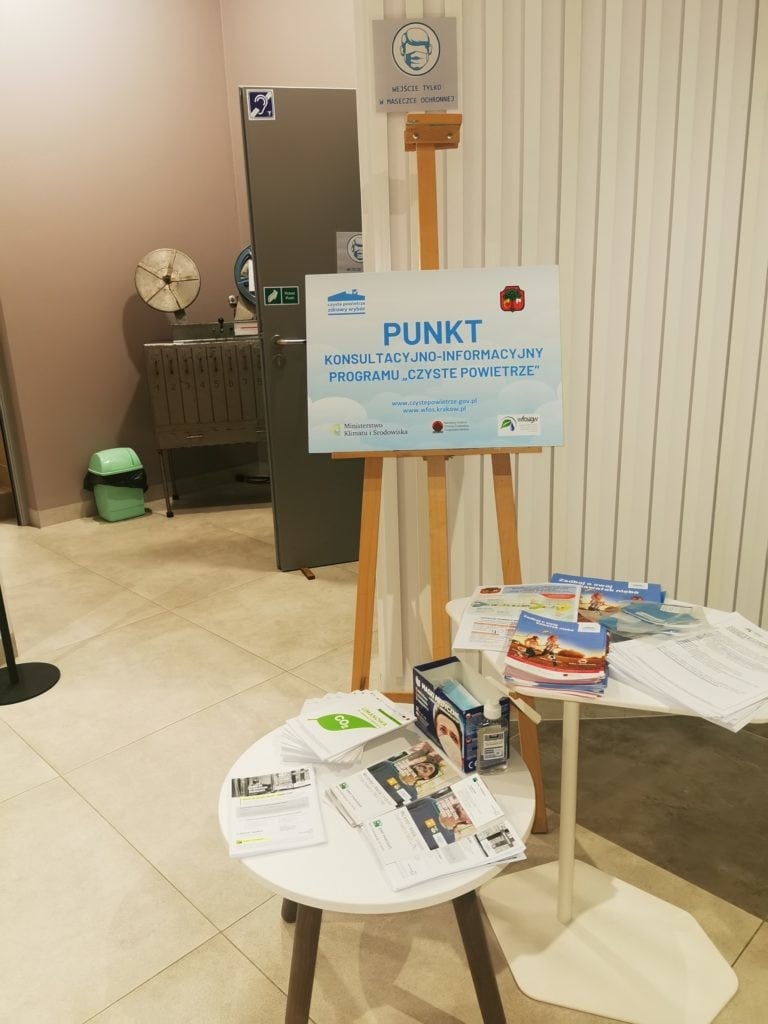
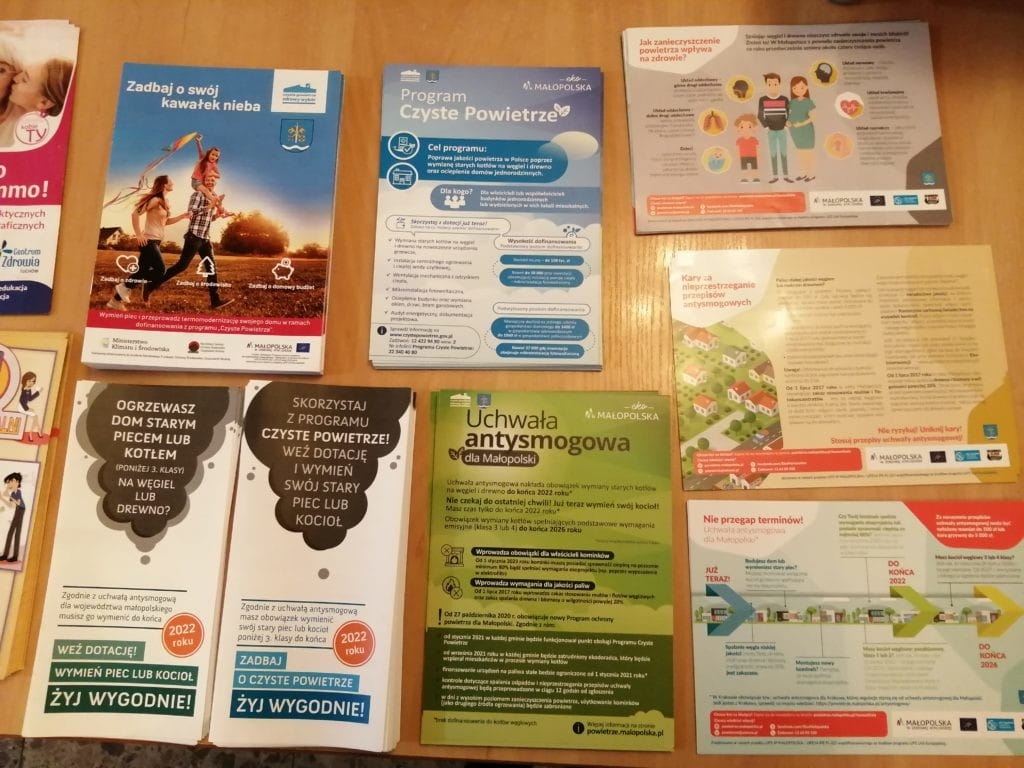
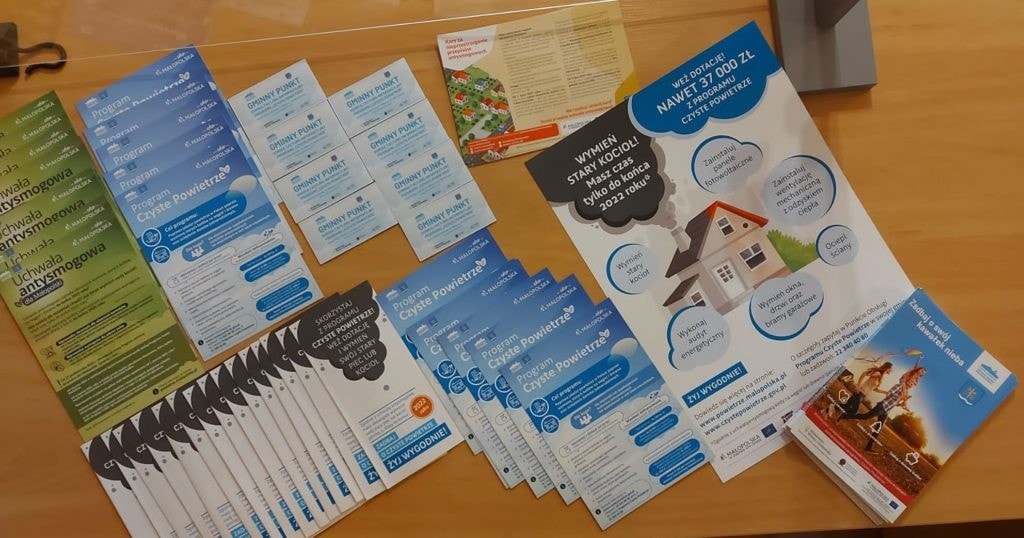
It is worth considering replacing the poisonous furnace now and taking advantage of the attractive subsidies. There is really little time left, because according to the provisions of the anti-smog resolution for Małopolska, from next year it will not be possible to burn in non-class boilers, the so-called black smackers. However, by the end of 2026, all 3rd and 4th class boilers should be replaced. Local governments help in replacing obsolete heating sources. In each commune, we can receive free advice and assistance in completing the application for co-financing under the “Clean Air” program service points. All you need to do is contact the Eco-managers or directly with the Municipal or City Office and ask about the “Clean Air” program. More information on co-financing can be obtained by calling the helpline 12 422 94 90 or on the website www.szczeepowieoło.gov.pl
Local anti-smog resolutions, hundreds of meetings of eco-managers with residents, training, workshops and educational campaigns are just some of the activities undertaken as part of the LIFE IP Małopolska project in a healthy atmosphere in 2021. Despite the difficulties related to the Covid-19 pandemic, many important tasks were successfully completed for the fight for clean air.
Anti-smog resolutions
On September 27, 2021, the Seymik of the Małopolskie Voivodeship adopted, at the request of municipalities, local anti-smog resolutions for: Skawina, Krzeszowice, Niepołomice, Rabka Zdrój, Czarny Dunajec, the city of Nowy Targ and the city of Oświęcim. They introduced a restriction on the installation of new coal-fired boilers and the need to replace all coal-fired boilers by 2030.
In May 2021, the Supreme Administrative Court finally dismissed all complaints against the anti-smog resolution adopted in 2017 for Małopolska. Thus, it confirmed the earlier judgment of the Provincial Administrative Court in Kraków that it complies with the law.
The resolution introduces the obligation to replace non-class coal and wood boilers by the end of 2022. Class 3 and 4 boilers can be operated for 4 years longer.
The activity of eco-managers in communes
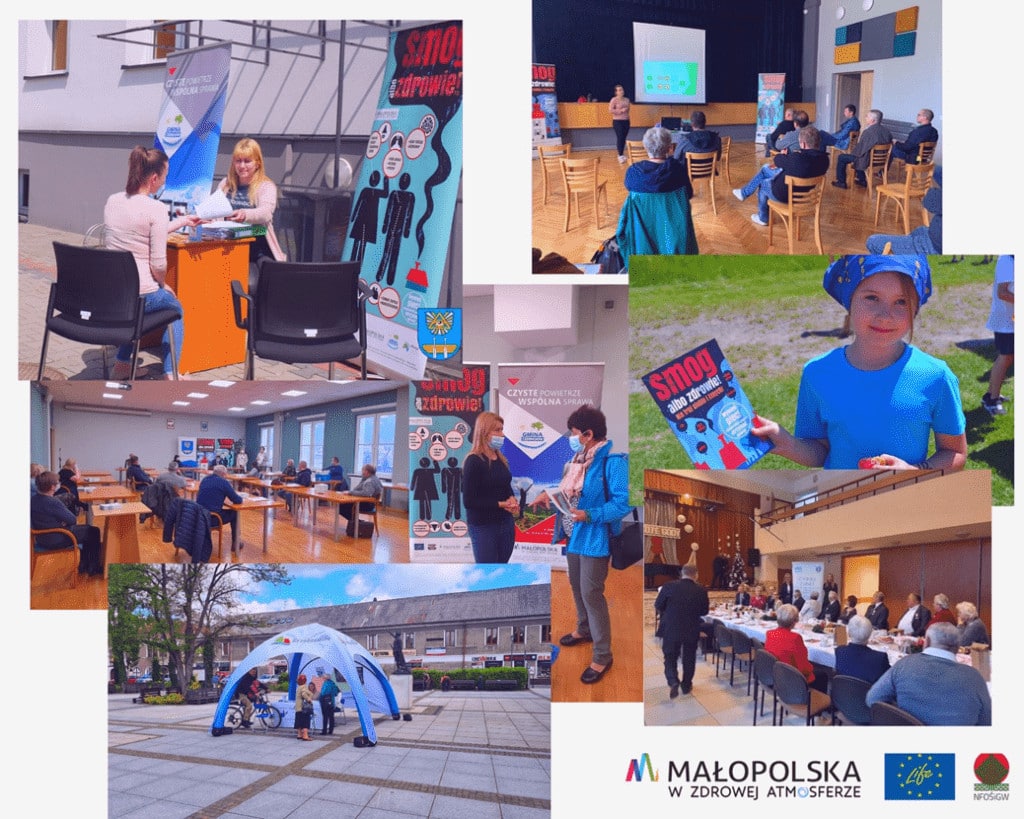
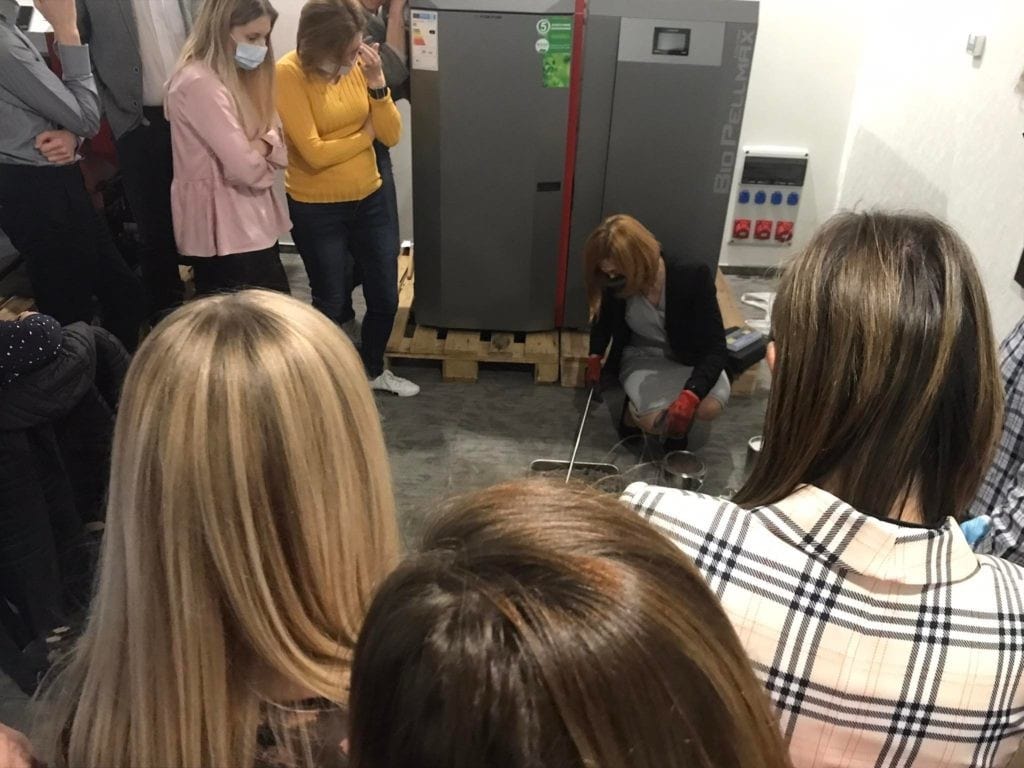
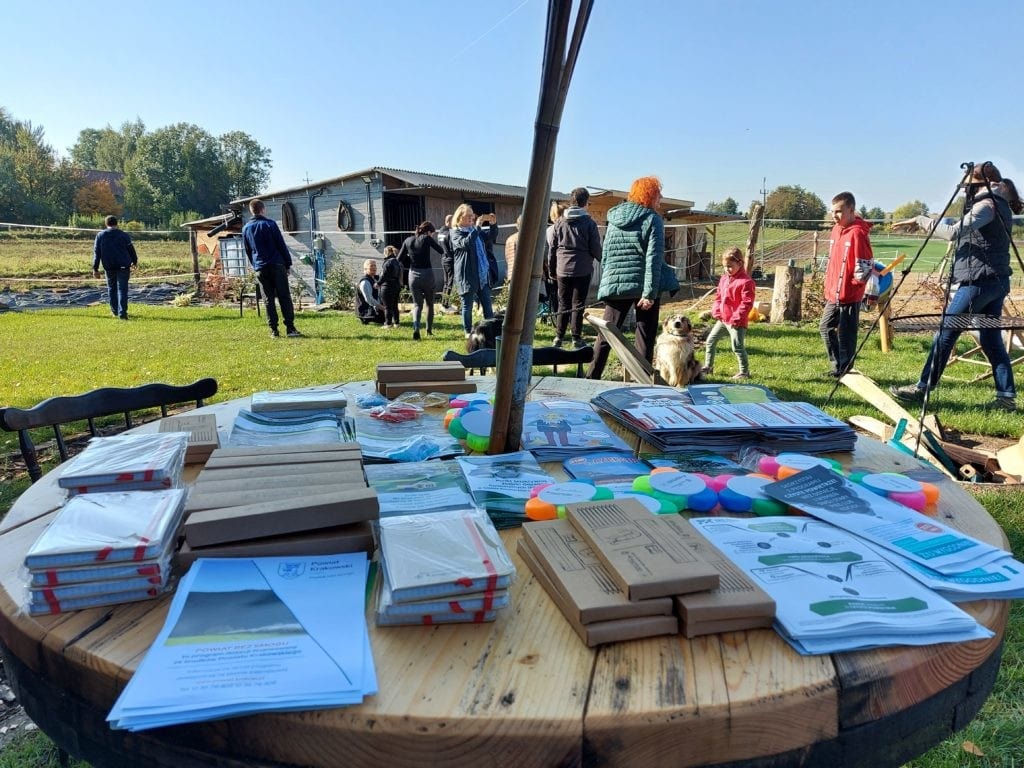
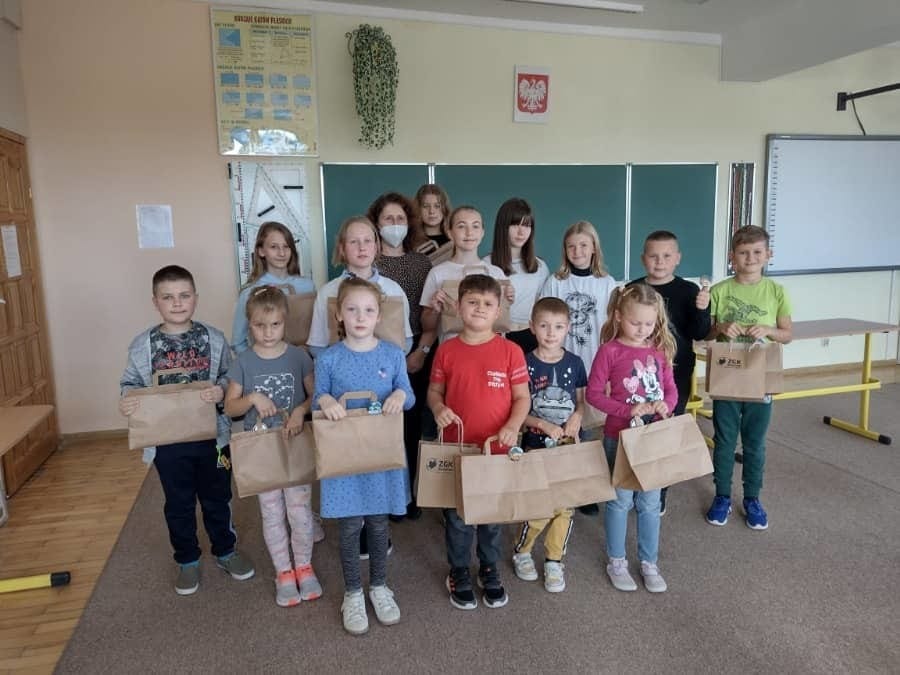
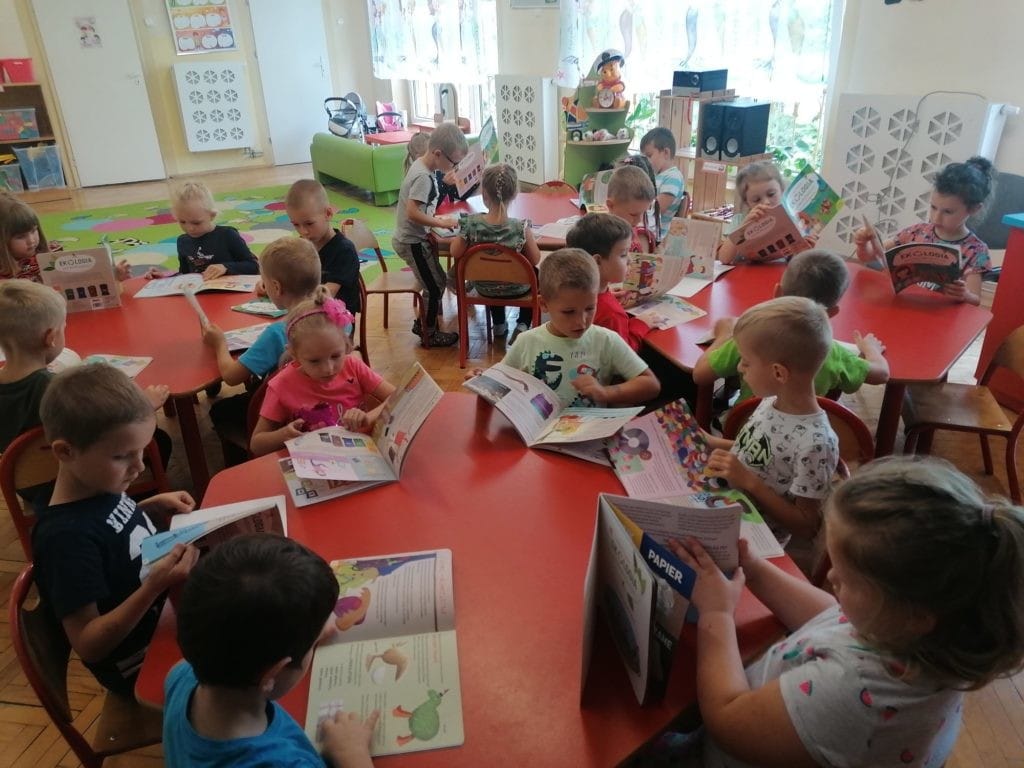
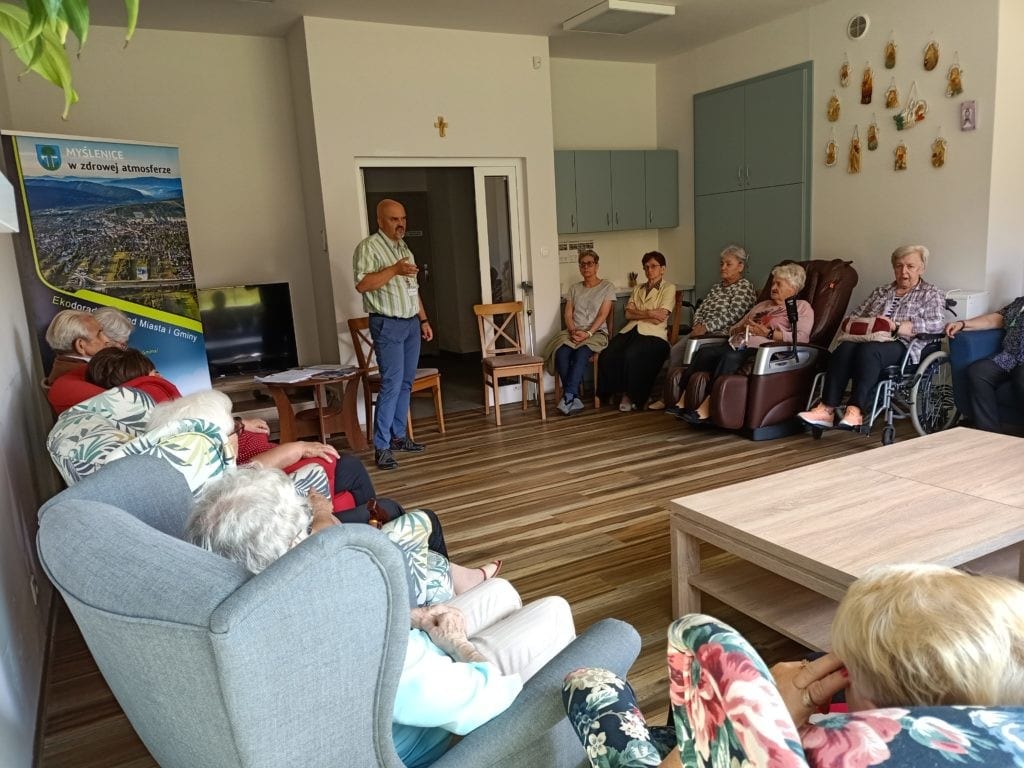
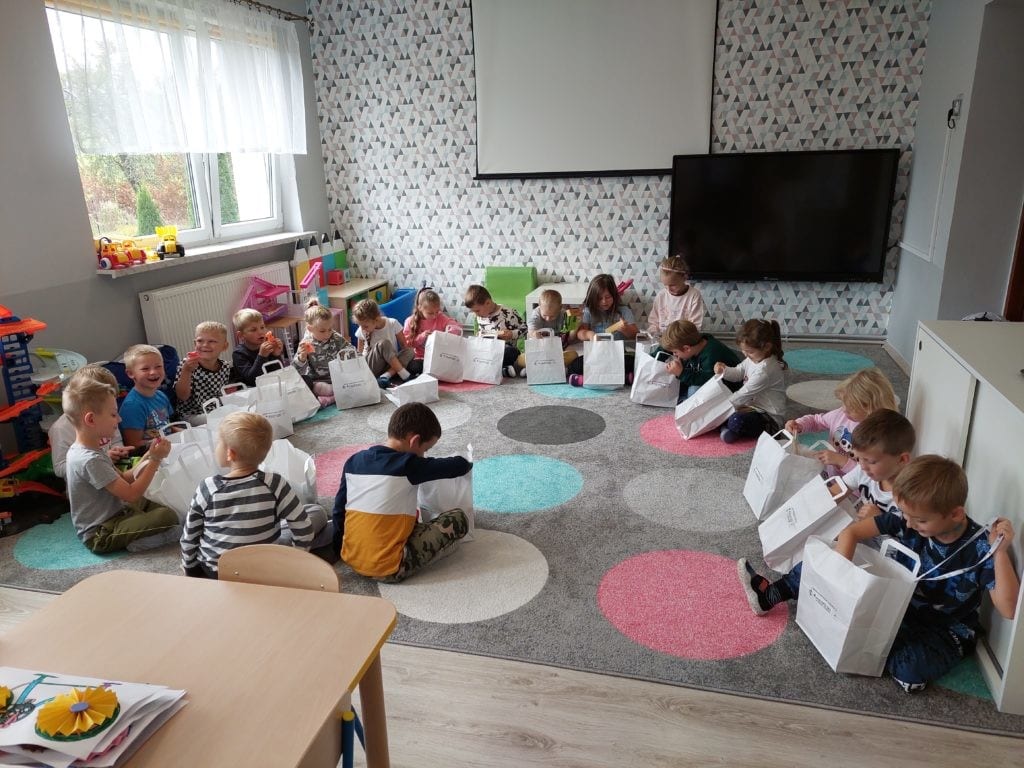
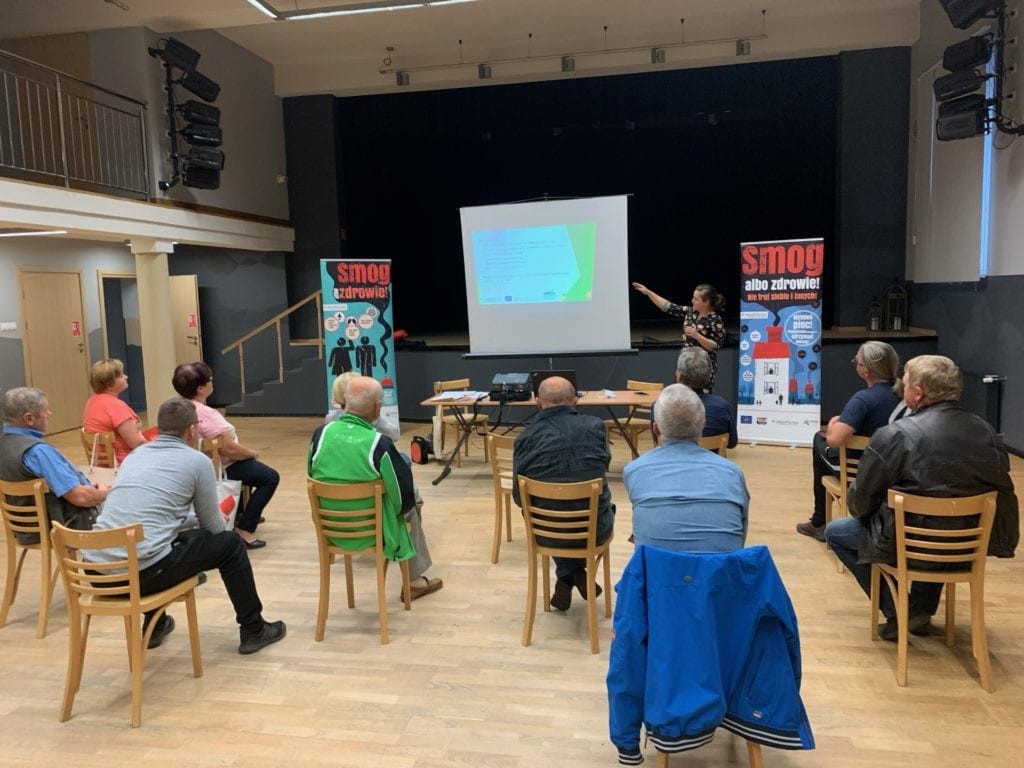
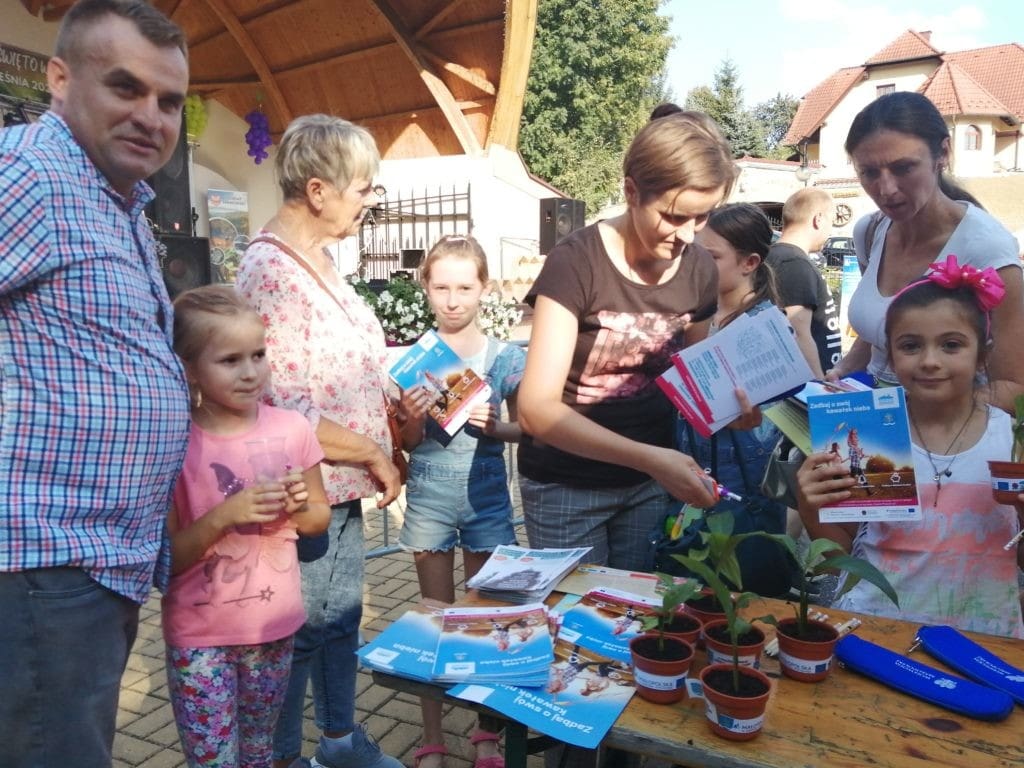
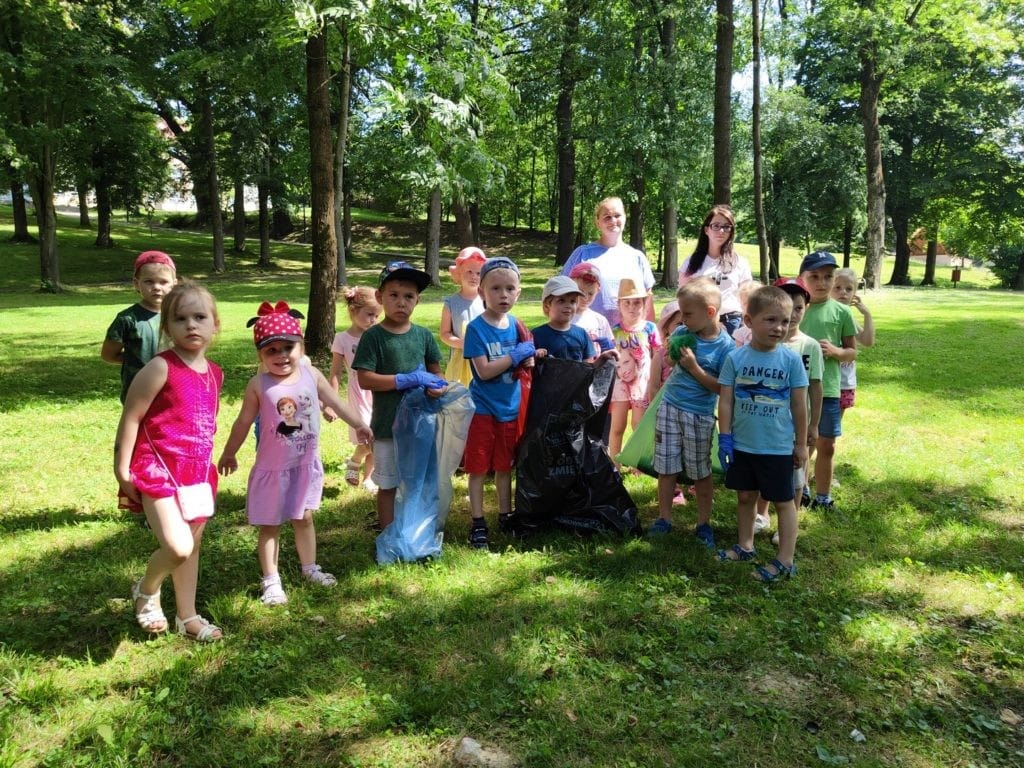
One of the most important activities of the LIFE project was the creation of a network of eco-managers in the municipalities of Małopolska. Due to the COVID-19 pandemic, their work in 2021 was difficult. Despite these adversities, 66 eco-managers employed in the LIFE project carried out over 1.5 thousand jobs in 2021. educational meetings and workshops for over 102 thousand. residents. They were often organized outdoors, in the form of picnics and talks with the local community. There were also meetings with various groups – with the elderly, students and preschoolers, people interested in replacing the stove.
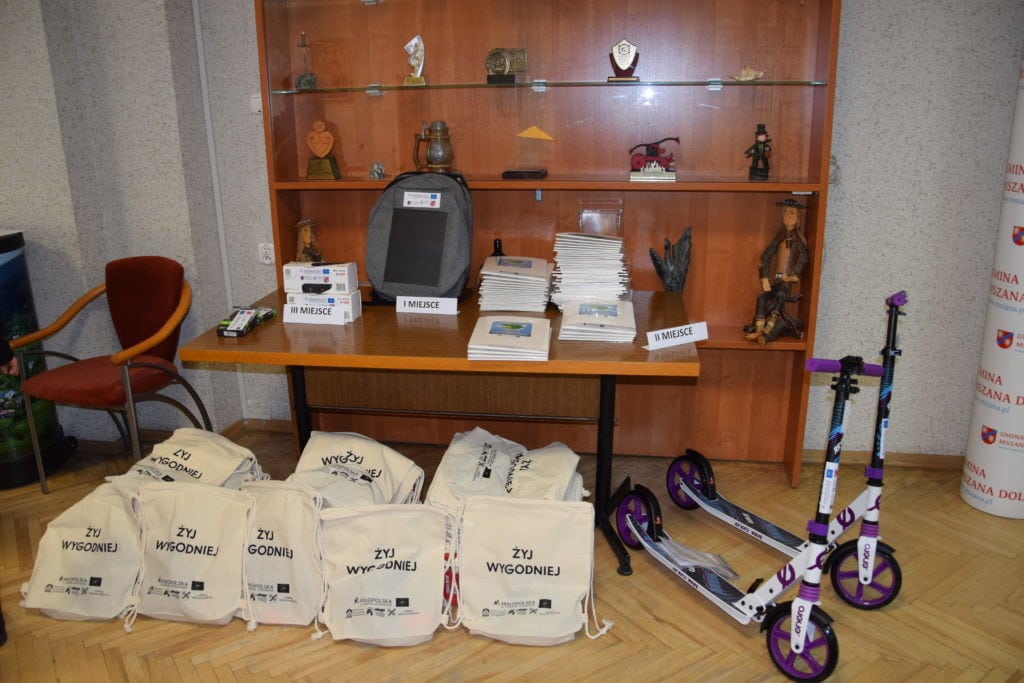
In addition, eco-managers helped residents by working in the office and in the field, providing over 152 thousand. advice on subsidy programs and anti-smog regulations. They also provided information materials – over 468,000 in total. air protection materials.
The activities of eco-managers are a significant support for residents in making decisions and completing formalities related to environmentally friendly investments, including, in particular, the replacement of furnaces. I encourage you to use their help in your commune – says Piotr Łyczko – deputy director of the Department of the Environment of the Marshal’s Office of the Małopolskie Voivodeship
Ecointervention application
Last year, almost 10,000 people reported using the Eco-intervention application. violations in the field of environmental protection. As shown by the data, the awareness of the inhabitants of the quality of the air they breathe is growing every year – 78% of reports concerned air pollution, 17% were related to illegal waste disposal, and the remaining 5% were registered in the other category, e.g. illegal waste discharge.
Training and information activities
The Marshal’s Office supported the communes and their employees with trainings on the possibility of obtaining funds from the Stop Smog program and methods of analyzing the problem of energy poverty in communes. He also organized workshops on the inspection of furnaces. A total of 511 employees of municipal offices, city guards and police officers were trained.
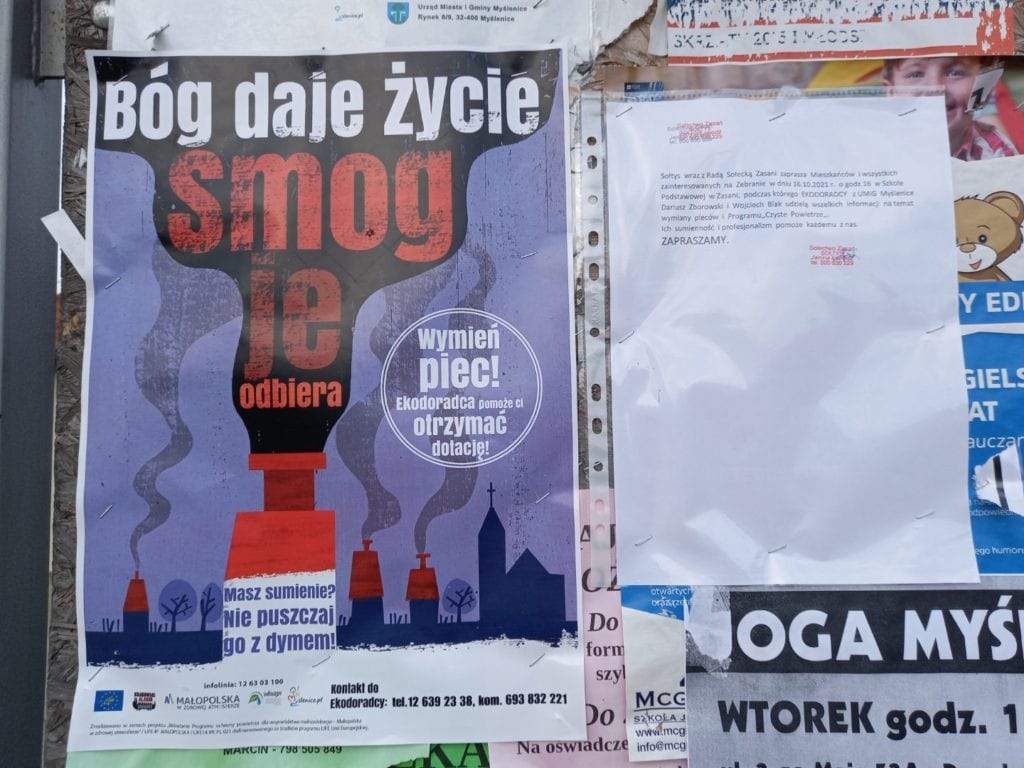
There were also extensive information campaigns regarding the anti-smog resolution for Małopolska. Information on the applicable regulations and encouraging the replacement of out-of-class boilers appeared on the air of regional and local radio stations, in the press and on websites.
Follow-up activities
In 2022, the fourth and final phase of the LIFE project implementation in Małopolska begins. It will be particularly important to continue information activities on anti-smog regulations and to help residents replace non-class coal and wood boilers.
Other regions in Poland and Europe are already benefiting from the experience of the LIFE project in Małopolska. The activities of eco-managers in communes increase the ecological awareness of the inhabitants and accelerate the exchange rate of the so-called “Kopciuchów”. On the other hand, the implementation of anti-smog resolutions brings specific effects of improving air quality in the region.
Main events
Draft guidelines were prepared for introduction in permits of obligation to implement actions limiting emission of dust to the air from installations in case of introduction of risk level 3.
A preliminary analysis of the technological feasibility of adapting agricultural operations, smokehouses and traditional bread baking to the requirements of the anti-smog resolution was prepared.
Cooperation has been established with the MCPs on including in their bulletins also a scope for financing adaptation of agricultural activities to air and climate protection priorities. The first bulletin containing this scope was published in early December.
On December 21, a videoconference was held on the activities of the City of Krakow in the area of limiting transport emissions.
Eco-managers distributed in total over 81 thousand information and educational materials and gave over 14 thousand pieces of advice to Małopolska residents.
C.1. Eco-managers
Advice and assistance to residents
In December, the Eco-managers employed under the LIFE program provided consulting assistance to the residents of Małopolska in the amount of:
5,650 people admitted to the office,
6,768 by phone,
746 in writing or by email,
970 during visits,
There were 1,389 inspections of residents regarding waste incineration. In 68 cases, violations were found.
Surveys from residents and grant applications
Eco-managers were involved in collecting surveys from residents and reviewing grant applications. December 2021:
216 surveys were collected from residents interested in applying for funding,
168 applications from residents or entities for funding were processed,
9 agreements with residents or entities for funding were signed and 808 such agreements were settled.
Eco-managers entered or updated data on 7,016 buildings in the heating database.
C.2 Competence Centre
List of low-emission heating appliances
The list of low-emission, ecodesign-compliant solid fuel heating equipment, available at www.powietrze.malopolska.pl, includes a total of 379 boilers and space heaters.
”Eco-intervention” application
As of December, 1144 applications had been accepted. The application is available at https://ekomalopolska.pl/app/ekointerwencja/index.html.
You can specify:
1,027 air pollution reports,
85 illegal waste disposal,
33 were related to sewage and wastewater discharges,
The hotline operated by the UMWM Competence Center responded to over 300 phone calls.
Meetings with an expert
The National Energy Conservation Agency held four events with eco-managers in December as part of its online “Meet the Expert” training:
01.12. – Meeting with KAPE expert – Central Register of Building Emissions – an element of Integrated System for Low Emission Reduction (ZONE),
18.12. – Meeting with KAPE expert – Heat storages – a way to save money in district and municipality heating systems,
15.12. – Meeting with KAPE expert – How can local government win against smog? Good practices,
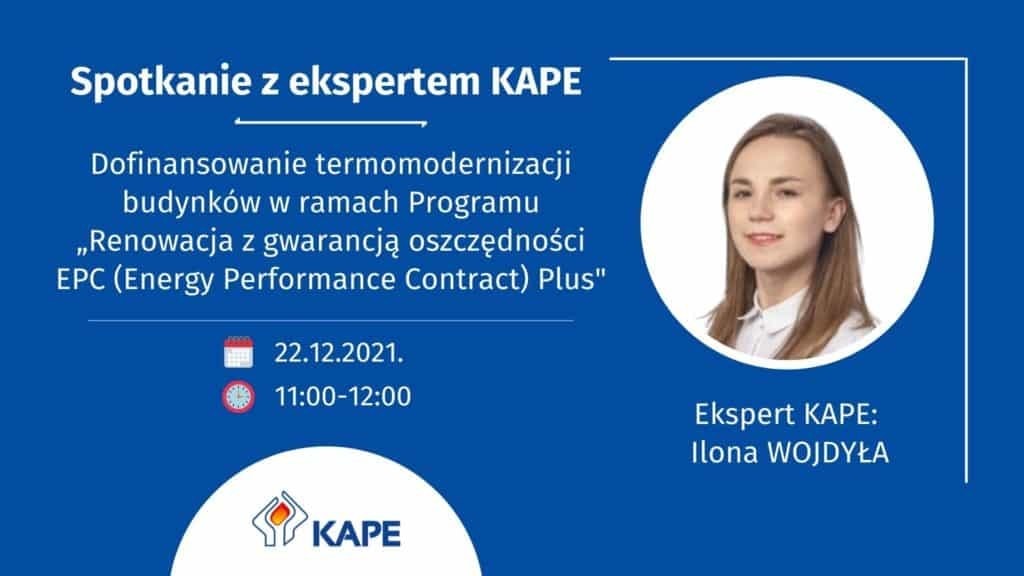
22.12. – Meeting with an expert from KAPE – Funding for thermomodernization of buildings under the Program “Renovation with a guarantee of savings EPC Plus”,
Draft guidelines have been prepared!
Draft guidelines were prepared for introduction in permits of obligation to implement actions limiting emission of dust to the air from installations in case of introduction of risk level 3.
Analysis of technological feasibility of adaptation to the requirements of the anti-smog resolution!
A preliminary analysis of the technological feasibility of adapting agricultural operations, smokehouses and traditional bread baking to the requirements of the anti-smog resolution was prepared.
A report on the activities of the Eco-managers!
A report on the information and promotion activities of the Eco-advisors was prepared.
E.2 Local information and education activities on air protection
Educational materials on air protection
Eco-managers in municipalities:
produced 85,125 flyers and brochures and 647 posters,
distributed 71,451 flyers and brochures and 856 posters,
prepared 2,805 and distributed 8,753 other educational and promotional materials (promotional materials, leaflets related to the Clean Air Program).
Meetings & Events
Eco-managers have organized meetings and events:
8 children/youth competitions with 443 participants,
11 school meetings attended by 562 people,
38 meetings with residents, attended by 331 people,
49 meetings with local leaders, totaling 344 people.
20 other air protection events attended by 6,678 people.
Use of media
Eco-managers in municipalities have prepared:
34 articles in the press,
167 online and social media articles and posts,
17 times other media were used
and participated in media releases related to the project:
43 radio or TV broadcasts.
E3. Networking with other projects
Establishing a partnership with MCP!
Cooperation has been established with the MCPs on including in their bulletins also a scope for financing adaptation of agricultural activities to air and climate protection priorities. The first bulletin containing this scope was published in early December.
Videoconference on the activities of the City of Krakow in the field of traffic emissions reduction!
On 21 December, a videoconference was held on the activities of the City of Krakow in the area of reduction of traffic emissions. The project activities were presented during the videoconference. Moreover, the REKOMKRAK tool for the estimation of the environmental effect of transport activities was presented. Another subject discussed during the videoconference was the actual exhaust emission tests conducted by ZTP and KAS. The meeting was aimed at the exchange of experience and sharing knowledge on good practices for reducing the negative impact of transport on the environment.
All owners of existing buildings by the end of June 2022 should submit a declaration to the Central Emission Evidence of Buildings (CEEB) regarding the heat source in use. You can do it in person, at your municipality office, or via the Internet. It is worth to hurry up, because failure to meet this obligation is punished with fines. Meanwhile, according to data as of December 2021, the database has received 73 thousand declarations from Małopolska, and they concern only 8% of address points. So still about 90 percent of building owners have not fulfilled this obligation.
What is CEEB?
The Central Building Emissions Inventory was launched on July 1, 2021. Its aim is to collect data on how Poles heat their homes. Such knowledge and the map of emissions drawn up on its basis will help in the fight against smog and air pollution.
– The database will make it possible to identify areas in need of particularly intensive action to replace the heat source. It will also enable effective adjustment of modernization programs. In the future, CEEB will also include information on public aid granted in the area of thermomodernization and replacement of boilers. It is therefore a tool for local governments and government administration to effectively carry out activities to improve air quality – Piotr Łyczko – Deputy Director of the Department of Environment.
Who should file the return?
Information on used and owned heating devices should be provided by each owner of a residential or non-residential building. In the case of multi-family buildings, this obligation should be fulfilled by the manager for the whole or part of the building. All used heating sources should be reported in the database, such as district heating, heating boiler with indication of its type, coal stove, heater or fireplace. It is also necessary to register renewable energy sources: heat pumps, geothermal, solar panels for water heating, except for photovoltaics.
By when do we have time?
Each owner or manager of an already operating and heated building is required to submit an electronic or paper declaration by June 30, 2022. For newly installed heating equipment, the deadline is 14 days after the heat source becomes operational.
How to make a declaration to CEEB?
The heating source can be reported in the traditional paper form or, via the website https://www.zone.gunb.gov.pl. Important: In order to use this form, you must have a trusted profile or an e-ID. If you want to declare in person, you have to fill in the form manually and send it by post or deliver it to the municipal office responsible for the location of your house.
Only one year to replace old stoves According to data from the CEEB declaration for December 2021, solid fuel boilers below class 3 or without class 3 account for as much as 41% of all stoves in Małopolska, while those meeting ecodesign requirements account for just 6%! Meanwhile, according to the anti-smog resolution for our province, by the end of 2022 all heat sources using coal or wood that do not meet the requirements of at least class 3 of the so-called eco-design must be replaced. They may be replaced by heating from the municipal district heating network, electric heating, heat pump, gas boiler, light fuel oil boiler or other heat source meeting the eco-design requirements. It is worth taking advantage of subsidy programs, such as Clean Air. Eco-advisers operating in most municipalities in Małopolska help to select a subsidy program for an individual situation and to fill out the documents. More information on this subject may be found at: link
Only 12 months are left until the obligation to replace old coal and wood burning stoves that do not meet emission standards of at least class 3 comes into force. The anti-smog resolution adopted by the Sejmik of the Małopolskie Voivodeship in January 2017 introduced a 6-year transition period for the replacement of non-class “kopciuchów”. This period will expire at the end of 2022, which means that after 1 January 2023 only boilers of at least class 3 will be legal to use. Class 3 and 4 boilers may be used a few years longer, until the end of 2026. The class of the boiler can be checked on the nameplate or in the documentation of the appliance. If it is not specified, it means that the boiler is out of class and should be replaced on the first date.
Assistance of Eco-managers in communes
The air protection program adopted in September 2020 introduced additional tasks for municipalities, which are to provide assistance to residents in adapting to the requirements of the anti-smog resolution. First and foremost, a Clean Air Programme service point should be established in each municipality in Małopolska, and an Eco-managers should be employed to assist the residents in completing and submitting the necessary formalities related to the application for financial support for replacement of the heating source or thermo-modernization.
The tasks of municipalities are primarily to help their residents to obtain funding and to replace the old furnace – says Deputy Marshal of Małopolska Region, Józef Gawron – There is little time left to arrange the formalities associated with the grant and to plan renovation work. In the coming months, this support for the residents will be especially needed
180 out of 182 communes in Małopolska have signed an agreement with the Provincial Fund for Environmental Protection and Water Management in Cracow, on the basis of which they run an official service point of the Clean Air Programme. The necessary documents can be submitted there, and assistance and explanations can be obtained.
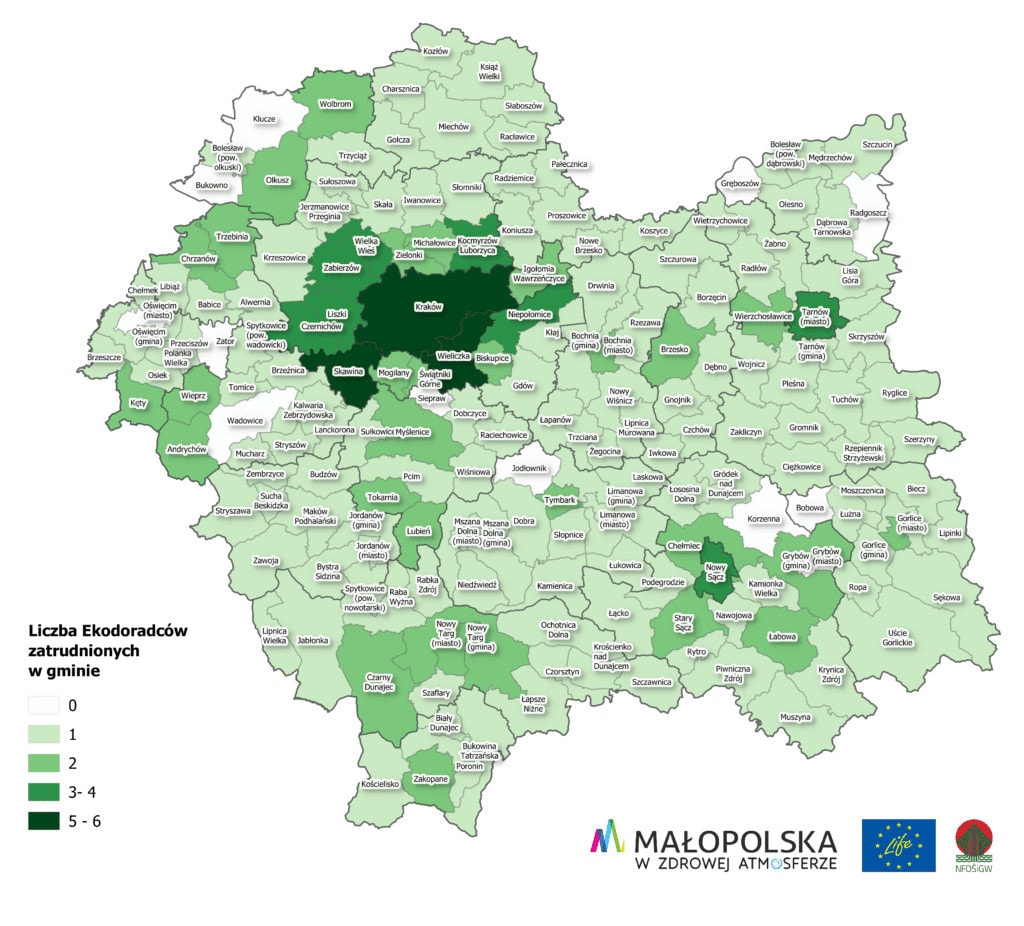
In addition, 170 municipalities in Małopolska hire eco-managers whose role is to help residents comply with the requirements of the anti-smog resolution. They advise on the selection of an environmentally friendly source of heat, assist in obtaining subsidies, and conduct educational and informational activities to ensure that everyone is aware of the health hazards posed by smog and the requirements of the anti-smog regulations. There are already 232 eco-managers in Małopolska’s municipalities, 66 of whom are employed under the LIFE project coordinated by the Marshal’s Office. Support for the employment of eco-managers in all municipalities is also planned under the new EU funds perspective for Malopolska.
Co-financing of furnace replacement
The main source of financing for furnace replacement and building insulation is the nationwide Clean Air Programme. It allows to obtain co-financing up to PLN 30 thousand in the basic variant and up to PLN 37 thousand in the higher variant for persons with lower income. By the end of October this year Małopolska residents have already submitted 37.5 thousand applications for the Clean Air Programme.
Replacement of furnaces is also supported under the EU funds of the Regional Operational Program managed by the Marshal’s Office. A total of more than 70 million Euro has been allocated for this purpose in the 2014-2020 perspective. However, in December 2021, the Board of the Malopolska Region decided to transfer the amount of more than 60 million PLN to 35 municipal boiler replacement projects from the reserve list. In addition, PLN 3.7 million will be transferred to the municipalities of Krakow’s obwarzanek for furnace replacement projects.
Additional EU funds for the replacement of furnaces will allow us to support all communal projects from the reserve list. Now the rate of investment and improvement of air quality in Małopolska will depend on the determination and involvement of local governments and residents,” adds Deputy Marshal of Małopolska Józef Gawron.
Inspections of furnaces
Another important element of preparing communes for the entry into force of the anti-smog resolution is the organization of a system of environmental compliance inspections. The obligation to conduct such inspections results from the Environmental Protection Law. The inspections may be carried out daily from 6:00 a.m. to 10:00 p.m. Violation of the regulations means the possibility of imposing a fine in the amount of up to PLN 500 or referring the case to court, which may impose a fine of up to PLN 5,000.
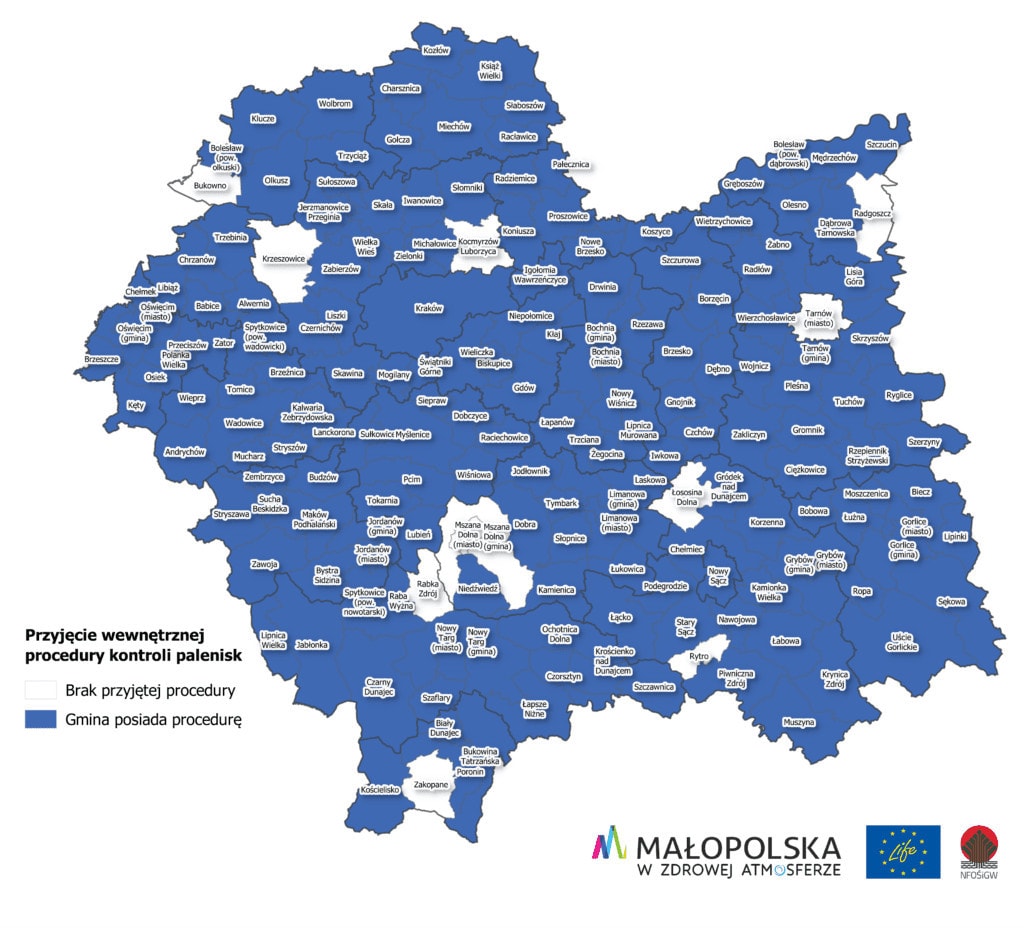
According to the provisions of the Air Protection Program, the municipalities of Malopolska should prepare procedures for control of furnaces on the basis of uniform guidelines prepared by the Marshal’s Office. Such procedures have already been prepared by 171 municipalities in Małopolska and adopted in the form of mayoral ordinances.
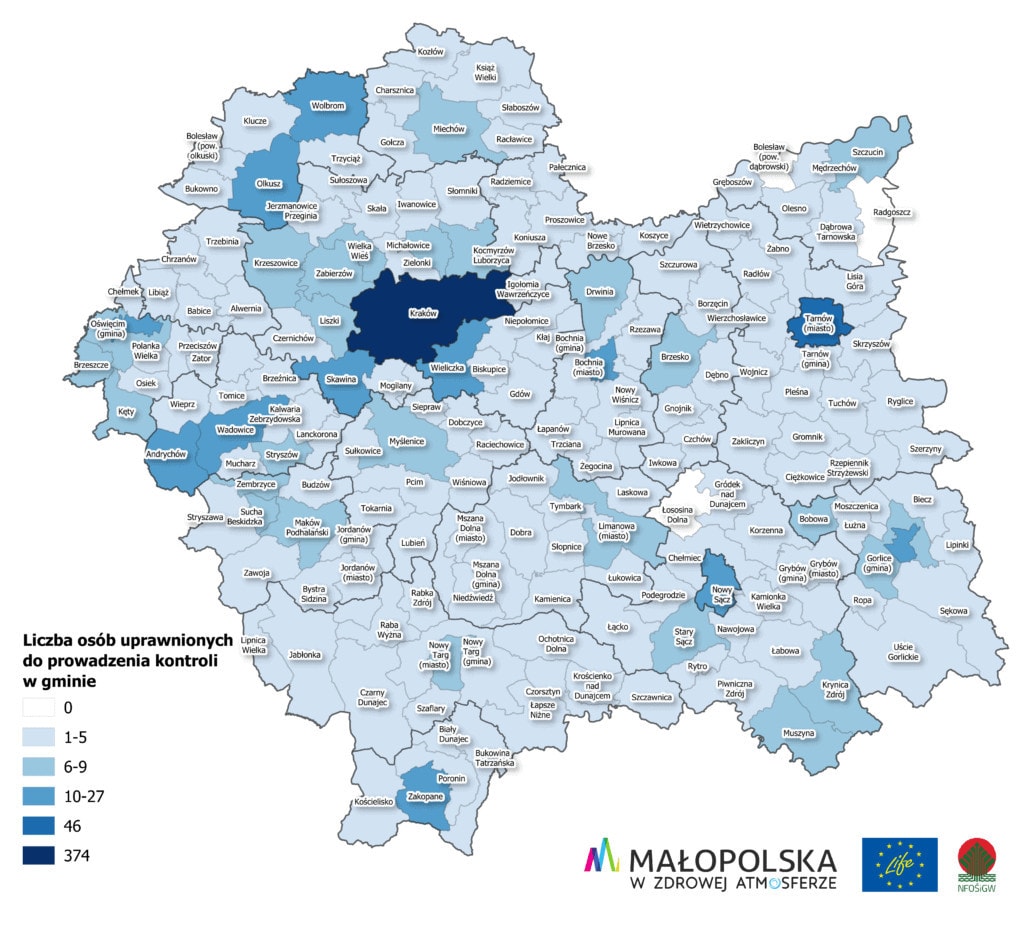
179 municipalities also have appointed municipal officers or guards who inspect furnaces. Altogether in Małopolska over 1100 officers and guards have appropriate authorizations from the head of the commune, mayor or town mayor, which enable them to enter the property and inspect the stove according to the regulations. The highest number of such persons has Kraków (374), Tarnów (46), Nowy Sącz (27) and Skawina (25).
Number of Eco-managers and persons authorized for control in Małopolska
Recently, there were also trainings organized by the Marshal’s Office on the principles of control. In October 2021, a total of 511 employees of municipal offices, municipal guards and police officers were trained. This was the second edition of such trainings, during the previous ones, in 2019, 474 people were trained.
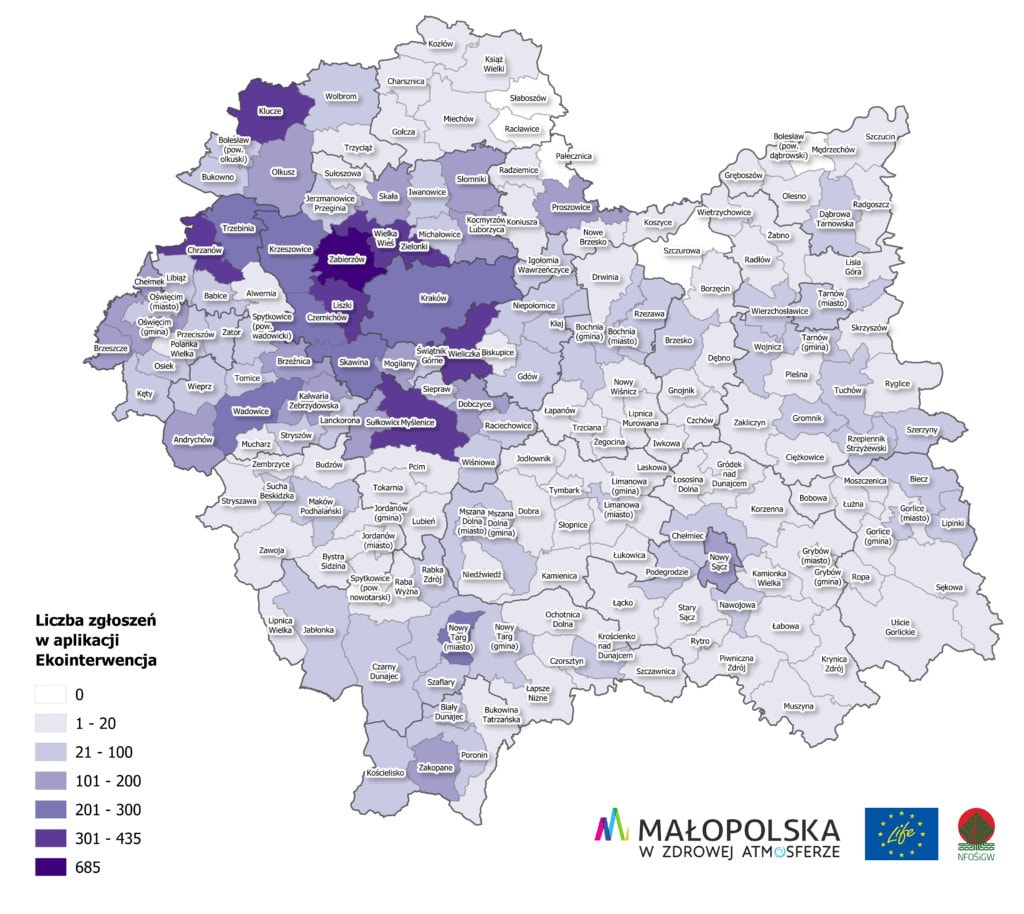
It is worth remembering that in case of suspicion of illegal waste burning it is worth notifying the control services in the municipality. The notification can be made in various ways – by phone, e-mail or in writing, but the Eco-Intervention application prepared by the Marshal’s Office can also be used for this purpose. It enables sending a notification which is automatically forwarded to the appropriate service in the commune. Eco-intervention notifications have already helped to detect more than 1,000 violations of environmental regulations, of which more than 400 were related to air pollution. The air protection program indicates the need to carry out inspections under the Eco-Intervention within 12 hours of notification. Unfortunately, this deadline cannot always be met, but as many as three quarters of inspections are carried out within 3 days of notification. The inspectors have also the possibility to take ash samples, which enable to detect illegal waste burning.
Notifications in the Eco-Intervention application in the category of air pollution
We highly recommend the publication “How to introduce innovations? A practical guide for administration” prepared by the Kraków Technology Park. The guide contains many interesting and practical ideas. For example, we will learn how to consult difficult social issues, investments or administrative decisions so that the solutions are best adapted to the needs of the recipients.
The publication is available on the KPT website: LINK
Multi-level collaboration for the common good
There are many ideas and ways to strengthen cooperation between administration, citizens and business. One of them, definitely worth recommending, is the work methodology proposed by the Kraków Technology Park. It has been used, among others, during creation and consultation works on strategic documents for the region as well as pilot implementations of innovative solutions improving functioning and quality of life of the region’s inhabitants.
The guide “How to innovate? A Practical Guide for Administration”, developed by KPT, describes on the basis of concrete examples how to consult difficult social issues, investments or administrative decisions, what they are and why it is worth introducing creative, community-engaged methods of work. It is presented how this work process translates into the quality of consultations and the final value, i.e. the effect of conducted activities.
Good practices in Malopolska
All the examples presented in the guidebook refer to activities carried out in Małopolska province. They include, among others, joint creation of the Air Protection Program for Małopolskie Voivodship, which took place in a broad, open dialogue with the residents, NGOs and business. This form of work not only increased social acceptance for the solution, but also provided a guarantee for its effective implementation.
It is similar in the case of testing IT tools, architectural and planning solutions or new services. This approach has been used both in the conception and implementation of a micropark, testing a smart bench, creating a platform for monitoring industrial pollution, as well as in projects developed in collaboration with the Kraków Technology Park.
The common denominator of the examples described in the publication is the process of co-creation, design and testing of solutions to improve the quality of life of citizens and the region. Specific examples show the benefits of using the co-creation process and the value of involving the local community, entrepreneurs, representatives of the scientific community and NGOs.
Helpful hints
Understanding mutual needs and expectations and properly addressing the needs of residents is not an easy task. This challenge is increasingly often faced by local governments, which for years have been conducting an effective dialogue with residents and entrepreneurs, balancing the needs of local communities and the investment opportunities of the administration. Thanks to the fact that already at the initial stage of designing (solutions, tools, regulations) the end users are involved, the administration is able to achieve measurable benefits and significantly improve the subsequent process of consultation.
The guide was developed as part of the Siscode project, implemented by KPT between 2018 and 2021, funded by Horizon 2020.
We encourage you to read on!
We are all aware of the importance of regulations introduced by the anti-smog resolution obliging owners of old solid fuel appliances to replace them. The anti-smog resolution does not only concern private persons. Also business and agriculture, in places where low-power equipment not requiring permits for gas or dust emissions into the air is used, must comply with the requirements of the anti-smog resolution. As a reminder, detailed requirements for the resolutions can be found here.
One of the tasks resulting directly from the Air Protection Programme for Małopolskie Voivodship is to develop a guidebook on financing adaptation of agricultural activities to air and climate protection priorities. Therefore, starting from December, in cooperation with Małopolskie Centrum Przedsiębiorczości, monthly EcoFinancing Bulletins prepared by Eco-managers for Business will also contain information about available financing for the agricultural sector. The bulletins are published on the EcoFinancing website.
From the Bulletin we will learn about the Agroenergy program as well as other options available in the market.
We would like to remind that Eco-managers for business is a partner for every entrepreneur interested in developing the company in accordance with current trends and legal regulations in the field of environmental protection. Eco-managers is a practical guide through the meanders of pro-ecological solutions and knowledge and information resources in the field of energy efficiency of enterprises. The tasks of Eco-managers are to inform, educate and advise.
You are also welcome to contact us directly
Małopolskie Centrum Przedsiębiorczości ul. Jasnogórska 11, 31-358 Kraków tel.: +48 12 376 91 58 e-mail: [email protected]
Main events
On November 8-9 a training was held for employees of communes, including eco-managers,on financial rules and requirements for realization of substantive tasks of the LIFE-IP MALOPOLSKA project.
The Małopolska Region has participated in numerous conferences, including the international conference on air pollution – towards clean air for Europe, in the framework of the integrated project HungAIRy LIFE; CLIMATE-CON 2021 – Silesian Climate Convention; the conference Virtual Study Tour on emission management organized in the framework of the CityAir project and the Clean Air Academy.
From November 12 to December 20, another edition of the “Smog-free Małopolska” campaign is conducted by Radio Kraków, PAS and the Małopolska Region.
On 30 November a meeting was held on the upcoming financial perspective of the cohesion policy, which was attended by representatives of all Marshal Offices. Małopolska Voivodeship was represented by Mr. Piotr Łycz – Deputy Director of the Department of Environment.
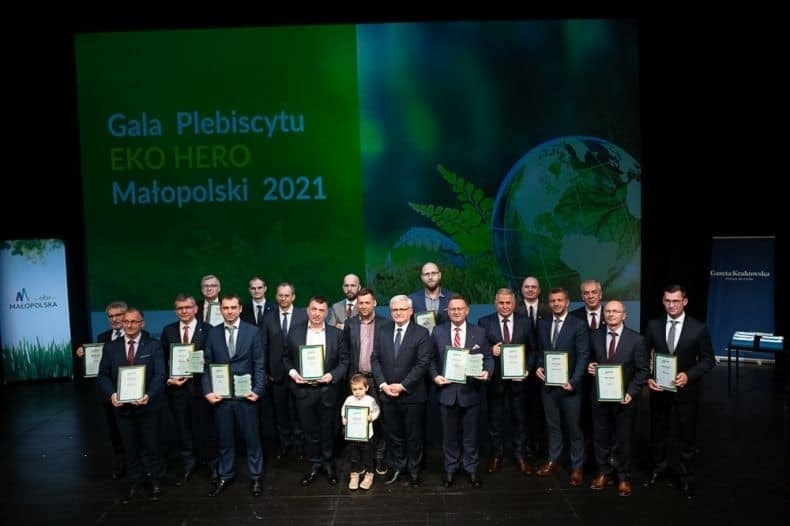
The results of EKOHERO Malopolska plebiscite organized by Gazeta Krakowska and Marshal Office of Małopolska Region were announced.
Eco-managers distributed over 35 thousand information and educational materials and gave over 12 thousand pieces of advice to inhabitants of Małopolska.
C.1. Eco-managers
Advice and assistance to residents
In November, the Eco-managers employed under the LIFE Program provided consulting assistance to the residents of Malopołska in the amount of:
5,079 people admitted to the office,
5,703 by phone,
524 in writing or by email,
819 during visits,
There were 1,061 inspections of residents regarding waste incineration. In 32 cases, violations were found.
Surveys from residents and grant applications
Eco-managers were involved in collecting surveys from residents and reviewing grant applications.
November 2021:
154 surveys were collected from residents interested in applying for funding,
reviewed 223 applications from residents or entities for funding,
76 grant agreements were signed with residents or entities and 485 such agreements were settled.
Eco-managers entered or updated data on 7,029 buildings in the heating database.
C.2 Competence Centre
List of low-emission heating appliances
The list of low-emission, ecodesign-compliant solid fuel heating equipment, available at www.powietrze.malopolska.pl, includes a total of 376 boilers and space heaters.
“Eco-intervention” application
As of November, 797 applications have been accepted. The application is available at https://ekomalopolska.pl/app/ekointerwencja/index.html.
You can specify:
667 air pollution reports,
103 illegal waste disposal,
27 were related to sewage and waste discharges,
The hotline operated by the UMWM Competence Centre answered over 300 phone calls.
Meetings with an expert
National Energy Conservation Agency in the framework of online training “Meeting the expert” in November organized three events attended by eco-advisors:
03.11. – Meeting with KAPE expert – State aid,
17.11. – Meeting with KAPE expert – Where to seek financial support for investments – White Certificates”,
24.11. – Meeting with KAPE expert – Subsidizing modernization of heat sources in small and medium heating companies.
Training for employees of municipalities
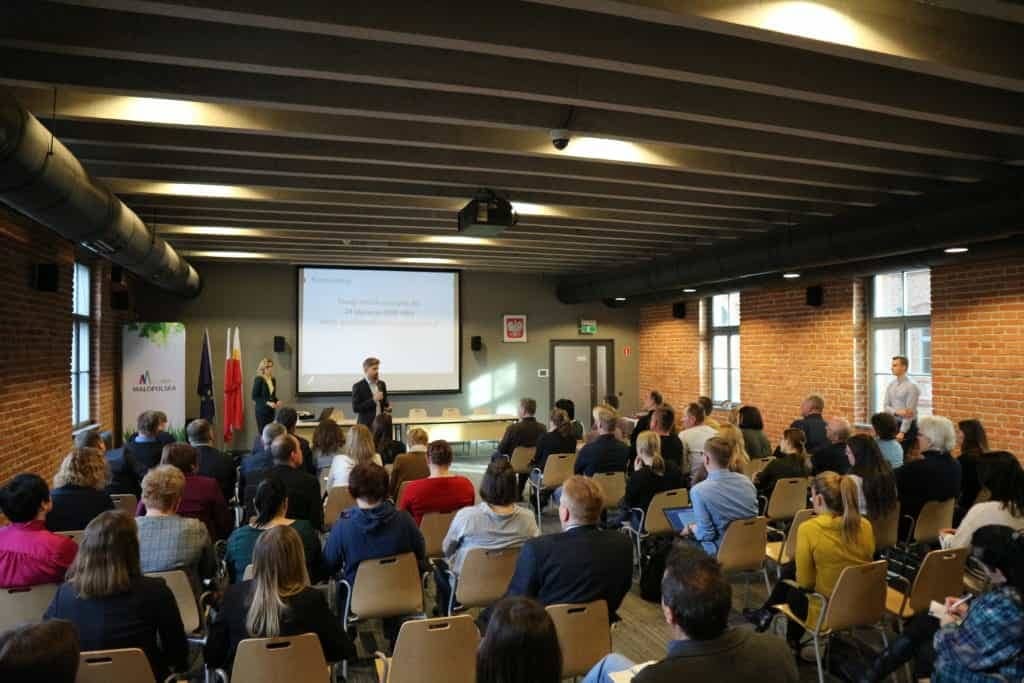
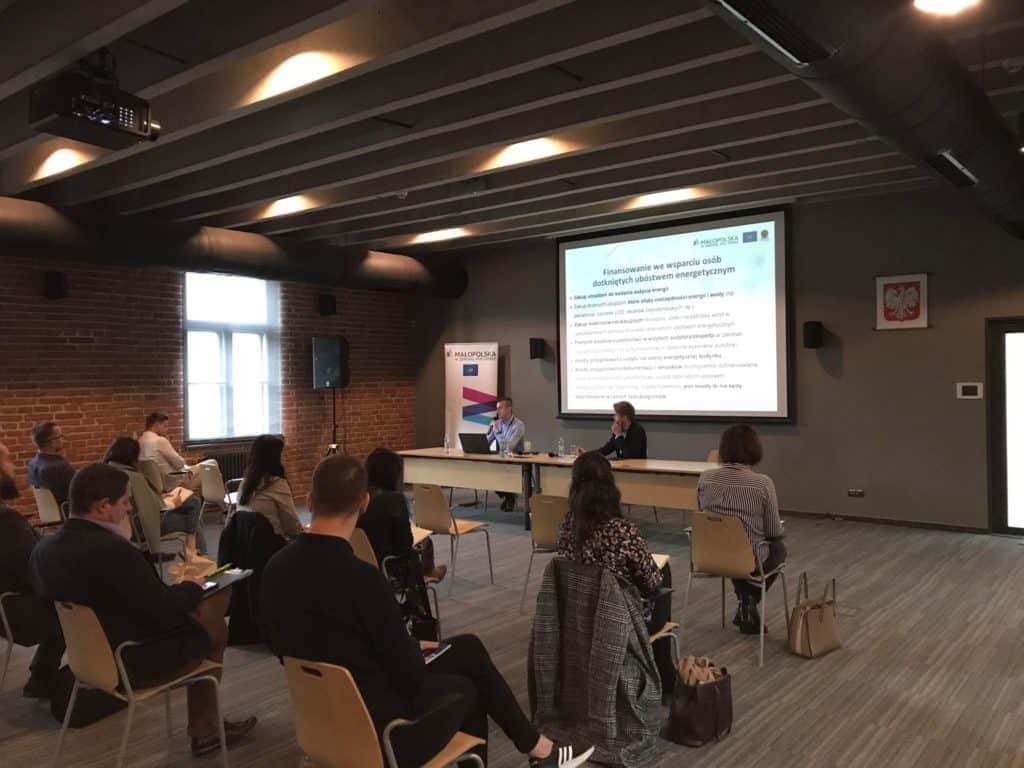
On the 8th and 9th of November in the Home Army Museum in Cracow a training was held for the employees of communes, including eco-managers, who are directly responsible for the realization of tasks within the LIFE – Małopolska in a healthy atmosphere project. The training concerned financial rules and requirements for realization of substantive tasks of the LIFE-IP MALOPOLSKA project.
Next edition of the “Smog-free Małopolska” campaign
From November 12th to December 20th another edition of the campaign conducted by Radio Kraków, PAS and the Malopolska Region “Malopolska without smog” is conducted. Each time the measurements are conducted simultaneously in two places. The “Smog-free Małopolska” campaign was inaugurated on Friday, 12th November with measurements in two communes of Krakow’s “obwarzanek”: Mogilany and Czernichów. Then Nowy Targ and Czarny Dunajec. At the end of the action (from 7 to 20 December) two health resorts of Lesser Poland will be visited: Krynica-Zdrój and Piwniczna-Zdrój.
EKOHERO plebiscite settled
The results of EKOHERO Malopolska plebiscite organized by Gazeta Krakowska and Marshal Office of Malopolska Voivodeship were announced. Gołcza won among small communes, Stary Sącz became the most ecological medium commune and Trzebinia the most ecological large one. The title of Eco HERO Company 2021 was awarded to PRAD Sp. z o.o. for the use of modern equipment to fight air pollution and illegal dumping sites. The jury considered the program “Gnojnik Commune – a home for amphibians” to be the most interesting Eco-Initiative.
E.2 Local information and education activities on air protection
Educational materials on air protection
Eco-managers in municipalities:
produced 43,373 flyers and brochures and 411 posters,
distributed 33,447 flyers and brochures and 404 posters,
prepared 1,073 and distributed 1,602 other educational and promotional materials (promotional materials, leaflets related to the Clean Air Program).
Meetings & Events
Eco-managers have organized meetings and events:
2 children/youth competitions with 40 participants,
45 school meetings attended by 2,271 people,
9 meetings with residents, attended by 193 people,
48 meetings with local leaders, totaling 345 people.
16 other air protection events attended by 3,753 people.
Use of media
Eco-managers in the municipalities have prepared:
29 articles in the press,
111 articles and online and social media posts,
18 times other media were used
and participated in media releases related to the project:
6 radio or TV broadcasts.
E3. Networking with other projects
HungAIRy webinar on air pollution
On November 9-10, 2021 in the framework of the integrated project HungAIRy LIFE, an international conference on air pollution – towards clean air for Europe took place. The Małopolska Region was represented by Piotr Łyczko, Deputy Director of the Department of Environment, and Adrianna Frankowska, a desk officer in the Air Protection Team.
Clean Air Academy – The role of an eco-managers in the municipality
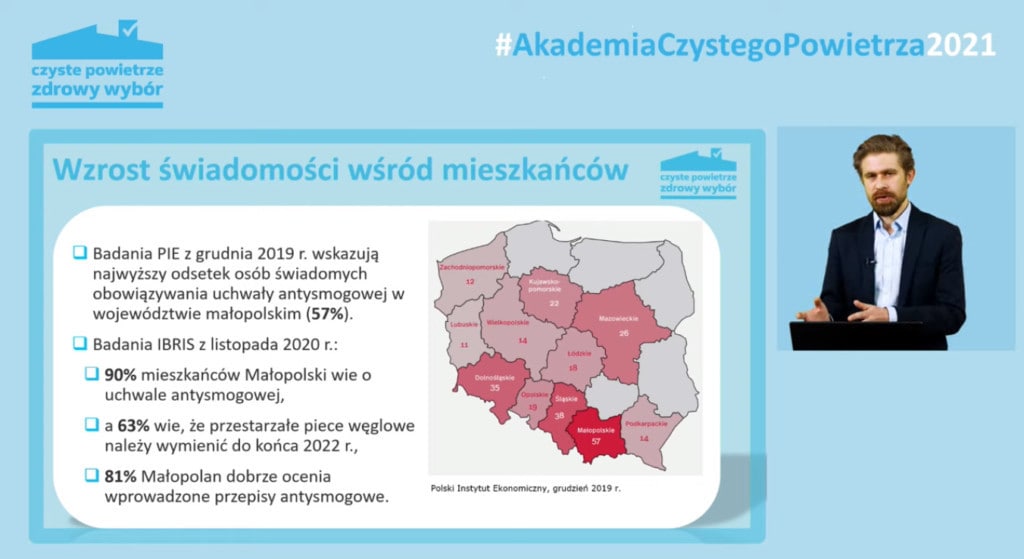
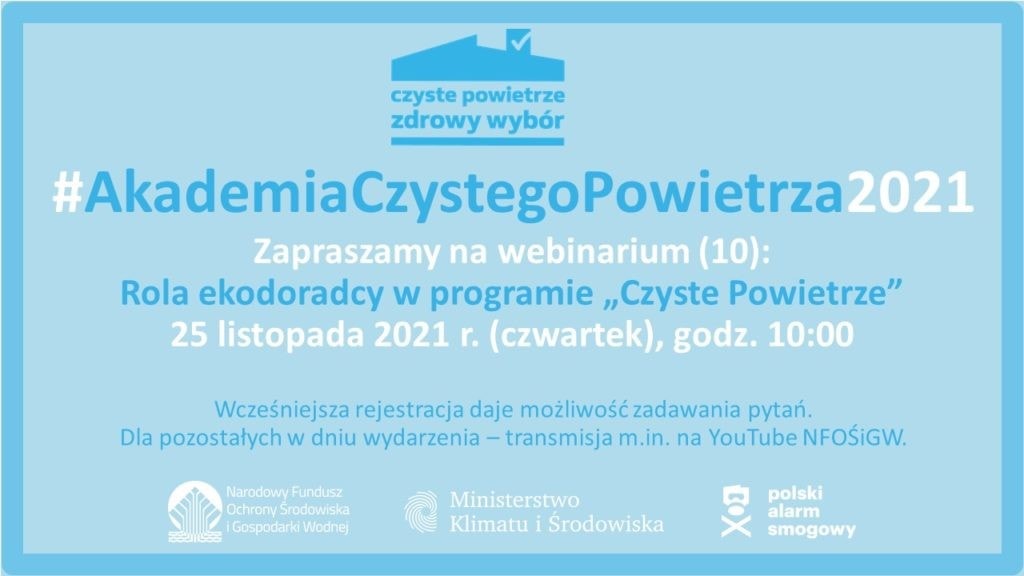
On November 25th, during the #Academy of Clean Air webinar, Mr. Piotr Łyczko – Deputy Director of the Department of Environment, talked about the role of an eco-manager at the municipal level, on the example of the Małopolska region.
CLIMATE-CON 2021 – Silesian Climate Convention
CLIMATE-CON 2021 – Silesian Climate Convention took place on 2nd November. The aim of the conference was to educate and raise awareness in the field of air quality improvement. One of the conference speakers was Mr. Piotr Łyczko – Deputy Director of the Department of Environment.
Konferencja Virtual Study Tour on emission management
The Virtual Study Tour on emission management organized under the project CityAir – Technical Assistance for Improving Air Quality and Raising Public Awareness in Cities in Turkey took place on November 22. The event was aimed at the exchange of experience in reducing emissions from residential buildings. Malopolska Region was represented by Aleksandra Pup – Senior Specialist in Air Protection Team. During the presentation she discussed the activities of Malopolska Region which have an impact on emissions from the municipal and household sector, i.e.: anti-smog resolutions, new Air Protection Programme and the activities of LIFE project.
Academy of Clean Air 2021
As part of the #AcademyCleanAir webinar series, 4 meetings were held in October:
November 4: Electrification in heating – photovoltaics and heat pumps
Nov. 18: Thermal retrofitting- The best energy is the energy we don’t use.
November 25: The role of the eco-counselor in the Clean Air Program
F2. Plan for post-program activities
On 30 November a meeting was held on the upcoming financial perspective of the cohesion policy, which was attended by representatives of all Marshal Offices. The meeting was largely devoted to the discussion on the coordination of actions aimed at the elimination of low emissions from the residential sector within the framework of national programs (i.e. Clean Air) and regional operational programs. Małopolska Voivodship was represented by Mr. Piotr Łyczko – Deputy Director of the Environment Department.
Main events
Between 4 and 29 October training sessions for employees of municipalities, police, and municipal and communal guards from the Malopolska province were held in the field of hearth inspection. Altogether 511 people were trained.
From 5 to 8 October, monitoring visits were carried out in 8 municipalities participating in the LIFE Project, i.e. Nowy Targ municipality and town, Poronin, Łapsze Niżne, Myślenice, Sułkowice, Wieprz and Skawina.
On the 4th of October, via the Webex platform, a training for the employees of municipalities from the Malopolska Region took place. The meeting was an opportunity to get acquainted with the introduced changes and facilitations in the access to the Stop Smog program, as well as with the experiences of the Skawina commune in the implementation of the program.
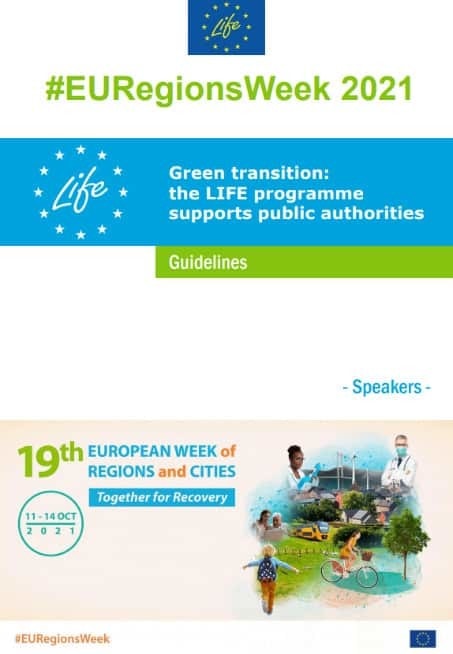
On 12th October during the European Week of Regions and Cities, in the panel Green transition: the LIFE programme supports public authorities, Mr. Tomasz Pietrusiak – Deputy Director of the Department of Environment presented the effects of the project.
On October 15, campaigns in local radio stations were completed. Among other things, radio spots on air protection were aired as part of the event.
Eco-managers distributed in total over 36 thousand information and educational materials and gave over 11 thousand pieces of advice to inhabitants of Małopolska.
C.1. Eco-managers
Advice and assistance to residents
In October, Eco-managers employed under the LIFE program provided consulting assistance to the residents of Malopolska in the amount of:
4,638 people admitted to the office,
5,328 by phone,
454 in writing or by email,
608 during visits,
There were 841 inspections of residents regarding waste incineration. In 36 cases, violations were found.
Surveys from residents and grant applications
Eco-managers were involved in collecting surveys from residents and reviewing grant applications. October 2021:
203 surveys were collected from residents interested in applying for funding,
236 applications from residents or entities for funding were processed,
100 contracts were signed with residents or entities for funding and 300 such contracts were settled.
Eco-managers entered or updated data on 4,412 buildings in the heating database.
C.2 Competence Centre
List of low-emission heating appliances
The list of low-emission, ecodesign-compliant solid fuel heating equipment, available at www.powietrze.malopolska.pl, includes a total of 376 boilers and space heaters.
“Eco-intervention” application
In October, 711 applications were accepted. The application is available at https://ekomalopolska.pl/app/ekointerwencja/index.html.
You can specify:
600 air pollution reports,
600 raportów o zanieczyszczeniu powietrza,
30 involved sewage and waste discharges,
The hotline operated by the UMWM Competency Center responded to over 300 phone calls.
Meetings with an expert
Krajowa Agencja Poszanowania Energii w ramach szkoleń online pn. „Spotkanie z ekspertem” w październiku zorganizowała cztery wydarzenia, w których wzięli udział ekodoradcy:
06.10. – Meeting with KAPE expert – Development of hydrogen-powered public transport,
13.10. – Meeting with KAPE expert – How to save energy on a daily basis?
20.10. – Meeting with KAPE expert – Examination with thermovision camera,
27.10. – Meeting with KAPE expert – Energy efficiency of indoor, outdoor and road lighting,
Training on the control of household furnaces
Throughout October there were trainings for employees of municipalities, police and municipal and communal guards from Malopolska province in the field of hearth control. The trainings were attended by 511 participants.
Training in the Stop Smog program
On the 4th of October, via the Webex platform, a training for the employees of municipalities from the Malopolska Region took place. The meeting was an opportunity to get acquainted with the introduced changes and facilitations in the access to the Stop Smog program, as well as with the experiences of the Skawina commune in the implementation of the program. More than 130 participants took part in the online workshop
E1. Regional media campaign for clean air
On October 5, campaigns on local radio stations were completed. Among other things, radio spots on air protection were aired as part of the event.
E.2 Local information and education activities on air protection
Educational materials on air protection
Eco-managers in municipalities:
prepared 19,318 flyers and brochures and 48 posters,
distributed 33,201 flyers and brochures and 312 posters,
prepared 2,639 and distributed 2,664 other educational and promotional materials (promotional materials, leaflets related to the Clean Air Program).
Meetings & Events
Eco-managers have organized meetings and events:
5 children/youth competitions with 296 participants,
25 school meetings attended by 860 people,
91 meetings with residents, attended by 275 people,
35 meetings with local leaders, totaling 140 people.
10 other air protection events attended by 997 people.
Use of media
Eco-managers in the municipalities have prepared:
36 articles in the press,
128 online and social media articles and posts,
13 times other media were used
and participated in media releases related to the project:
19 radio or TV broadcasts.
E3. Networking with other projects
European Week of Regions and Cities
On 2 October, during the European Week of Regions and Cities, in the panel Green transition: the LIFE programme supports public authorities, Mr. Tomasz Pietrusiak – Deputy Director of the Department of Environment presented the effects of the project.
Partnership with Airly
A partnership was established with Airly on their “Breathe Poland” report.
Academy of Clean Air 2021
As part of the #AcademyCleanAir webinar series, 4 meetings were held in October:
7 October: Municipalities in the Clean Air Program – sharing good practices,
14 October: Platform for cooperation for partners of the Clean Air Program using the example of PGNiG and API-GWD,
October 21: Anti-smog resolutions and the Central Building Emissions Inventory – new responsibilities,
28 October: Applications for funding and payment in the Clean Air Program – how to plan and account for your investment?
F1. Project management
Between 5 and 8 October, monitoring visits were carried out in 8 communes participating in the LIFE Project, i.e. Nowy Targ municipality and town, Poronin, Łapsze Niżne, Myślenice, Sułkowice, Wieprz and Skawina
The #Academy of Clean Air is a series of free webinars for installers, energy advisors and construction companies. The online meetings, which started on 11 May 2020, are a joint initiative of the Ministry of Climate, the National Fund for Environmental Protection and Water Management and the Polish Smog Alarm.
The next webinar is on October 21!
The sixth webinar in the #AcademyCleanAir series will take place on October 21 at 10 a.m.
Anti-smog resolutions and Central Registration of Building Emissions – new obligations
To participate in the training, please register at: https://app.livestorm.co/transmisjalive/zachety-dla-gmin-w-programach-czyste-powietrze-i-stop-smog (registration gives you the opportunity to ask questions in the chat room). Although the number of places is limited, there will also be a public broadcast of the meeting (without the possibility to ask questions) on the National Fund for Environmental Protection and Water Management’s YouTube channel (youtube.com/user/nfosigw).
The #Academy of Clean Air is a series of free webinars for installers, energy advisors and construction companies. The online meetings, which started on 11 May 2020, are a joint initiative of the Ministry of Climate, the National Fund for Environmental Protection and Water Management and the Polish Smog Alarm.
The next webinar is on October 14!
The fifth webinar in the #AcademyCleanAir series will take place on October 14 at 10 a.m.
Cooperation platform for partners of the Clean Air Programme based on the example of PGNiG and API-GWD
To participate in the training, please register at: https://app.livestorm.co/transmisjalive/zachety-dla-gmin-w-programach-czyste-powietrze-i-stop-smog (registration gives you the opportunity to ask questions in the chat room). Although the number of places is limited, there will also be a public broadcast of the meeting (without the possibility to ask questions) on the National Fund for Environmental Protection and Water Management’s YouTube channel (youtube.com/user/nfosigw).
Main events
On 27 September, during the XLV remote session of the Sejmik of the Małopolskie Voivodeship, local anti-smog resolutions were adopted for the communes of Niepołomice, Krzeszowice, Skawina, Rabka Zdrój, Czarny Dunajec, and the cities of Oświęcim and Nowy Targ. The local anti-smog resolutions introduce a complete ban on burning coal as of 1 January 2030, and a ban on installing new coal-fired equipment as of the beginning of 2022.
Marshal Office of Malopolska Region summarized the activities of municipalities in the implementation of the Air Protection Program for Malopolska Region in the first half of the year 2021. Liszki, Wieliczka and Nowy Targ turned out to be the leaders in replacing the old heating co-fires.
On 7 and 8 September in the Slovak town Banská Bystrica an international conference Effective Air Quality Management 2021 was held. Invited guests addressed the issues of air quality, including its monitoring and implementation of tools to improve it. The conference was attended by Mr. Tomasz Pietrusiak – Deputy Director of the Department of Environment.
The Clean Air Regions Boot Camp workshop organized by Western Balkans Green Center took place from September 8 to 9. Topics included the state of air quality in Europe, reduction of pollution and public involvement in the fight for clean air. The conference was attended by Mr. Tomasz Pietrusiak – Deputy Director of the Department of Environment, who discussed the tasks of local governments to accelerate the replacement of inefficient heating sources in Małopolska.
From 4 to 19 September, the RMF FM radio station conducted a campaign promoting educational and informational activities, which included the introduction of an anti-smog resolution and its impact on the region’s inhabitants. At the same time, information was provided on where to look for subsidies, assistance of eco-advisors and interviews were held with satisfied residents of the voivodship, who have already benefited from this assistance and contributed to the improvement of air quality and comfort of living.
Since September 15, six local radio stations broadcast the social campaign. The event included airing radio spots on air protection issues.
On 27 September, through the Webex platform, a training was held for representatives of municipalities, employees of social welfare centers, eco-advisors, energy advisors and substantive staff related to the topic of energy poverty.
On September 29 a meeting concerning the Clean Air Priority Program was held. The meeting was a workshop, during which representatives of each invited municipality presented potential problems related to the interest in the Clean Air Programme and reasons for the low number of applications submitted by inhabitants.
The 3rd edition of the international conference C4E Forum – The Central and Eastern European Energy Efficiency Forum – was held from 21 to 24 September in the city of Poiana Brasov, Romania. The theme of the conference concerned energy efficiency, but one of the aspects discussed was also the issue of air protection. Representatives of the Office of the Marshal of the Environment and the Cracow Smog Alarm took part in the panel discussion entitled “The nexus of energy efficiency, air quality and health”, during which they shared with the conference participants their experiences concerning improvement of air quality in Małopolska, as well as increasing the energy efficiency of residential buildings as one of the effects of implementing actions in the region.
On September 30, an application was submitted for Phase IV of the LIFE Integrated Project “Implementation of the Air Protection Programme for the Małopolska Region – Malopolska in a healthy atmosphere”.
Eco-managers distributed in total over 39 thousand information and educational materials and gave over 11 thousand pieces of advice to inhabitants of Malopolska.
C.1. Eco-managers
Advice and assistance to residents
In September, Eco-managers employed under the LIFE program provided consulting assistance to the residents of Malopolska in the amount of:
4,783 people admitted to the office,
5,191 by phone,
306 in writing or by email,
1,301 during visits,
312 inspections were carried out at residents regarding waste incineration. Violations were found in 6 cases.
Surveys from residents and grant applications
Eco-managers were involved in collecting surveys from residents and reviewing grant applications. September 2021:
277 surveys were collected from residents interested in applying for funding,
343 applications from residents or entities for funding were processed,
255 agreements were signed with residents or entities for funding and 292 such agreements were settled.
Eco-managers entered or updated data on 2,005 buildings in the heating database.
C.2 Competence Centre
List of low-emission heating appliances
The list of low-emission, ecodesign-compliant solid fuel heating equipment, available at www.powietrze.malopolska.pl, includes a total of 427 boilers and space heaters.
”Eco-intervention” application
As of September, 412 applications have been accepted. The application is available at https://ekomalopolska.pl/app/ekointerwencja/index.html.
You can specify:
285 air pollution reports,
84 illegal waste disposal,
43 involved sewage and waste discharges,
The hotline operated by the UMWM Competency Center responded to more than 250 phone calls.
Energy poverty analysis methodology training!
On 27th September a training for representatives of municipalities, employees of social welfare centers, eco-managers, energy advisors and technical staff related to energy poverty took place via the Webex platform. The meeting was organized in cooperation with the National Energy Conservation Agency and was an opportunity to get acquainted with the guidelines for the preparation of the energy poverty analysis, to which the municipalities were obliged according to the Air Protection Programme.
D1. Monitoring the effects of the implementation of the Air Protection Programme for Małopolskie Province (MPOP)
Marshal Office of Malopolska Region summarized the activities of municipalities in the implementation of the Air Protection Program for Malopolska Region in the first half of the year 2021. Actions in the discussed period were undertaken in our region in 150 municipalities, which in this way reduced emissions from inefficient boilers and furnaces and improved the quality of life of residents. In the first half of the year 3 493 inefficient sources of heat for solid fuels were replaced in Małopolska. Most of them were eliminated in the communes of Liszki (187), Wieliczka (132) and Nowy Targ (W) (116).
E1. Regional media campaign for clean air
From 4 to 19 September, the RMF FM radio station conducted a campaign promoting educational and informational activities, which included the introduction of an anti-smog resolution and its impact on the region’s inhabitants. At the same time, information was provided on where to look for subsidies, assistance of eco-managers and interviews were held with satisfied residents of the voivodship, who have already benefited from this assistance and contributed to the improvement of air quality and comfort of living.
Since September 15, six local radio stations broadcast the social campaign. The event included airing radio spots on air protection issues.
E.2 Local information and education activities on air protection
Educational materials on air protection
Eco-managers in municipalities:
prepared 39,728 flyers and brochures and 297 posters,
distributed 30,646 flyers and brochures and 572 posters,
prepared 9,674 and distributed 8,271 other educational and promotional materials (promotional materials, leaflets related to the Clean Air Program).
Meetings & Events
Eco-managers have organized meetings and events:
9 competitions for children/youth with 2,045 participants,
42 school meetings attended by 2,792 people,
77 meetings with residents, attended by 1,549 people,
67 meetings with local leaders, totaling 550 people.
36 other air protection events attended by 12,422 people.
Use of media
Eco-managers in the municipalities have prepared:
20 articles in the press,
173 articles and online and social media posts,
13 times other media were used
and participated in media releases related to the project:
6 radio or TV broadcasts.
E3. Networking with other projects
Effective Air Quality Management 2021 – Slovakia
On 7 and 8 September this year, an international conference Effective Air Quality Management 2021 was held in the Slovak town Banská Bystrica. Invited guests addressed the issues of air quality, including its monitoring and implementation of tools for its improvement. It was an excellent opportunity to exchange experiences and good practices in the field of air protection. The representatives of the Slovak Republic, Czech Republic, Poland and other EU countries took part in the conference. Małopolska Region was represented by Mr. Tomasz Pietrusiak – Deputy Director of Environment Department, who presented the tasks of self-governments within implementation of Air Protection Programme for Małopolska Region.
The Clean Air Regions Boot Camp – Hungary
The Clean Air Regions Boot Camp workshop organized by Western Balkans Green Center took place from September 8 to 9. Topics included the state of air quality in Europe, pollution reduction and public involvement in the fight for clean air. Also discussed were programs to improve air quality in European countries. The conference was attended by Mr. Tomasz Pietrusiak – Deputy Director of the Department of Environment, who discussed the tasks of local governments aimed at accelerating the replacement of inefficient heating sources in Małopolska.
Meeting on the Clean Air Priority Program
On September 29 a meeting concerning the Clean Air Priority Program was held. The meeting was a workshop, during which representatives of each invited municipality presented potential problems related to the interest in the Clean Air Programme and reasons for the low number of applications submitted by inhabitants.
European Mobility Week 2021
From 16th to 22nd September within the framework of the Sustainable Transport Week in the municipalities of Malopolska voivodeship a number of related events took place. The aim is to promote environmentally friendly forms of mobility, such as public transport, cycling, walking and multimodal transport, i.e. combining different modes of transport. This year’s edition was held under the motto Safe and healthy through sustainable mobility. The motto draws attention to the difficulties Europe and the world have experienced during the COVID-19 pandemic and provides an opportunity to reflect on the potential for change arising from this unprecedented health crisis. The four main themes this year are: mental and physical health, safety and response to the COVID-19 pandemic.
C4E Forum – Central and Eastern Europe Energy Effumiciency For
The 3rd edition of the international conference C4E Forum – The Central and Eastern European Energy Efficiency Forum – was held from 21 to 24 September in the city of Poiana Brasov, Romania. The theme of the conference concerned energy efficiency, but one of the aspects discussed was also the issue of air protection. Representatives of the Municipality of the Małopolska Region and the Cracow Smog Alarm took part in the panel discussion entitled “The nexus of energy efficiency, air quality and health”, during which they shared with the conference participants their experiences concerning improvement of air quality in Małopolska and also increasing the energy efficiency of residential buildings as one of the effects of implementing actions in the region.
Academy of Clean Air 2021
As part of the #AcademyCleanAir webinar series, 3 meetings were held in September:
September 16: “Clean Air” – environment, new rules, helpful tools.
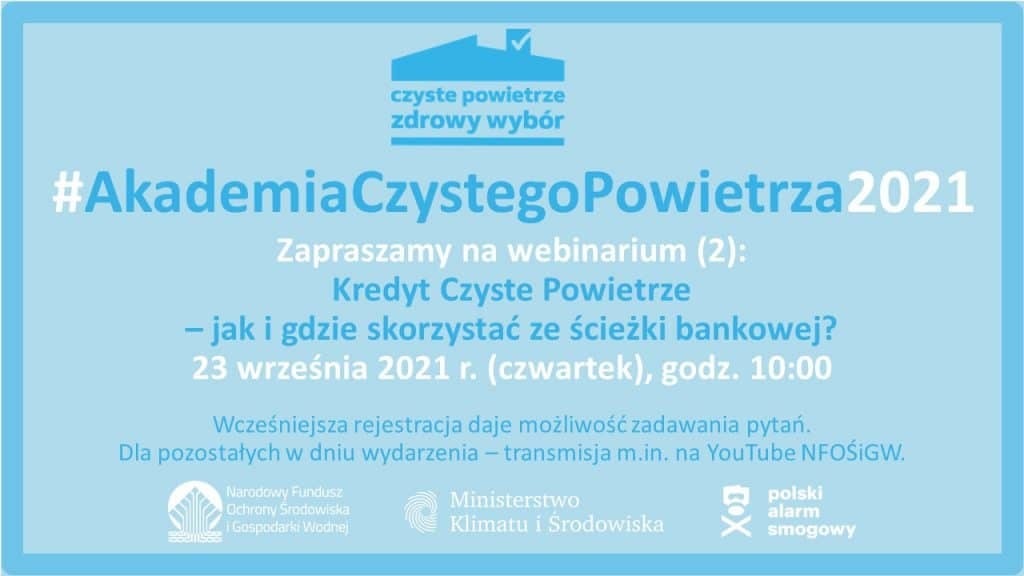
September 23: “The Clean Air Credit – How and where to use the banking pathway”.
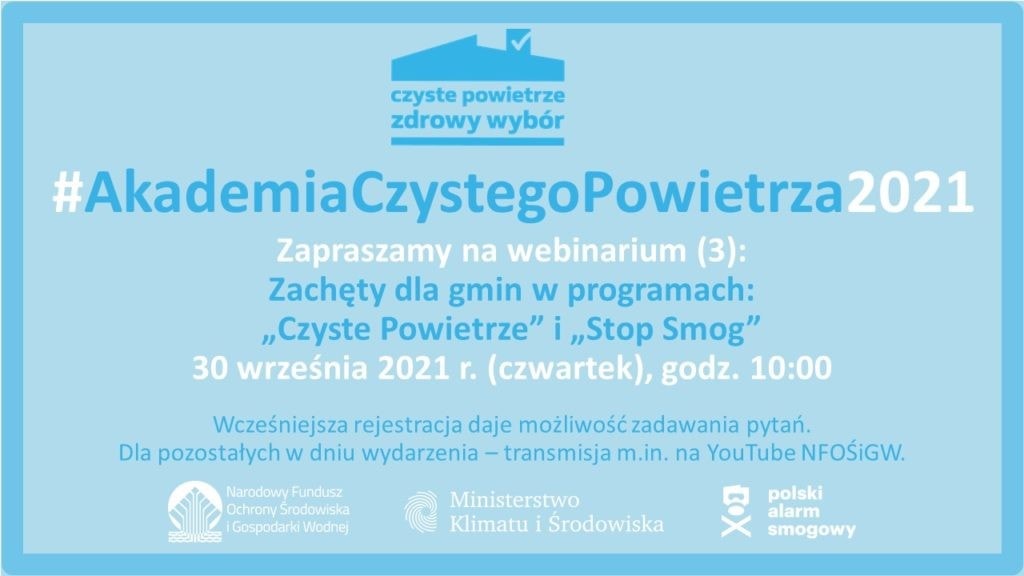
September 30: Incentives for municipalities in programs: “Clean Air” and “Stop Smog”.
F1. Project management
On September 30, an application was submitted for Phase IV of the LIFE Integrated Project “Implementation of the Air Protection Programme for the Małopolska Region – Małopolska in a healthy atmosphere”.
On October 4, 2021 via the Webex platform a training for employees of municipalities from the Małopolska province was held.
The meeting, organized in cooperation with the National Fund for Environmental Protection and Water Management and the Municipality of Skawina, was an opportunity to learn about the changes introduced and facilitations in access to the Stop Smog program, as well as about the experiences of the Skawina Municipality in implementing the program. Over 130 participants took part in the online workshop.
What was the training about?
During the meeting new rules of the Stop Smog program were discussed. This year’s edition of the program, which allows for assistance to people suffering from so-called energy poverty, contains several important simplifications. The most important changes include allowing intercommunal associations and counties to apply to the program in the role of coordinator and allowing grants for installations in buildings owned by the municipality. The period from the conclusion of the agreement to the implementation of the investment has also been extended from 3 to 4 years.
The Skawina commune, one of the first in the Małopolska region to join Stop Smog, also shared its experience in the implementation of the programme. The representatives of the commune discussed step by step the stages of the investment implementation from the selection of beneficiaries to the acceptance of the investment and the documentation.
The #Academy of Clean Air is a series of free webinars for installers, energy advisors and construction companies. The online meetings, which started on 11 May 2020, are a joint initiative of the Ministry of Climate, the National Fund for Environmental Protection and Water Management and the Polish Smog Alarm.
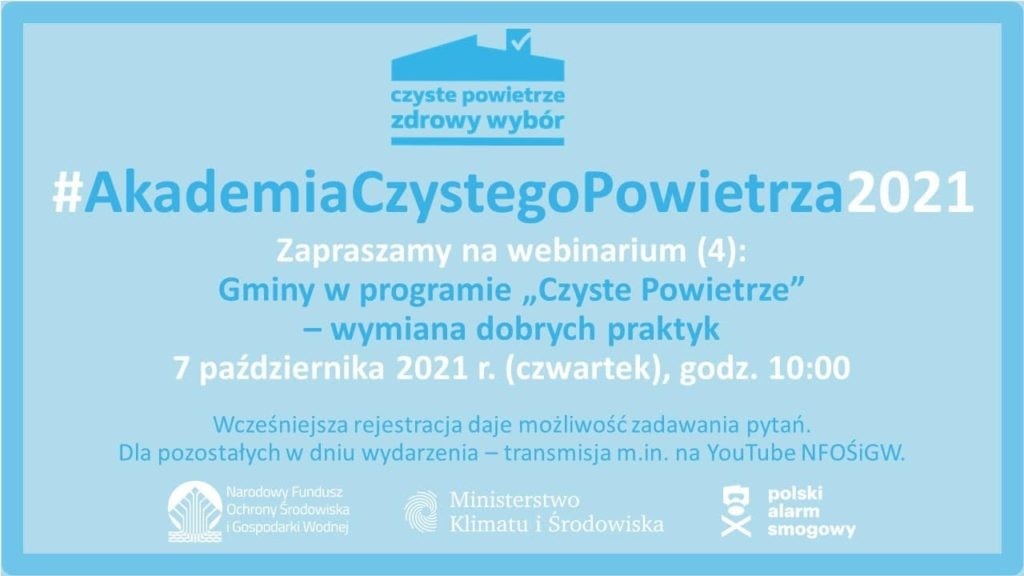
The next webinar is on October 7!
The fourth webinar in the #AcademyCleanAir series will take place on October 7 at 10 a.m.
Municipalities in the “Clean Air” Programme – an exchange of good practices
To participate in the training, please register at: https://app.livestorm.co/transmisjalive/zachety-dla-gmin-w-programach-czyste-powietrze-i-stop-smog (registration gives you the opportunity to ask questions in the chat room). Although the number of places is limited, there will also be a public broadcast of the meeting (without the possibility to ask questions) on the National Fund for Environmental Protection and Water Management’s YouTube channel (youtube.com/user/nfosigw).
The #Academy of Clean Air is a series of free webinars for installers, energy advisors and construction companies. The online meetings, which started on 11 May 2020, are a joint initiative of the Ministry of Climate, the National Fund for Environmental Protection and Water Management and the Polish Smog Alarm.
The next webinar is September 30!
The third webinar in the #Aca
demyCleanAir series will take place on September 30 at 10 a.m.
Incentives for municipalities in the programs: “Clean Air” and “Stop Smog”
To participate in the training, please register at: https://app.livestorm.co/transmisjalive/zachety-dla-gmin-w-programach-czyste-powietrze-i-stop-smog (registration gives you the opportunity to ask questions in the chat room). Although the number of places is limited, there will also be a public broadcast of the meeting (without the possibility to ask questions) on the National Fund for Environmental Protection and Water Management’s YouTube channel (youtube.com/user/nfosigw).
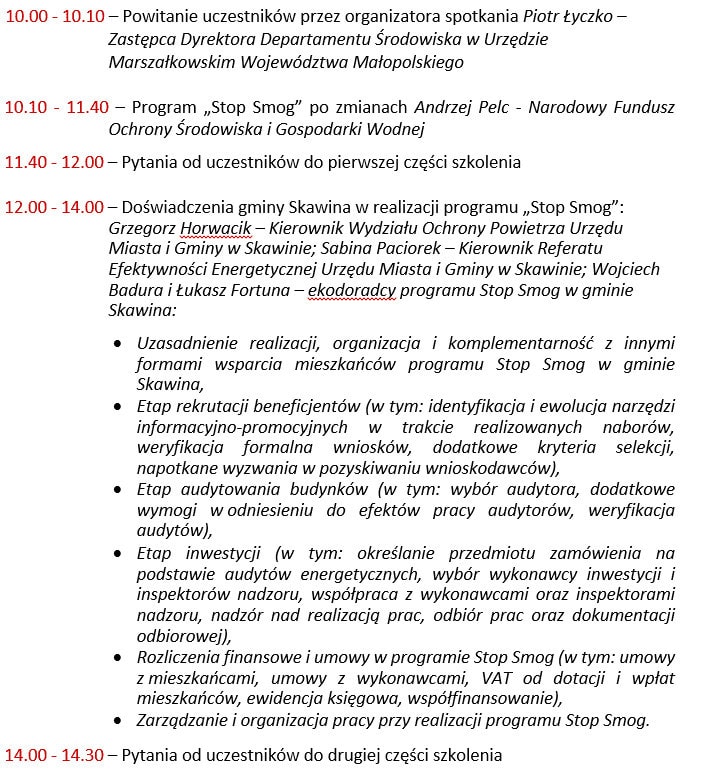
On March 31st this year, the second edition of the “Stop Smog” program was launched. The program concerns low-emission undertakings carried out by communes and addressed to inhabitants suffering from energy poverty. The program makes it possible to subsidize investments in these people up to 70% of the costs of replacement of heating and thermomodernization of the building. The remaining 30% is the commune’s own contribution. As a result, residents of communes can receive a non-refundable grant of up to 100% of the cost of the project. New rules of the program significantly simplified obtaining subsidies and realization of investments.
We kindly invite you to take part in a meeting organized together with NFOŚiGW and Skawina Commune, which will be an opportunity to learn about the changes introduced and facilitations in the access to the Stop Smog program, as well as about the experiences of the Skawina Commune in the implementation of the program.
When?
The online meeting will be held on October 4, from 10 a.m. to 2:30 p.m., via the Webex platform.
How can you sign up?
Applications can be made through the sign-up form available at: https://powietrze.malopolska.pl/stop-smog/
Training Program:
Additional Information:
The contact person for the case is Ms. Klaudia Kowalczyk, e-mail; [email protected], available at: 12 37 96 084.
In the adopted 2020. Air Protection Programme for the Małopolska province, all municipalities in the Małopolska province were required to prepare an analysis of the problem of energy poverty by 30 June 2022. The Board of the Małopolska Voivodeship was obliged to present guidelines for the preparation of a database of people affected by energy poverty in the municipality.
We invite you to participate in a training organized jointly with the National Energy Conservation Agency, which will be an opportunity to familiarize yourself with the developed guidelines.
When?
An online meeting will be held on September 27, 2021, from 10 a.m. to 1:30 p.m.
For Whom?
We invite to participate in the meeting representatives of municipalities, employees of municipal and communal social assistance centers, eco-managers, energy advisors and substantive staff related to the topic of energy poverty.
Training Program:
Hour
Unit
Subject
10.00-10.10
Marshal's Office of the Malopolska Region
Welcoming the participants to the meeting
10.10-10.40
National Energy Conservation Agency S.A.
Discussion of the provisions of the methodology – Where to obtain Where to obtain data to analyse energy poverty and how to collect them? Where to obtain data to help analyze energy poverty in the municipality and how to collect them?
10.40-11.00
National Energy Conservation Agency S.A.
Methodology discussion
11.00-11.30
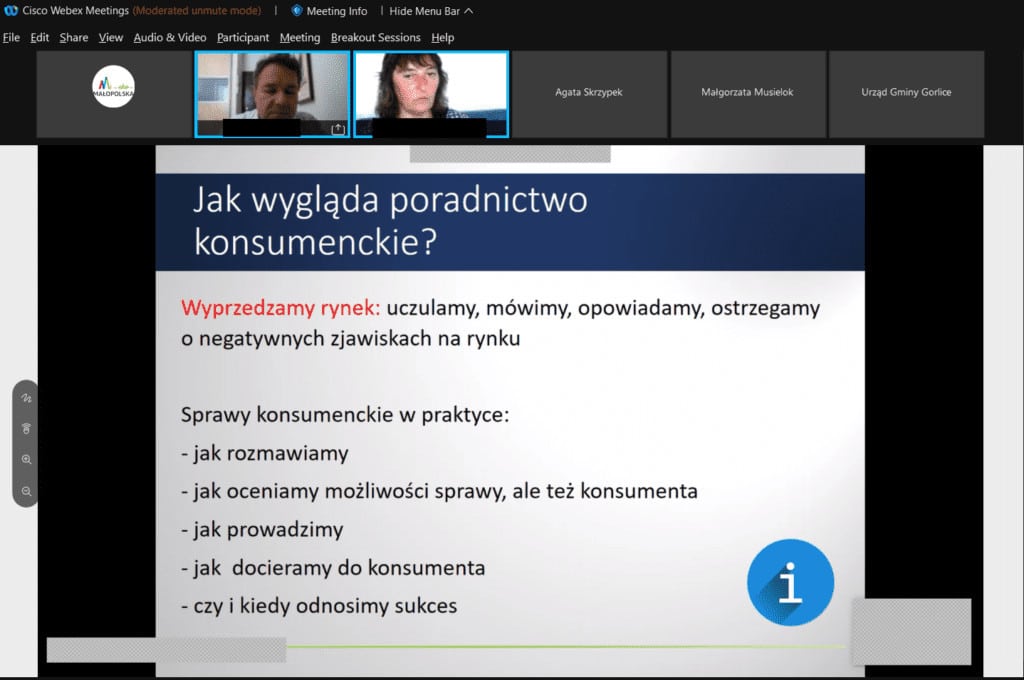
Consumer Federation
How do you talk to people at risk of fuel poverty?
11.30-11.45
Break
11.45-13.00
National Energy Conservation Agency S.A.
Quick assessment of the building condition – simplified energy audit energy audit of the building
13.00-13.30
National Energy Conservation Agency S.A.
Guidelines for estimating the amount of of needed low-carbon projects
Attention!
If you would like to attend the training, please email your request to: Powietrze@adrianna-frankowska
The contact person for the case is Ms. Klaudia Kowalczyk, e-mail; [email protected], available at: 12 37 96 084
The #Academy of Clean Air is a series of free webinars for installers, energy advisors and construction companies. The online meetings, which started on 11 May 2020, are a joint initiative of the Ministry of Climate, the National Fund for Environmental Protection and Water Management and the Polish Smog Alarm.
The next webinar is on September 23!
The second webinar in the #AcademyCleanAir series will take place on September 23 at 10 a.m.
“Clean Air Credit – How and where to use the banking pathway”
To participate in the training, please register at: https://app.livestorm.co/transmisjalive/kredyt-czyste-powietrze-jak-i-gdzie-skorzystac-ze-sciezki-bankowej (registration gives you the opportunity to ask questions in the chat room). Although the number of places is limited, there will also be a public broadcast of the meeting (without the possibility to ask questions) on the National Fund for Environmental Protection and Water Management’s YouTube channel (youtube.com/user/nfosigw).
With a view to local governments who are closest to their residents, the second series of free webinars #Academy of Clean Air2021 was prepared. The guide to the “Clean Air” programme reformed in 2020 is a useful source of information both for employees of communal consultation and information points, eco-managers , as well as applicants interested in subsidies for the replacement of the so-called “fossil fuels” and for home insulation. Thursdays with the program “Clean Air”, starting September 16, invite: Ministry of Climate and Environment, National Fund for Environmental Protection and Water Management and Polish Smog Alarm.
The first, last year’s edition of the Clean Air Academy on the simplified Clean Air Programme, has so far attracted the interest of about 250 thousand people. What is more: the audience of our professional e-guide, still available at the website czystepowietrze.gov.pl, keeps growing. Therefore, together with NFOŚiGW and PAS we decided to continue the trainings during which we want to share our knowledge, good practices and discuss how we can contribute to improving the quality of the air we all breathe.
says Minister of Climate and Environment Michał Kurtyka.
The first cycle of the Academy was addressed to installers, energy advisors and construction companies. This time we want to mobilize local government units to fight against smog through the common implementation of the program “Clean Air” and assisting residents in obtaining grants. That is why at the Academy we will exchange experiences and talk about how to effectively provide information about the need to replace the so called “fossil fuels” and how to efficiently serve the “Clean Air” applicants in communal consultation and information points.
Vice-president of the National Fund for Environmental Protection and Water Management Paweł Mirowski adds.
The role of self-governments in the “Clean Air” programme is extremely important, because only thanks to a well functioning local network of applicants’ service we have a chance to reach in the 2029 perspective even three million households where inefficient heat sources need to be replaced. The introduced incentive system of the National Fund for Environmental Protection and Water Management (reimbursement of part of the beneficiary’s service costs to the local authorities, bonuses for the most active communes), as well as anti-smog resolutions and the obligation to register the heat source in the Central Register of Emissions of Buildings – among other things we will discuss those issues during this year’s Academy.
Andrzej Guła, the leader of the Polish Smog Alarm announces.
The #Academy of Clean Air2021 series will also include other topics that were not discussed in the first edition, including in particular a new banking path, i.e. the Clean Air Loan (grants for partial repayment of bank loan principal) and issues concerning the settlement of an eco-investment included in a payment application. Other activities complementary to the Clean Air Programme will also be discussed, including the “Stop Smog” programme.
Please join us for our first webinar today!
The #Academy of Clean Air2021 will begin on Thursday, September 16 at 10:00 a.m. During the first meeting, experts from the National Fund for Environmental Protection and Water Management will remind the participants of the principles of the Clean Air Programme, including details on the second part of the programme for the less affluent, entitled to an increased level of co-financing. There will also be tips on how to gain knowledge about the program and what helpful tools to use before preparing an application for funding. To participate in the first webinar, please register at: https://app.livestorm.co/transmisjalive/czyste-powietrze (registration gives you the opportunity to ask questions via chat). Although the number of places is limited, there will also be a public transmission of the meeting (without the possibility to ask questions) on the NFOŚiGW channel on YouTube (youtube.com/user/nfosigw). In addition, each webinar – just like the first edition of the Academy – will be available for viewing again on the NFOSiGW YouTube channel within one week. Invitations with the link to register for each subsequent webinar will be published, among others, on the website and social media of the Academy partners.
Newsletter
Cookies
We serve cookies. If you think that's ok, just click "Accept all". You can also choose what kind of cookies you want by clicking "Settings".
Cookie policy