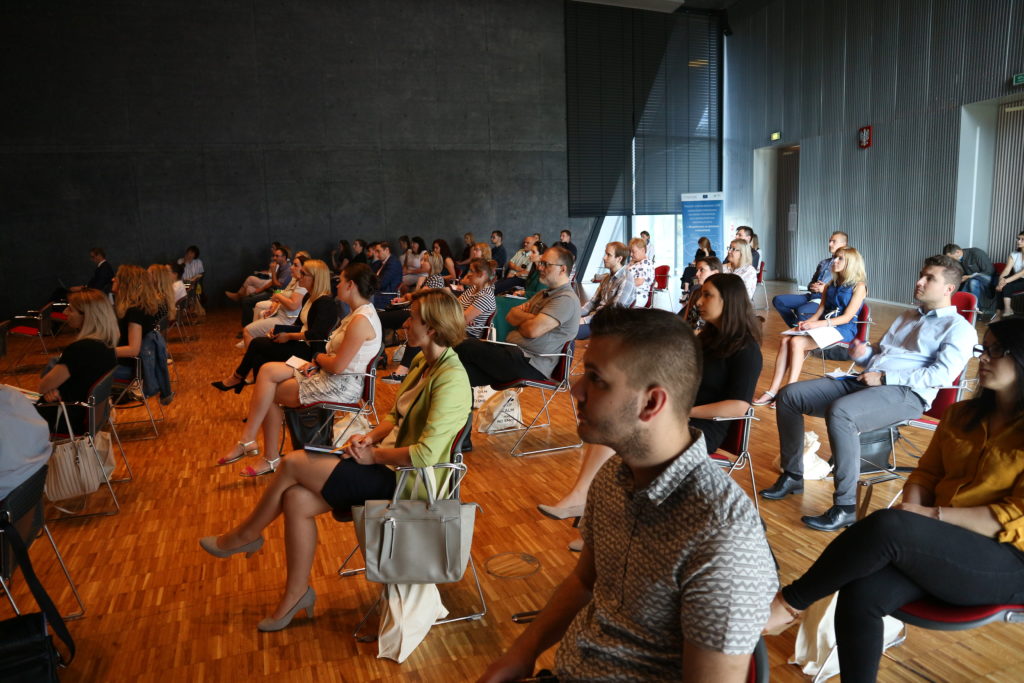
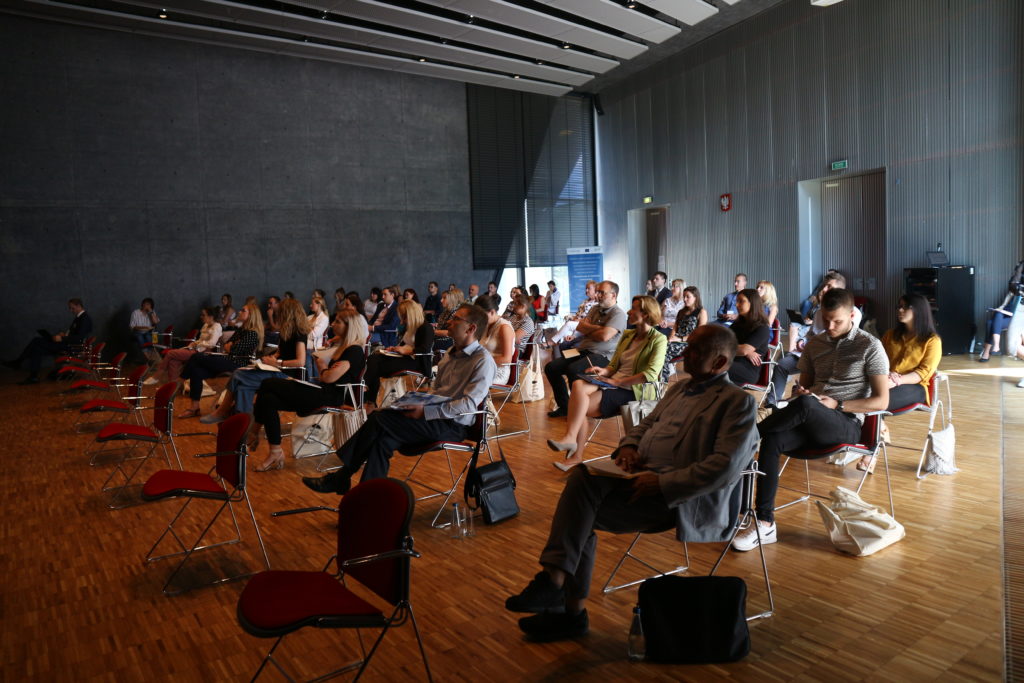
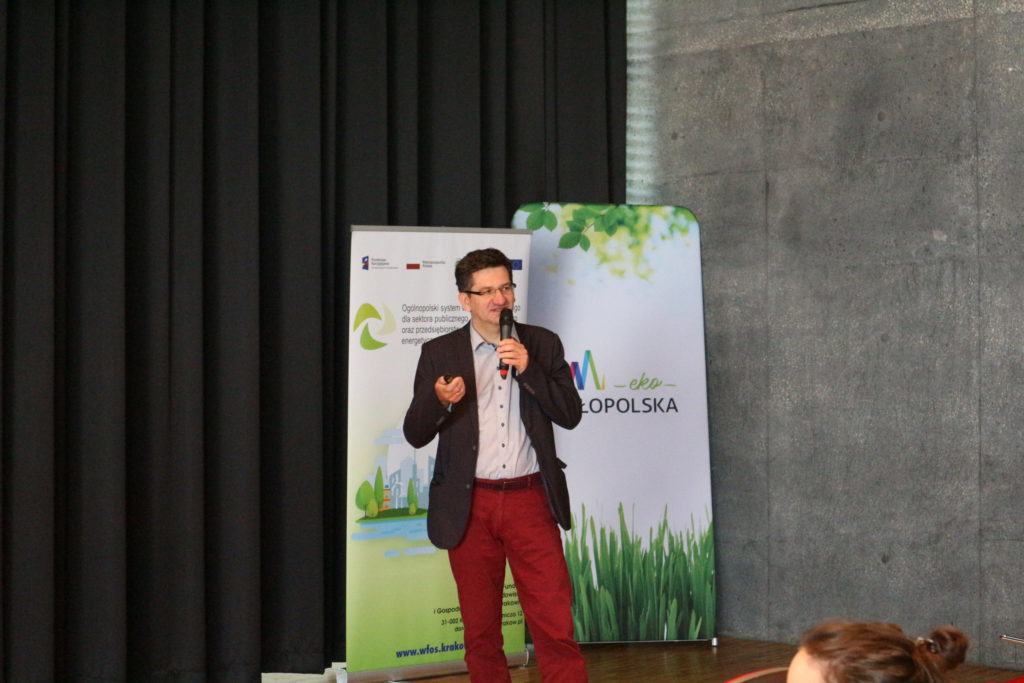
The next step towards the adoption of the Air Quality Plan

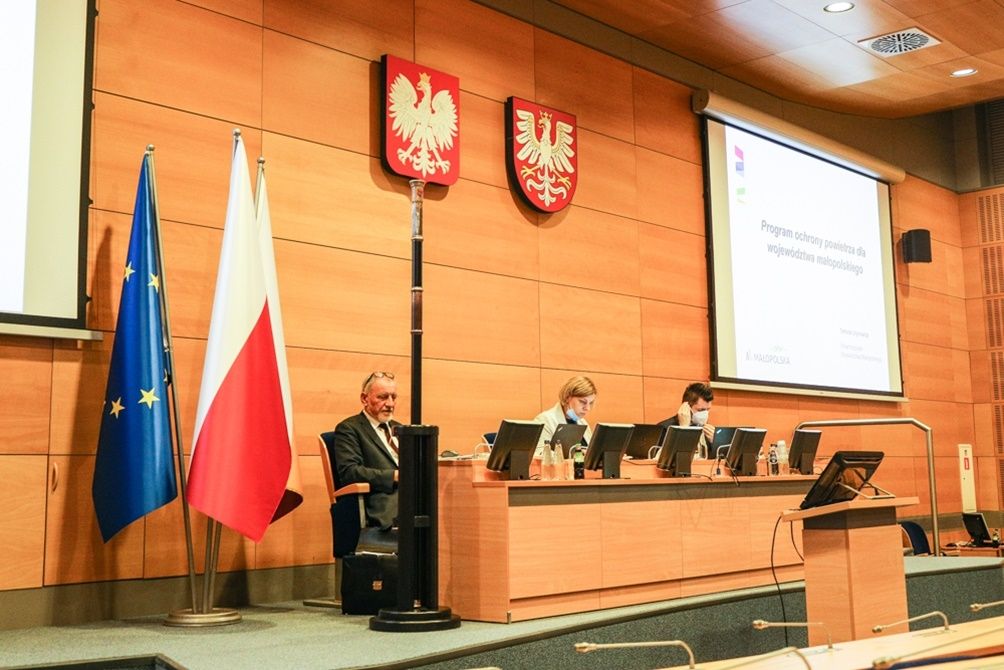
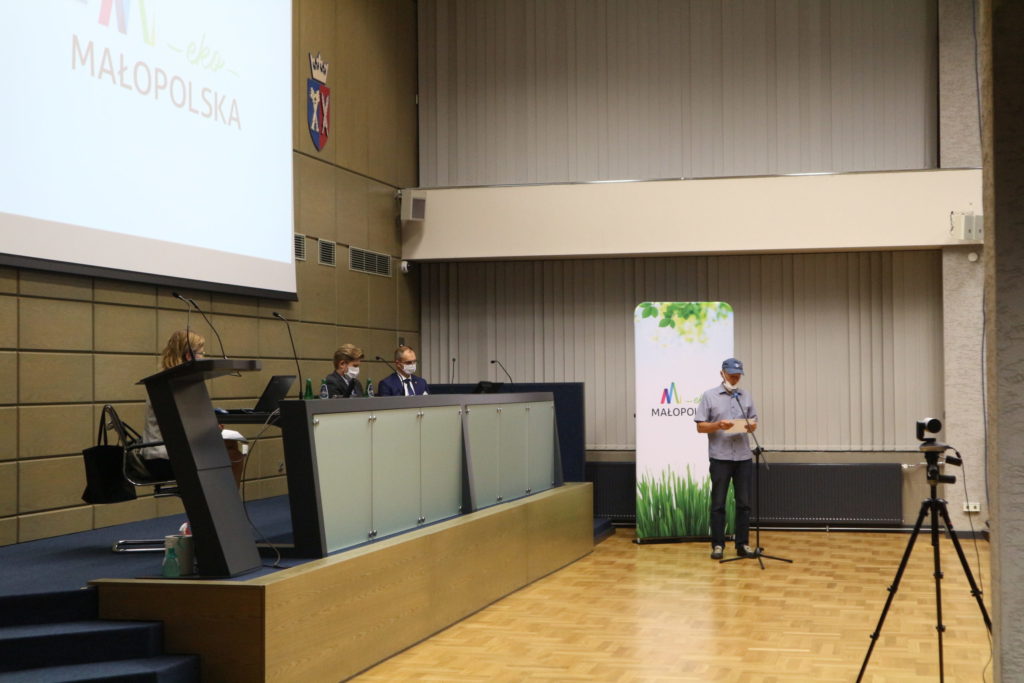
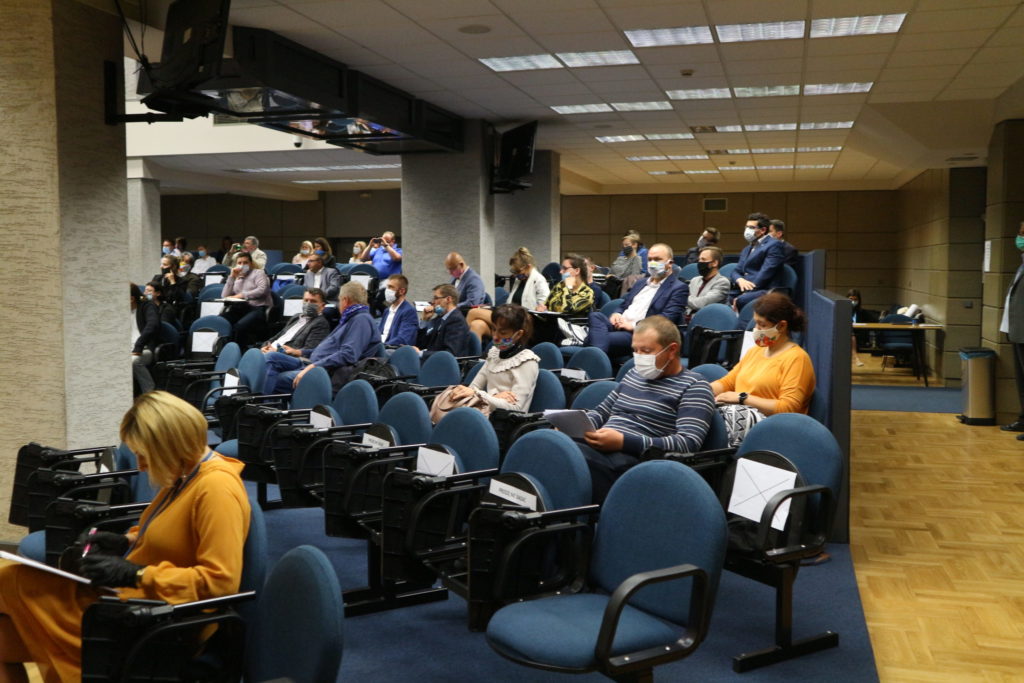
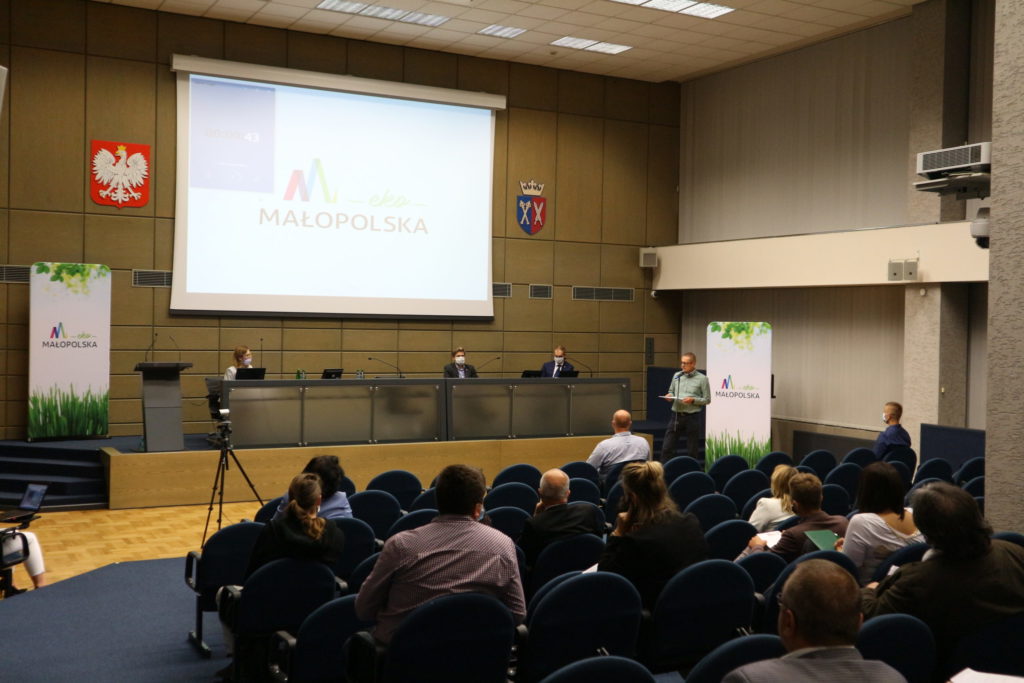
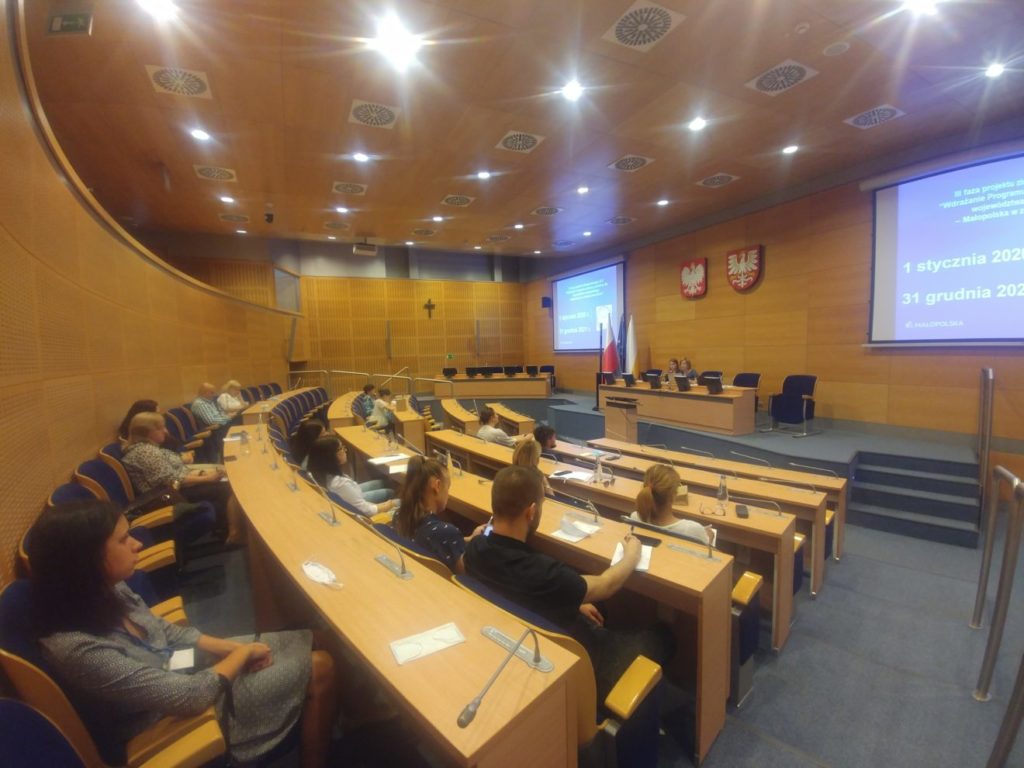
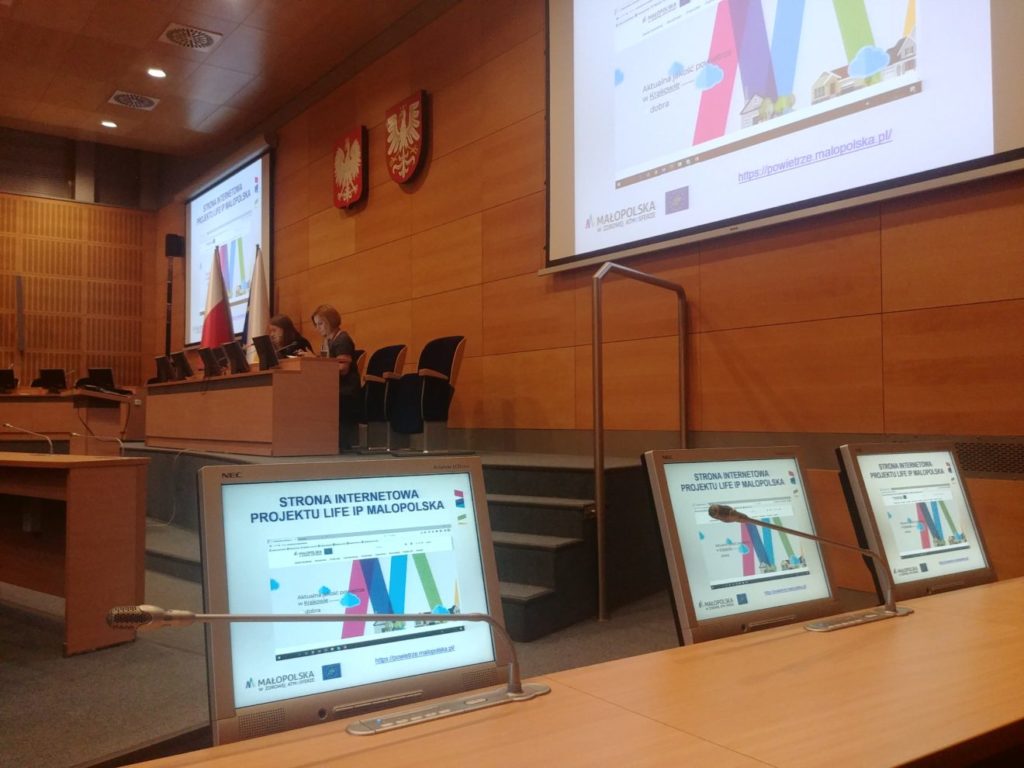
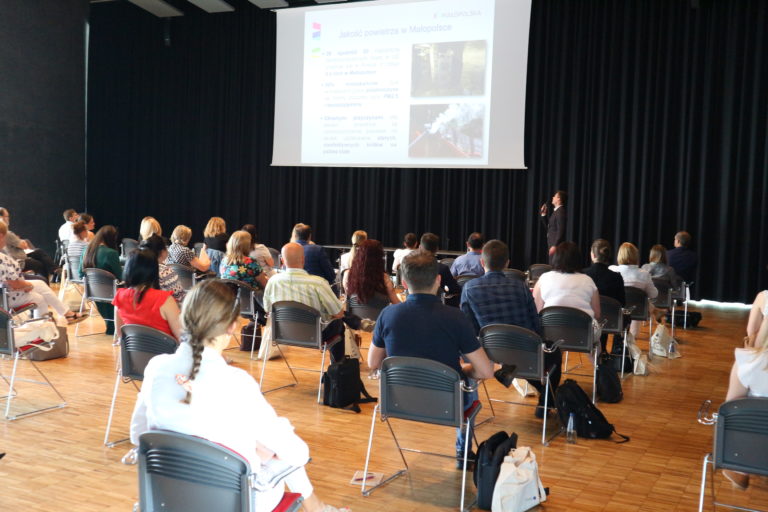
After a break in the session announced on 31st August 2020, the Chairman of the Sejmik of the Małopolska Region, prof. Jan Tadeusz Duda, resumed the remote session of the Sejmik of the Małopolska Region on Wednesday 2nd September XXIV. The first and especially awaited by many residents point of the session was dedicated to the Air Quality Plan for the Małopolska Region – 1 st Reading.

Many councillors, local government officials and experts took part in a few hours’ discussion on the Air Quality Plan. Voices were dominating about the need to introduce the proposed changes, the historical necessity and the obligation to modernise the country, but there were also criticisms. Many times during the session it was pointed out that the obligations resulting from the implementation of the programme cannot affect the contents of the budget and the quality of life of people who are in a worse financial situation.

I would like to thank Marshal Tomasz Urynowicz very warmly. I would also like to thank all the employees who took part in this long marathon to reach the first reading of the Air Quality Plan for the Małopolska Region. I would also like to thank all those who took part in this process outside our office. Not only those who agreed to different solutions. I would also like to thank all those who proposed solutions which did not necessarily comply with the provisions of the programme. Every opinion is valuable. I would like to make a declaration at this point in time on behalf of the Board of the Voivodship that all these comments which have been made during today’s debate will be examined very carefully by the Board. These proposals, which are reasonable proposals, we will try to ensure that they are also included in the programme. In a month’s time, if there is no obstacle, the programme will be presented to the Sejmik for discussion and voting

– said Marshal Witold Kozłowski.

Ambitious and multi-faceted assumptions of the Air Quality Plan for the Małopolska Region, which together with the government’s air quality plans is a system of interconnected vessels, were outlined by Deputy Marshal Tomasz Urynowicz during the Wednesday remote session.

After six months of preparation, we present to you a document entitled “Air Quality Plan for the Małopolska Region” with the awareness of the importance and responsibility for the policy contained in this document

said Deputy Marshal Tomasz Urynowicz.

Małopolska sets the national standard for Air Quality Programmes!

Deputy Marshal Tomasz Urynowicz referred to the speech of Deputy Prime Minister and Development Minister Jadwiga Emilewicz. She made her speech on Monday, during the first part of the session. At that time, the Deputy Prime Minister paid attention to the great importance of the solutions developed so far in Krakow and Małopolska. Małopolska has become a determinant of national air protection standards.

The Deputy Marshal also gave the councillors, participants and viewers the content of a letter from the Ministry of Development transmitted on the Internet. The document noted that the actions taken in Kraków and Małopolska bring positive effects not only in the form of local air quality improvement, but also have an impact on other regions of the country. “Currently, in 13 voivodships, anti-smog resolutions have already been adopted, created on the basis of model resolutions initiated in Krakow and Małopolska. As the Ministry of Development, we also positively evaluate the main directions of activities of the Air Quality Plan for the Małopolska Region. An important element of this Programme is the broad involvement of municipalities in the implementation of the Clean Air Programme. Also support for people affected by energy poverty with the use of the Stop Smog programme” – was emphasised.

In the correspondence from the Ministry of Development it was mentioned that it is important to prioritise the use of renewable energy sources. Especially in the case of public buildings. And also planning an inventory of heating sources for buildings using the Central Building Emissions Register prepared at the national level.

The Air Quality Plan is a formal and legal requirement which must be adopted by regional governments. It is primarily linked to the implementation of EU policies. Most importantly, it is also a document which sets out the most important directions, in a vector nature, indicating intentions. It does not refer to detailed solutions. In our draft, which is different from previous projects, because after all, every three years such an air quality plan is prepared, it probably arouses as much controversy, but why is it special? Well, its framework is enshrined directly in the Environmental Protection Act. The method of preparation, the general boundaries and horizons indicated in the programme are primarily related to the amendment of the Environmental Protection Act

– said Deputy Marshal Tomasz Urynowicz

Air quality in the Małopolska Region requires resolute actions!

In accordance with the Environmental Protection Law, which the Deputy Marshal underlined in his speech. The aim of the Programme is to improve air quality in the shortest possible time. According to the judgment of the Court of Justice of the EU, issued due to the fact that air quality standards in Poland have been exceeded, these actions must be adequate to the level of pollution and are to achieve acceptable levels as soon as possible. In accordance with the amendment of the Environmental Protection Law, the voivodships have time until 30th September 2020 to adopt new air quality plans.

The challenges we face and the air quality in the Małopolska Region requires bold actions

– said Deputy Marshal Tomasz Urynowicz

In 2013-2018, 43.6 thousand boilers and furnaces using solid fuels were eliminated in the Małopolska region. More than half of these furnaces were decommissioned in Krakow only (22.5 thousand).  The improvement of air quality in Kraków and Małopolska is particularly visible in the heating period from October to March. The average concentration of PM10 dust between the winter season 2014-2015 and the last season 2019-2020 dropped by 30% in Małopolska, while in Krakow by as much as 45%.

This is one of the effects and successes of a consequent environmental policy, especially the most courageous direction already taken by other regional governments, which was the implementation of the anti-smog resolution – said Tomasz Urynowicz.

said Tomasz Urynowicz

The most important actions identified in the Air Quality Plan:

There is still a long way to go to the ideal. The amount of harmful substances continues to exceed the permissible levels in all air protection zones. In the opinion of the General Inspector of Environmental Protection for 2018 and 2019, the permissible and target levels of PM10, PM2.5, benzo(a)pyrene and additionally nitrogen dioxide in Krakow were exceeded.

Action 1. proposed in this situation in the Air Quality Plan, as a task for all public institutions, is primarily to provide financing from 1st January 2022 exclusively for installations fuelled by biomass (excluding projects in progress), and also – financing from 1st January 2023 exclusively for installations fuelled by biomass with emissions of particles up to 20 mg/m³. Additionally, preferences should be provided in the form of higher co-financing for heat pumps, photovoltaic panels, solar collectors, heating installations connected to geothermal heat plants and biomass boilers with dust emission up to 20 mg/m³.

What is the purpose of these actions? First and foremost, full implementation of the so-called anti-smog resolutions for Małopolska and Kraków. The second is improving the energy efficiency of buildings so that we do not simply throw this energy into the air. And also increasing the use of renewable energy sources

– said Deputy Marshal Tomasz Urynowicz

The Government’s Clean Air Programme, as the most important, main source of funding for environmental activities in the near future, providing preferential funding for renewable energy sources, also indicates that the funding granted must comply with the provisions of the Air Quality Plan for a particular voivodship. – Therefore, the government programme is adjusted to the requirements proposed in the Air Quality Plan – said the Deputy Marshal.

The Air Quality Plan specifies, i. a. tasks for municipalities:

Firstly, creating and maintaining a service point for the government’s Clean Air Program. The total value of this program is PLN 103 billion. Małopolska could allocate approximately PLN 7 billion for thermo-modernization activities, including replacement of furnaces

said Deputy Marshal Tomasz Urynowicz.

An Ecomanager in every municipality!

Another requirement is to employ an eco-manager. The Deputy Marshal reminded us that the eco-managers are financed under the LIFE programme, which has been acquired by the Malopolska Region. – Another LIFE programme, this climatic one, also allows for the employment of an eco-manager in poviats – he added.

The benefits are visible. Those municipalities where the eco-manager is employed have so far replaced many more furnaces than others. Between 2016 and 2019, the municipalities have replaced as many as 32,289 boilers in the LIFE programme (55 municipalities), while the remaining ones (127) have replaced 16,165 old high-emission devices.

The Air Quality Plan also assumes that the commune will carry out at least once a year an information campaign on the requirements of the Anti-smoke Resolution and the forms of co-financing available from public funds for the replacement of furnaces. It also provides for an inventory of heat sources and renewable energy installations by the end of June 2022 (at least 90%). This is also related to the planned actions of the government within the Central Building Emissions Register.

System and intervention controls!

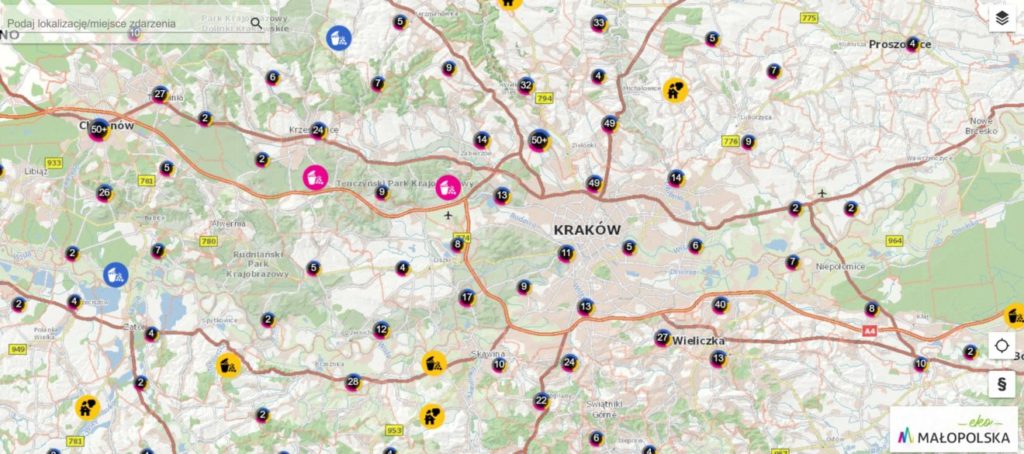
This programme provides for intervention and system checks on compliance with air protection regulations. An example of this is Eco-intervention, an innovative solution implemented a year ago in Małopolska. – An easy, simple, intuitive system, which allows each of us to report environmental damage using a smartphone. We want this scheme of intervention and system controls to become a certain standard. It is already a formal and legal requirement under the Environmental Protection Act, but this provision has, unfortunately, the problem that it is difficult to implement it, although it is an obligation. It is the duty of local authorities to carry out these controls – added the Deputy Marshal.

There have been 2178 requests for intervention since March 2020. As many as 699 of them were not answered by the competent authority (mainly the municipality). – This needs to be corrected,’ noted the Deputy Marshal.

This programme involves the carrying out of scheduled inspections by the municipal or inter-municipal guards, authorised staff or in cooperation with the police, in respect of compliance with air protection regulations. The number of buildings inspected depends on the number of inhabitants of a given municipality. – Therefore, it is not a challenge beyond measure. It is a challenge adequate to the real size of a given commune – said the Deputy Marshal.

The municipalities should prepare an internal procedure for the inspecting of furnaces in order to comply with the anti-smog resolution and the ban on burning waste by 30 September 2021.

One of the key assumptions of the programme is also to support the inhabitants of the municipality affected by energy poverty. – The government’s Stop Smog programme helps to achieve this. To make this happen, an inventory of the programme must be carried out. We need to have information from the municipalities on how many inhabitants can be covered by this type of aid,‘ –  noted Deputy Marshal Tomasz Urynowicz.

It is recommended for municipalities to allocate at least 1% of their own income from 2021. They will be allocated to activities related to air protection.  Also the use of electricity from renewable energy sources in public buildings (the target is 100%).

Tasks for poviats:

The programme also includes, proposed tasks for poviats. Including information on current air quality on the official website of the poviat until 31st October 2020, as well as links to the Eco-intervention application and the Clean Air Programme.

In addition: employment until 30th June 2021 and maintaining the position of Climate Eco-manager, as well as conducting information campaigns on the requirements of anti-smog resolutions as part of issuing building permits and accepting building applications. It was also recommended to allocate at least 0.5% of own revenues to activities related to air protection from the poviat’s budget from 2021.

An important element are also actions to reduce emissions from transport. One of the goals is to achieve the level of permissible nitrogen dioxide in Krakow. Eliminating vehicles that do not comply with exhaust emission regulations from traffic. And also to promote sustainable forms of transport: public transport, bicycles and pedestrian traffic.

An important element are also actions to reduce emissions from transport. One of the goals is to achieve the level of permissible nitrogen dioxide in Krakow. Eliminating vehicles that do not comply with exhaust emission regulations . And also to promote sustainable forms of transport: public transport, bicycles and pedestrian traffic.

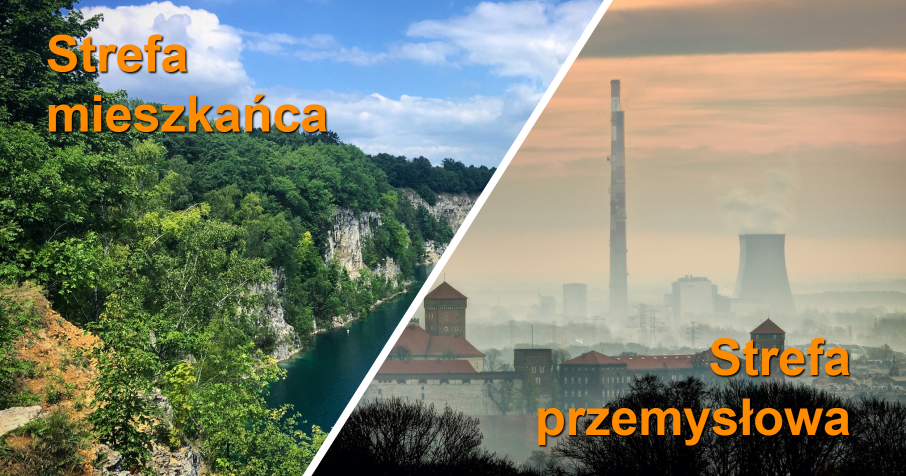
The Air Quality Plan also aims to reduce harmful emissions from industry. This is to be achieved, among other things, through regular checks on economic activity: planned and interventional. It is important to have universal access to information – providing information about industrial accidents resulting in the emission of pollutants, informing about issued decisions and permits for the emission of pollutants for plants located in a municipality. It was also proposed to create a platform for collecting data on industrial emissions with public access.

All these activities have a specific reason and purpose. According to scientific estimates, air pollution is responsible:

  • 43% of deaths due to respiratory diseases,
  • 29% of lung cancer deaths,
  • 25% of deaths due to cardiovascular diseases,
  • 24% of deaths from strokes…

The air pollution and COVID-19!

As Deputy Marshal Tomasz Urynowicz mentioned, the results of analyses carried out by Harvard University scientists have shown that even a small increase in exposure to air pollution leads to a significant increase in the risk of death from COVID-19 disease. 285/5000

The analysis of the Małopolska Regional Development Observatory shows that diseases resulting from air pollution cause Małopolska residents to lose over 2 million working days a year. And the average cost of lost working days related to gross salary is PLN 400 million per year.

Poor air quality can also discourage tourists from visiting the region in winter. Representatives of the tourist industry fear that without a solution to the problem of poor air quality they may lose more and more clients. The reason for this is the growing awareness and expectations in this regard. It is estimated that the external costs resulting from the current level of pollutant emissions may reach PLN 6.7 billion on a voivodship scale. On the other hand, savings resulting from the implementation of the Program – reduction of emissions – may amount to PLN 1.6 billion annually.

Deputy Marshal Urynowicz also pointed out, i. a. the important role of the renewable energy sector in the current and future structure of the labour market. This is what the national forecast of professions, of particular importance for the development of the country, carried out by the Ministry of National Education, provides. In the Małopolskie Voivodship, the forecast contains a list of 74 important professions. They include e.g. the demand for technicians of renewable energy equipment and systems.

European Green Deal!

The European Green Deal, and especially the so-called ‘renovation wave’ of public and private buildings, is one of the main objectives of the European plan to decarbonise the economy and achieve climate neutrality. Construction is responsible for 36% of total greenhouse gas emissions in Europe and 40% of energy consumption. It is estimated that for every EUR 1 million invested in the renovation of buildings in EU Member States, between 13 and 28 jobs will be created (18 jobs on average). For Poland, some analyses indicate that this figure may be as high as 42 new jobs.
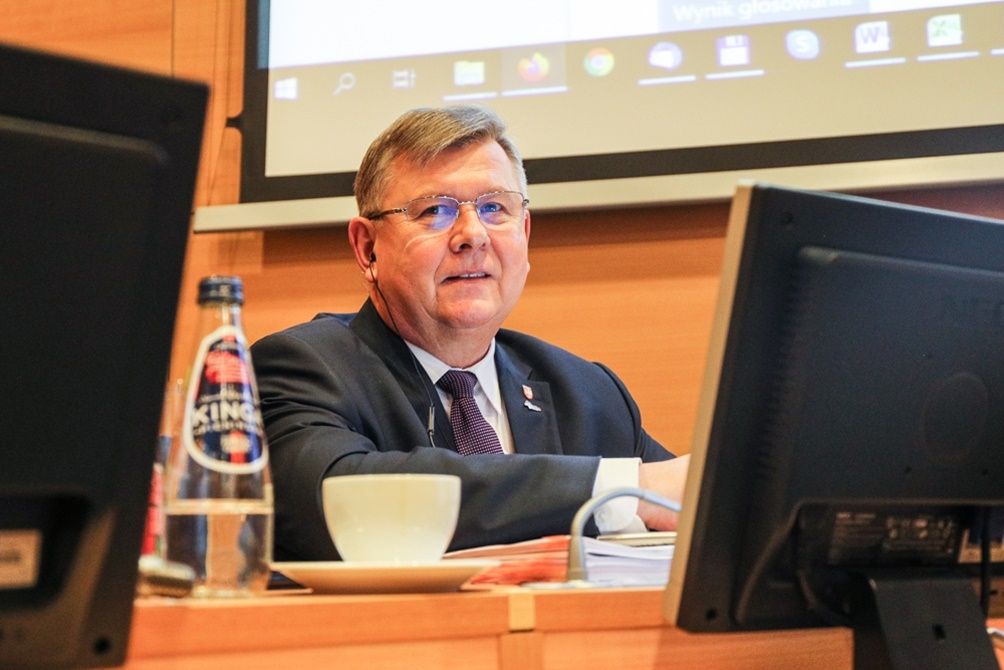
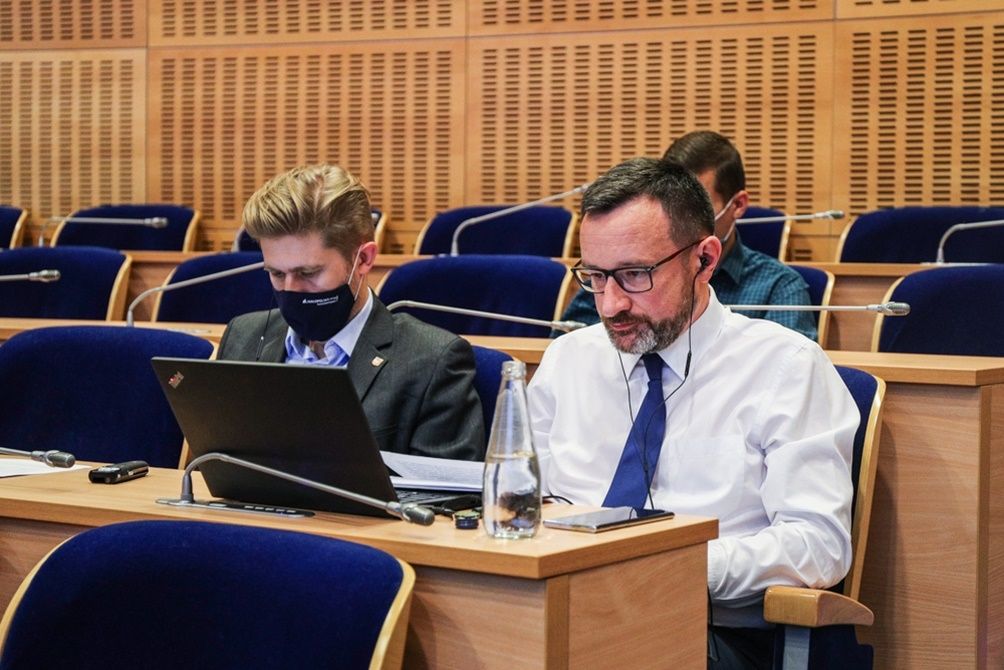
Photo gallery:

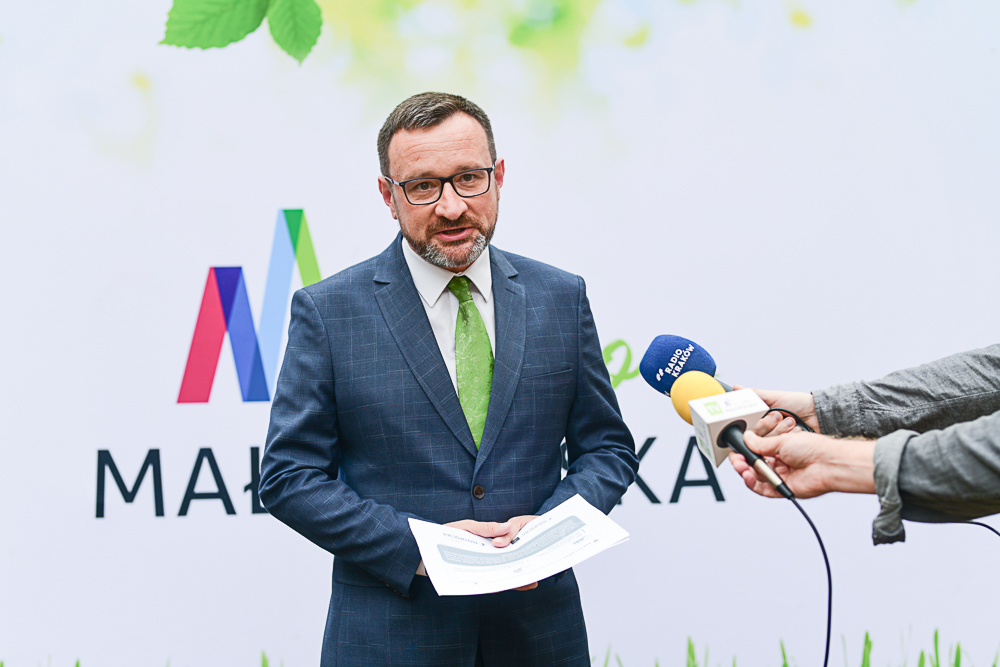
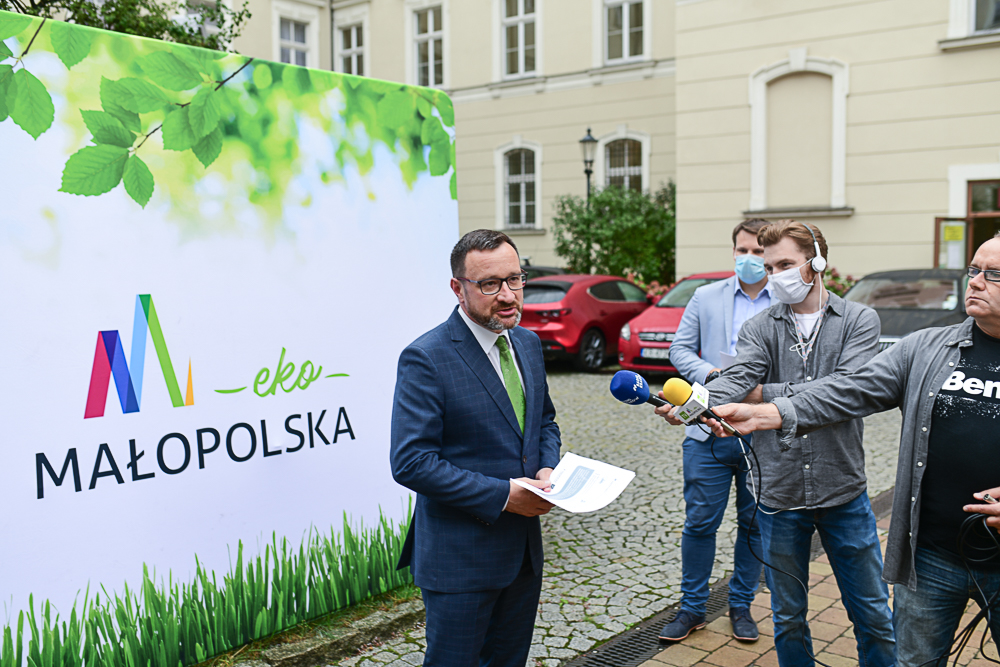
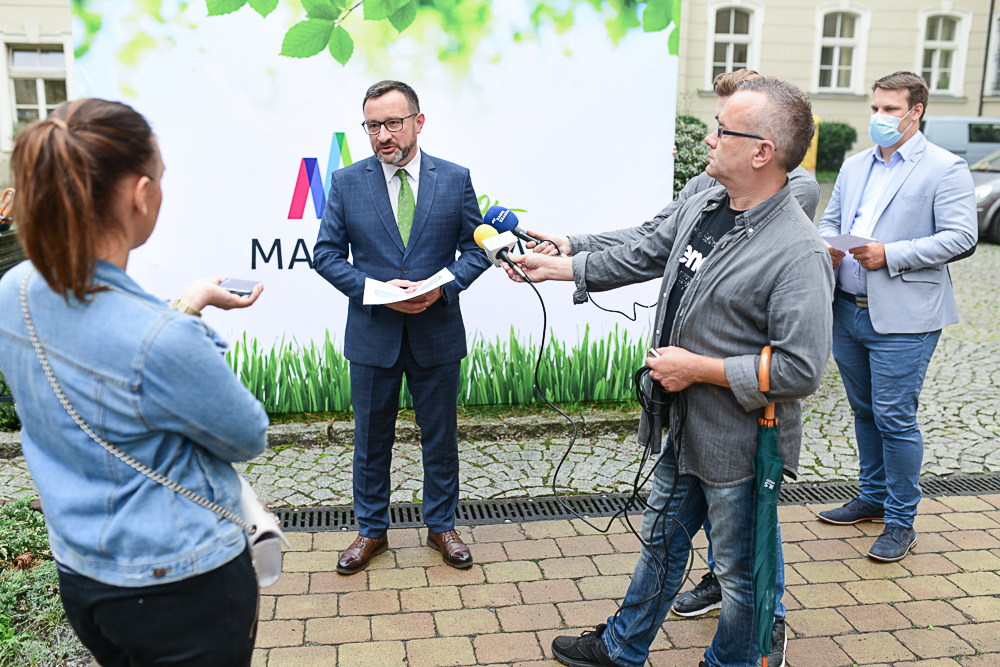
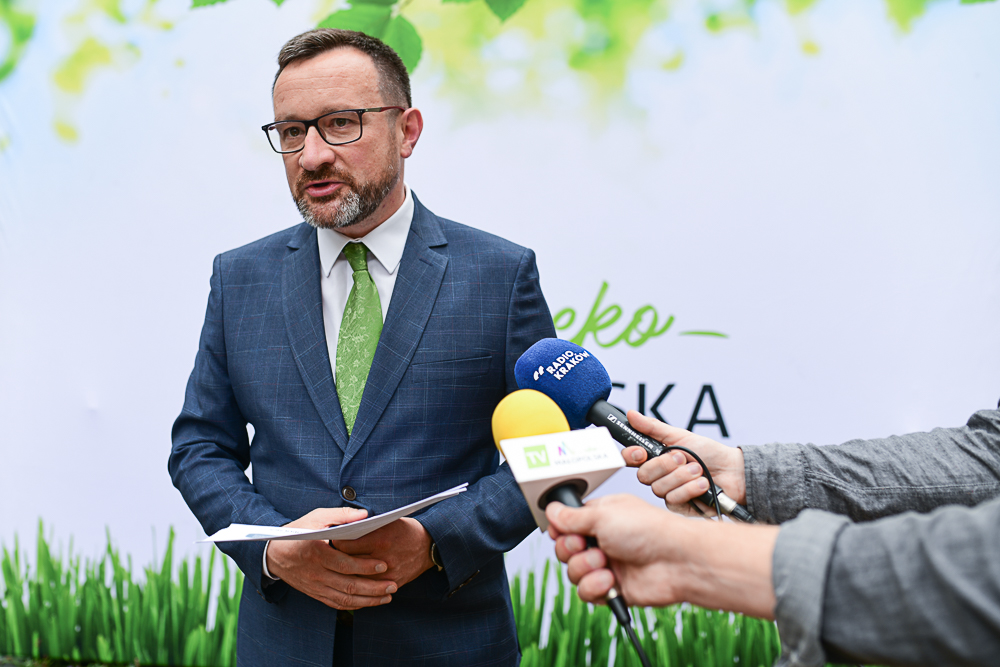
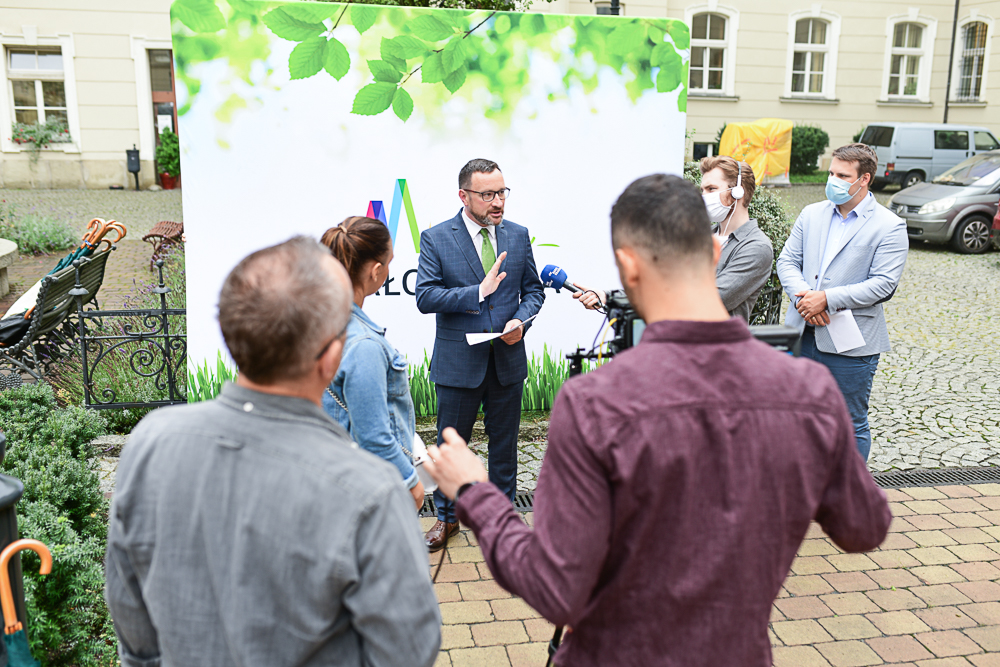
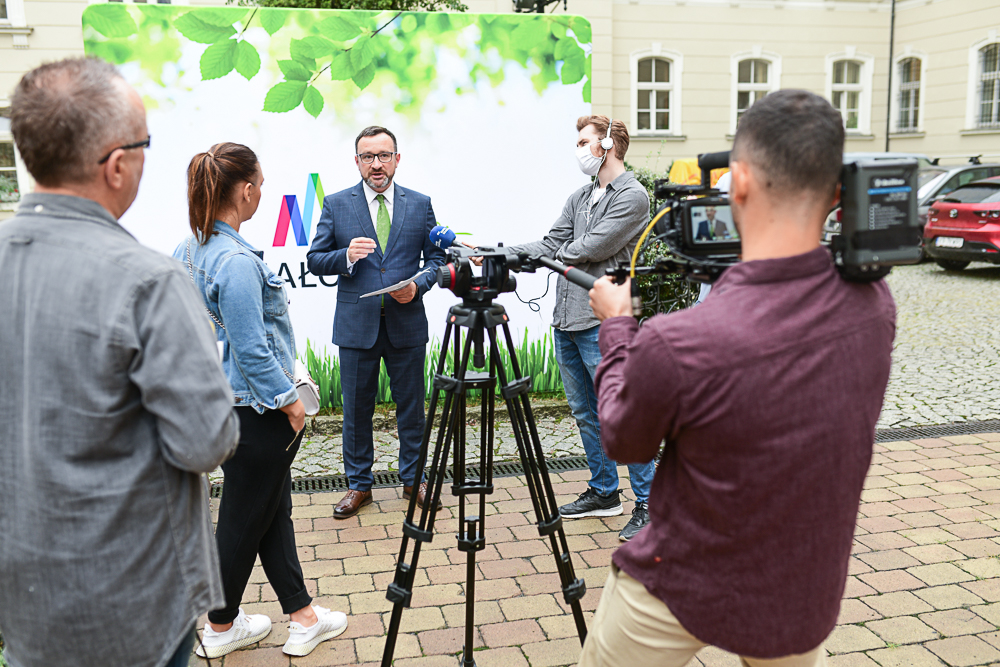
The main goals and the most important activities defined in the Air Quality Plan for the Małopolska Region these are the main issues presented by Deputy Marshal Tomasz Urynowicz during the press conference on Tuesday, 1st September this year.

The main objective of the Program is to improve air quality in the Małopolska Voivodeship. The program – as Deputy Marshal Tomasz Urynowicz pointed out – also serves the implementation of government instruments, such as the Clean Air program, and the full implementation of anti-smog resolutions for Kraków and Małopolska.

The Air Quality Plan requires greater efforts on the part of local authorities to help residents to take advantage of subsidies for the replacement of heating sources, thermal modernisation of buildings and the use of renewable energy sources. Municipalities should also be prepared to help people affected by energy poverty using the Stop Smog programme. Małopolska is aiming at low-carbon transformation, which is also connected with preferences for the use of renewable energy sources,
– noted Deputy Marshal Tomasz Urynowicz.

Jadwiga Emilewicz, the Deputy Prime Minister and Minister for Development, had spoken the day before about the fact that Małopolska sets a nationwide standard for Air Quality Plans.

Not only in Kraków, but throughout Małopolska, the discussion about air quality is no longer a discussion about “whether to deal with it”, but “how to deal with it”, how to carry out this transformation effectively and in a socially acceptable way.

said Jadwiga Emilewicz

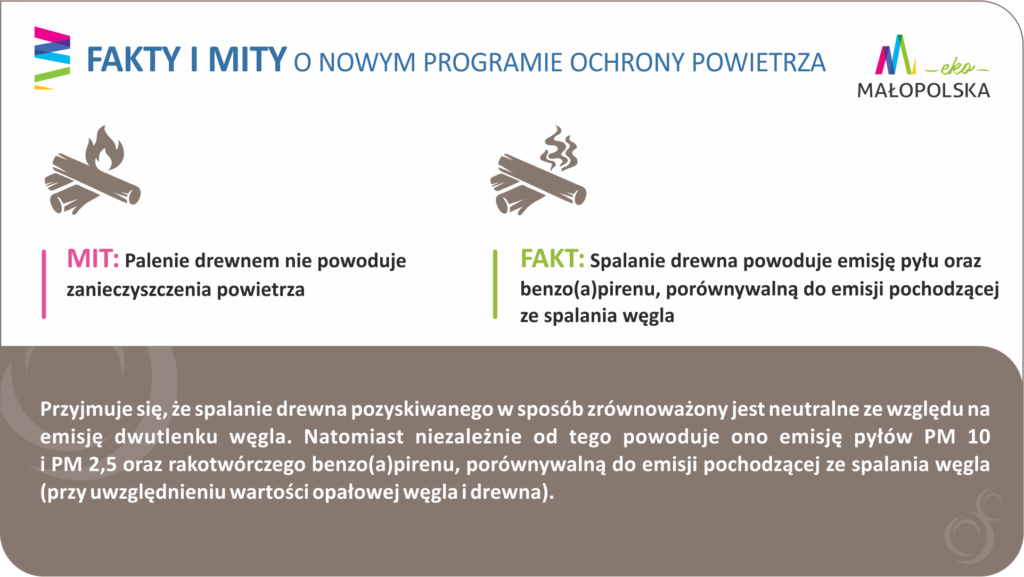
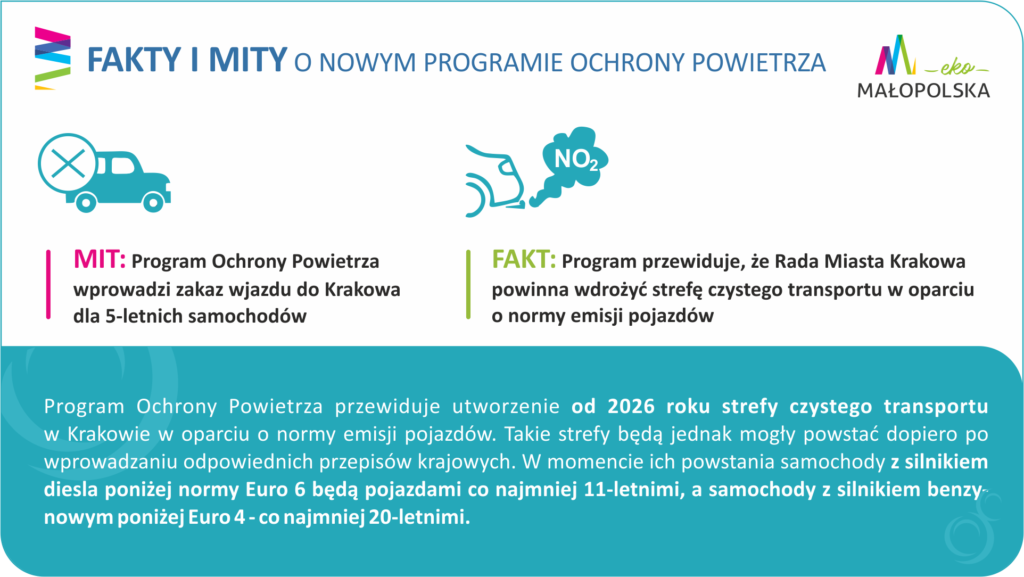
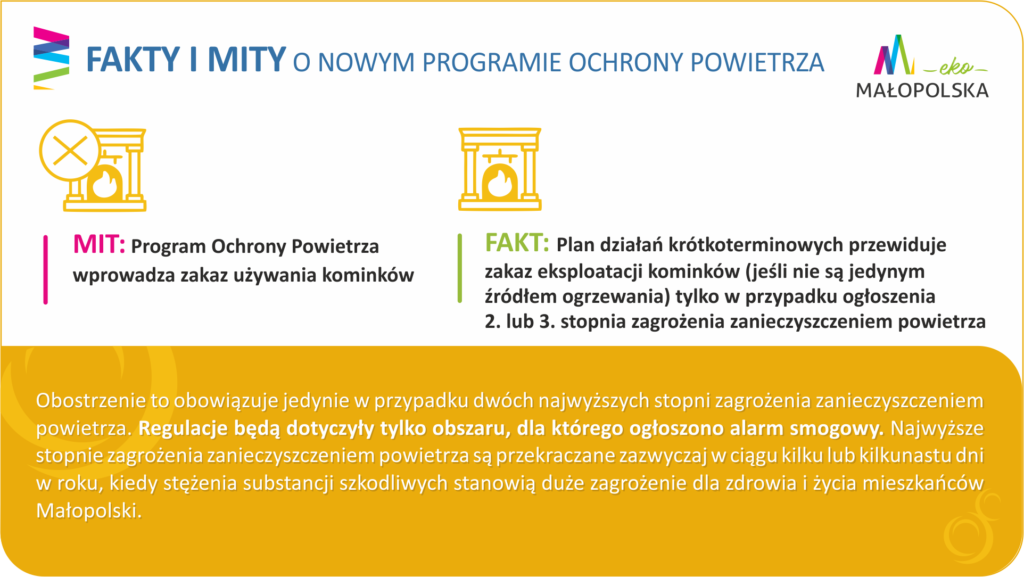
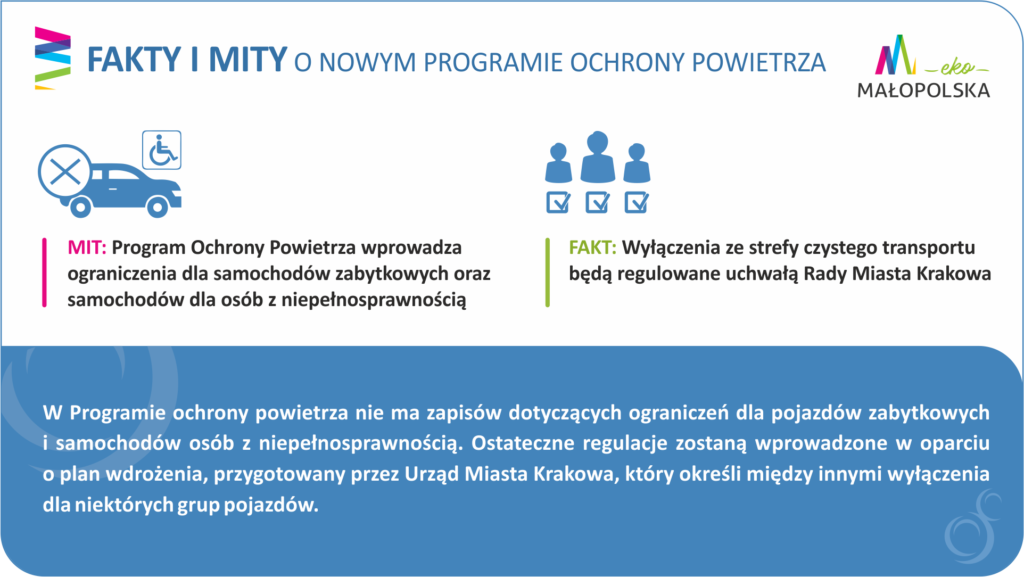
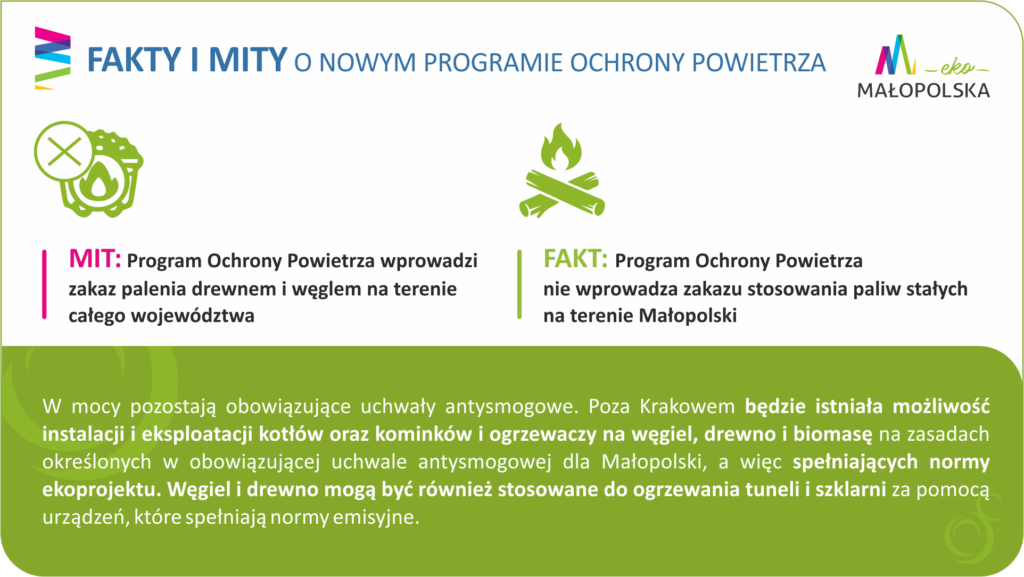
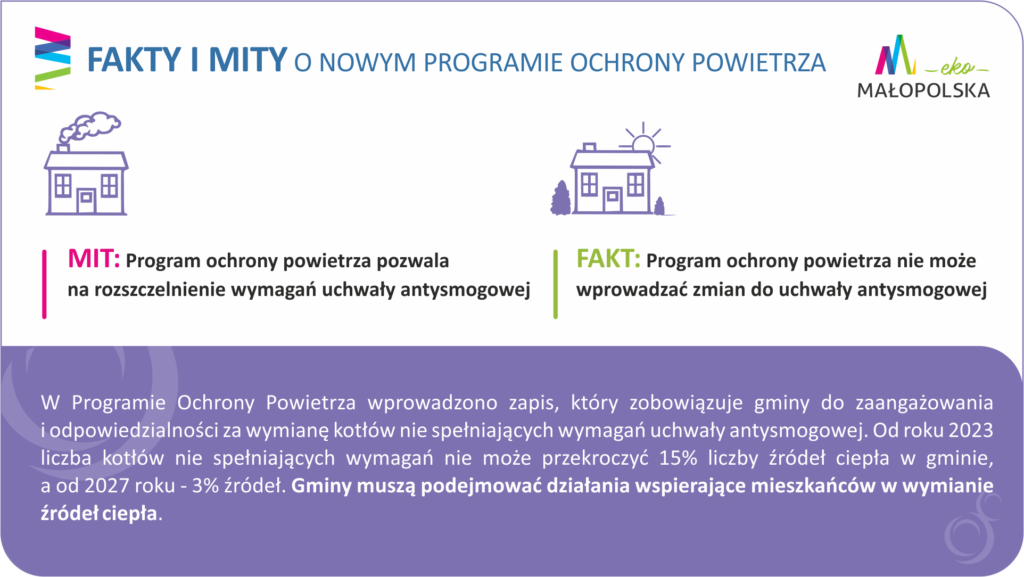
Facts and myths about the new Air Quality Plan for the Małopolska Region:

The most important actions identified in the Air Quality Plan are the following:

  • Promoting the use of renewable energy sources by providing higher funding for RES and the use of “green energy” in public buildings,
  • Accelerating the implementation of the anti-smog resolution for Małopolska, i.e. replacing old furnaces and boilers,
  • Support for the implementation of the Clean Air Priority Program by establishing Service Points for this program in all municipalities of Małopolska,
  • Support for people affected by so-called energy poverty in meeting the obligations arising from the anti-smog resolution,
  • Preparation of an inventory of all heating sources in municipalities, which will allow for effective implementation of the air protection strategy and support for areas requiring the most intensive activities,
  • Ensuring the implementation of the strategy for climate protection at local and regional level by creating an eco-manager position in all municipalities of Małopolska and climate eco-manager position in all districts,
  • Information campaigns about the requirements of the antismog resolution and available subsidies in all municipalities at least once a year,
  • Controls of waste incineration and compliance with the antismog resolution in municipalities – implementation of planned controls and reactions to notifications under the Eco-intervention application,
  • The promotion of sustainable forms of transport: cycling and walking,
  • Introduction of a clean transport zone in Krakow after the entry into force of national regulations, in accordance with a detailed implementation plan prepared by the President of Krakow,
  • Increasing the public’s access to information on industrial emissions and failures in enterprises and inspections of economic activities in terms of their impact on air quality.

Short-term action plan

Short-term measures are implemented in situations where successive levels of air quality standards are exceeded: the risk of exceeding the alert level (level 3), information on pollution (level 2) or acceptable air pollution (level 1). These activities are addressed to local governments, businesses and residents:

  • 1 degree – if the average of the last 12 hours for PM10 concentrations exceeds 80 µg/m3,
  • 2nd stage – when there is a risk of exceeding the information level (100 µg/m3 of PM10),
  • 3rd degree – when there is a risk of exceeding the alarm level (150 µg/m3 of PM10).

The most important actions during significant air quality exceedances:

1st degree:

  • Inspections of furnaces and boilers for waste incineration

2nd degree:

  • Inspections of furnaces and boilers for waste incineration
  • Lack of activity of children and young people outside
  • Restriction of leaf blowers
  • Prohibition of fireplaces and local coal and wood space heaters (popular “goat stove “) – when they are not the only source of heating

3rd degree:

  • Inspections of furnaces and boilers for waste incineration
  • Reducing the activity of children and young people outside
  • Restriction of leaf blowers
  • Prohibition of fireplaces and local coal and wood space heaters (popular “goat stove”) – when they are not the only source of heating
  • Prohibition of construction work related to dust emissions
  • Reduction of emissions from industry (introduction of measures to reduce emissions, which are set out in the emissions permit)

What does POP (Air Quality Plan) mean for a residents?

The introduction of the Air Quality Plan will improve the quality of life of residents by reducing the level of pollution in the air. The programme will impose on them obligations to inform the municipality about their heat and electricity source and the need to adapt heating devices (powered by wood and coal) to the requirements of the antismog resolution. 

They will also gain measurable benefits:

  • Professional advice on furnace replacement provided by the eco-manager employed in each municipality
  • Easier access to subsidy programmes – Clean Air Programme customer service point in each municipality
  • Current access to information on air quality – information available on the websites of municipalities and cities
  • Common access to environmental education through the activities of eco-managers
  • Access to information on pollution from industrial sites
  • Support for people affected by energy poverty, for example, by creating subsidy schemes for heating costs.

Photo gallery:

  • The transitional period for those selling and using heating fuels for heating purposes shall end on 31st August 2020.
  • Sellers and purchasers are obliged to submit the simplified registration declaration AKC-RU in order to obtain the status of an intermediary oil entity (for sellers) or oil consuming entity (for purchasers).
  • The registration obligation also covers natural persons and entities not conducting business activity, e.g. municipalities.

From 1st September this year it will be impossible to buy or sell heating oil for heating purposes without registration with the tax office.

From the end of August, time is running out to send the AKC-RU simplified registration application (paper or electronic). This results from the amendment of 19 July 2019 to the Act on the system of monitoring road and rail transport of goods and certain other acts (Journal of Laws, item 1556). It introduced changes in the trade in heating fuels already from 1st September 2019, but for a year during a transitional period (i.e. until the end of August 2020), heating oil can still be traded without registration.

The new obligation will apply not only to sellers, but also to consumers. These can be either individuals or non-businesses, such as municipalities, hospitals. The purpose of this is to tighten up the tax system for the marketing of heating oil and to include it in the monitoring system.- explains Maria Rutka, Director of the Excise Duty Department at the Ministry of Finance.

If sellers and buyers do not register by the end of August, they will not be able to sell or buy heating oil from 1st September.

What is the risk of missing registration in time?

Unregistered persons will not be able to sell or purchase heating oil for heating purposes. The intermediary oil operator is a trader authorised to sell heating oil. However, the consuming oil entity is the entity that consumes the purchased heating oil for heating purposes in its furnace (heating device).

How can this be done?

You must submit the AKC-RU simplified registration application form. The form is specified in the annex to the Regulation of 21 August 2019 on the model of documents related to simplified registration in the field of excise duty (Journal of Laws, item 1578).

This can be done in two ways: electronically, i.e. without leaving home. Filling in the paper application and submitting it personally to the tax office or by post. The AKC-RU form is available in every tax office.

On the Puesc.gov.pl website, in the “Fuels for heating” tab, instructions for electronic registration are available. You can also find detailed information about changes in the rules for the sale and purchase of heating oil for heating purposes after 1st September 2020.

Where can I find information?

Information on changes and registration is available on puesc.gov.pl under “Fuels for heating”.

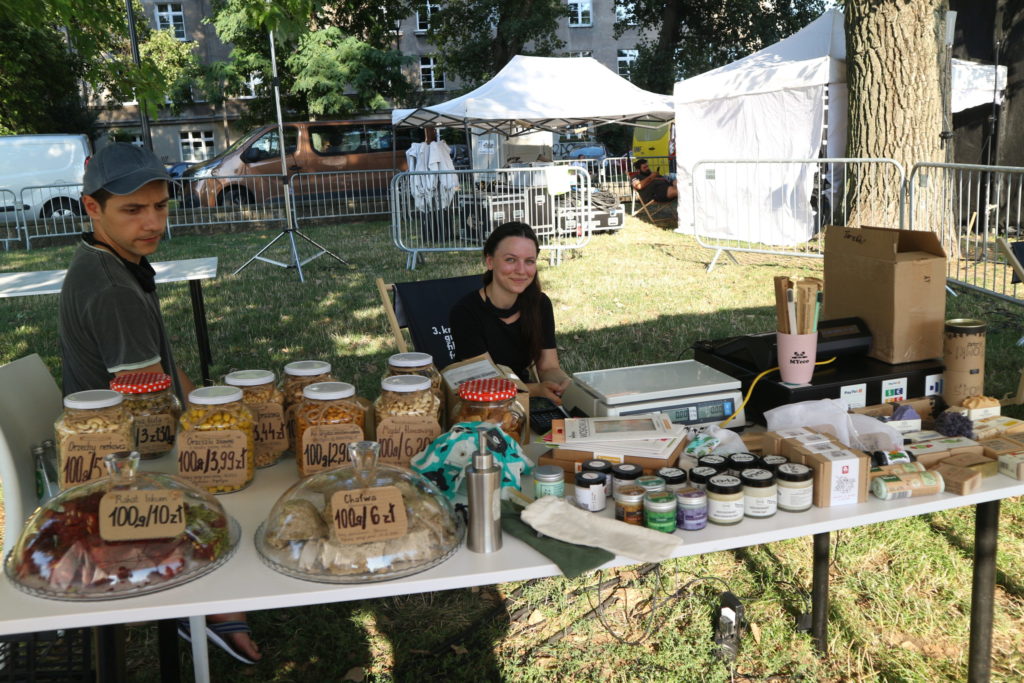
Despite the pandemic in Krakow from 16th to 23rd August, another 3rd edition of the Krakow Green Film Festival took place. It is an international festival of ecological films, a celebration of the cinema and people who are not indifferent to the fate of our planet.

Honeyland” and many more!

As every year, the August film festival in Krakow attracts creators of the best ecological films in the world and viewers hungry for good, committed cinema. Nearly a thousand films from all over the world have been submitted for this year’s edition of the event, and about 70 productions have qualified for the main competition. Most of the films had their Polish premiere in Krakow, and for some of them it was also the world premiere. The competition also included films that have won awards at the world’s biggest festivals over the past year, such as Honeyland – winner of the 1st Prize at the Sundance Festival and Oscar nomination.

Many attractions!

As part of the festival, silver screen lovers could take part in free screenings in open-air cinemas located in the city centre. Each day of the festival was dedicated to a different theme, including air protection. The programme also included numerous accompanying events, such as workshops, photo exhibitions or the festival of healthy vegetarian food – VEGE FIESTA.

 Ecological education is the first and most important step towards the changes we want to see in the environment around us. We have to understand that everything starts with us: our actions, habits, way of life, sensitivity. Through events such as the Krakow Green Film Festival we reach people’s consciences, we speak to their imagination.

– says Deputy Marshal Tomasz Urynowicz

Marshal’s Office is the main partner of the 3rd Krakow Green Film Festival!

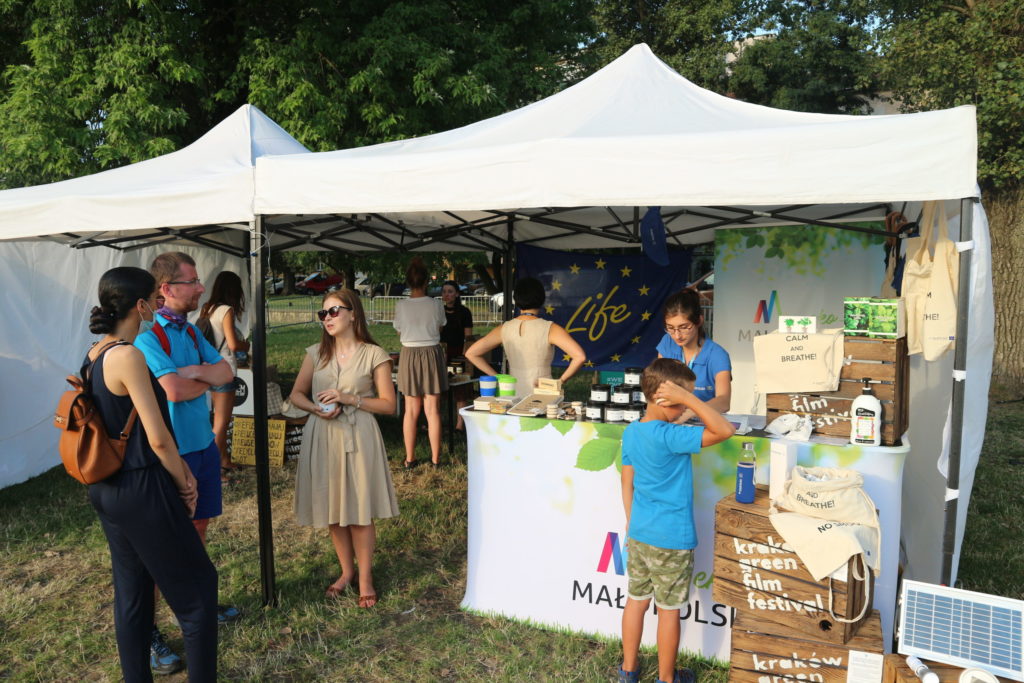
The Marshal’s Office of the Malopolska Region was the main partner of the 3rd Krakow Green Film Festival!!! This is the second year of successful cooperation between EkoMałopolska and the Kraków Green Film Festival.

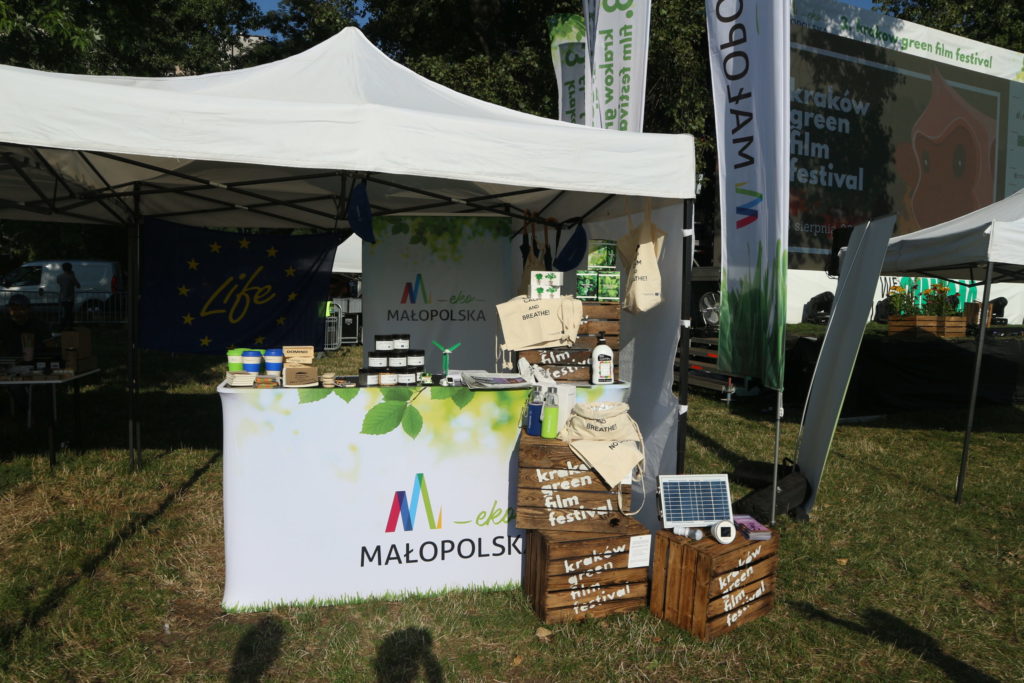
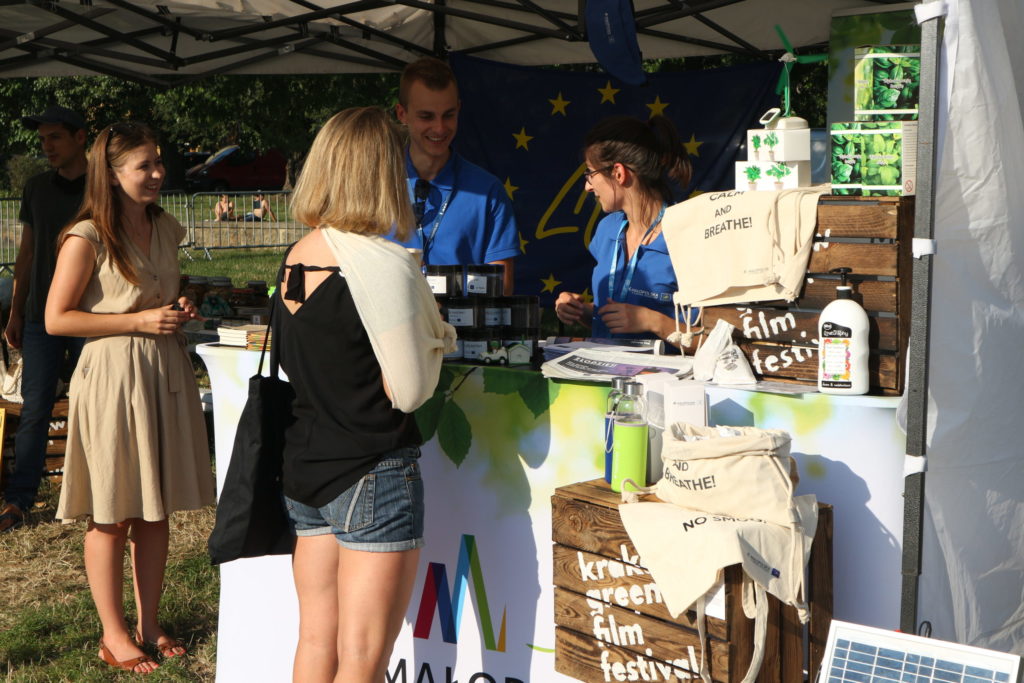
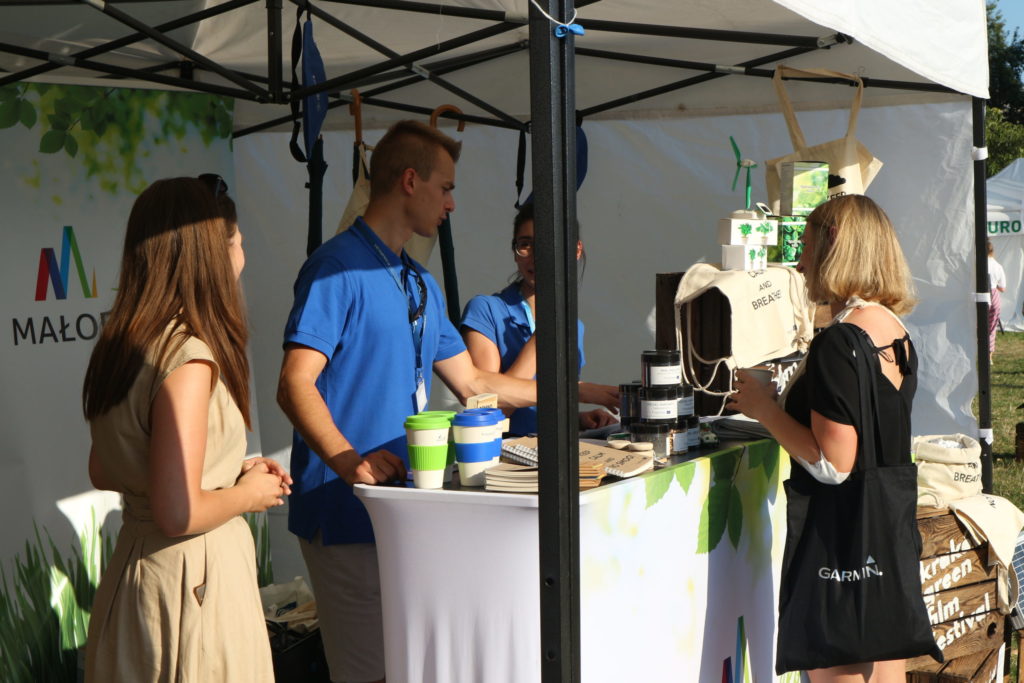
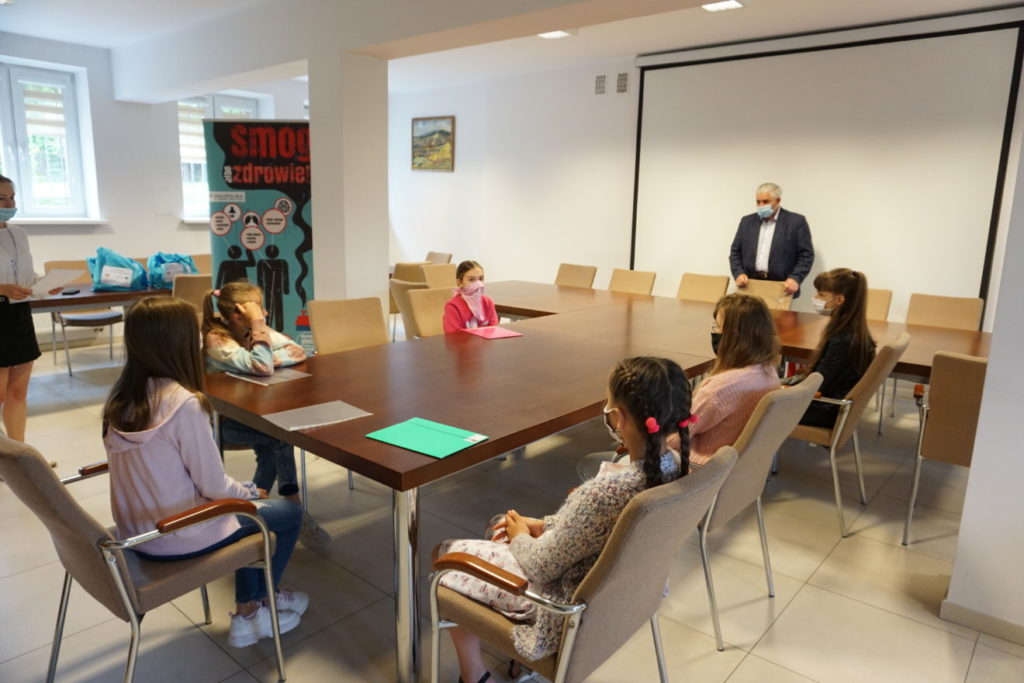
During the festival, the Air Protection Team also had their stand, where numerous educational materials and gadgets could be found. Project representatives answered questions about the antismog resolution, the LIFE integrated project and many others. All those willing could also take part in the competition with numerous prizes.

What is the purpose of pilotage?

The aim of the pilot is to test the functionality and usefulness of the Internet platform for monitoring industrial pollution.

The pilotage is carried out in the municipality of Skawina, after prior identification of interest and potential of other municipalities of the Krakow agglomeration.

The piloting of the industrial pollution monitoring solution is conducted from August to December 2020.

It is very important to oblige industrial companies to react immediately and inform the public about the accident. In this way, everyone will have the chance to protect themselves from the consequences. The new solution is, for the time being, a pilot, but ultimately we want to cover the whole Małopolska.

   – emphasises Tomasz Urynowicz, Deputy Marshal of Małopolska Region.

Who is responsible for the creation of the platform?

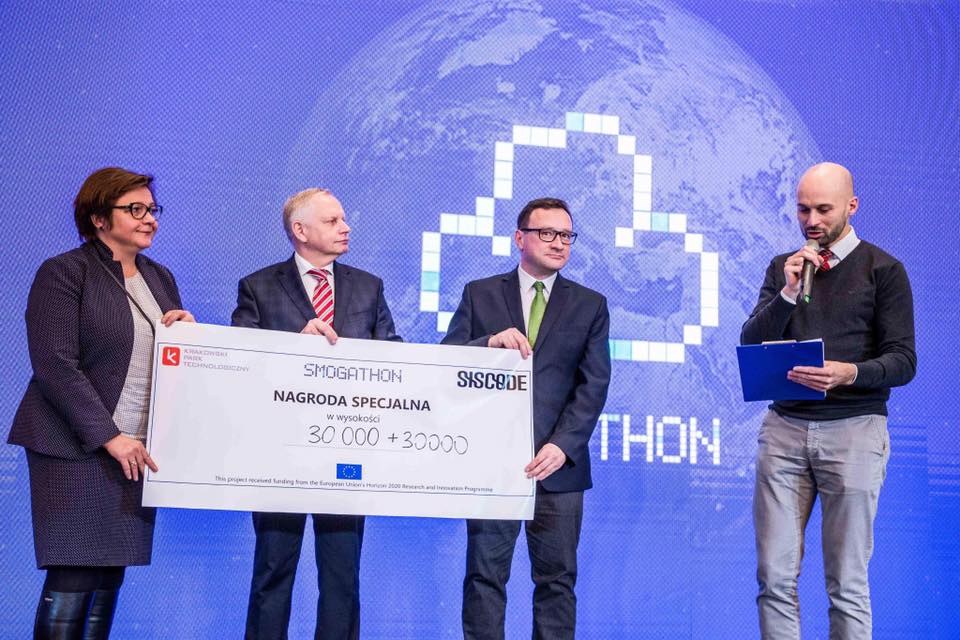
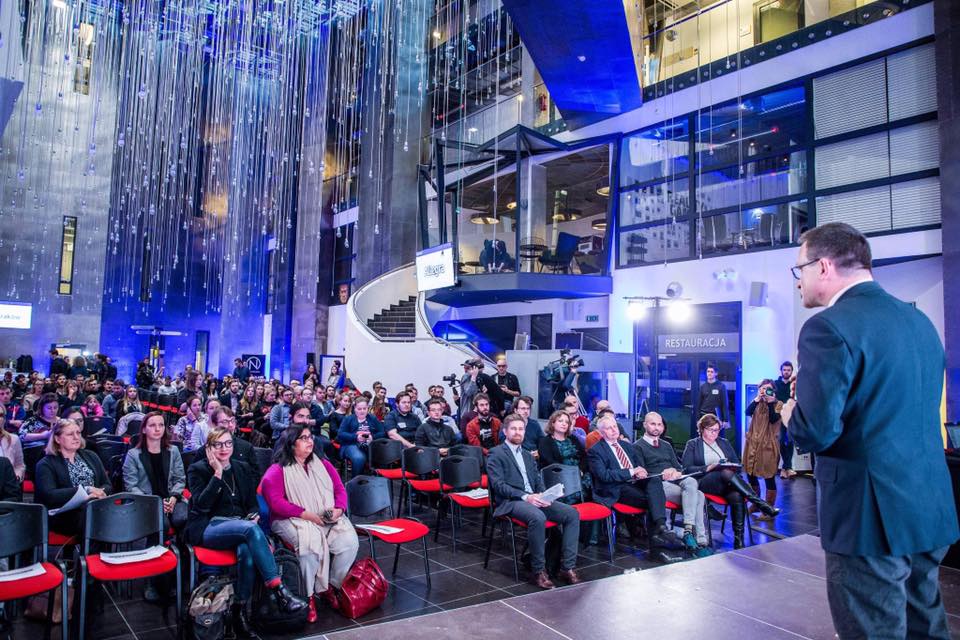
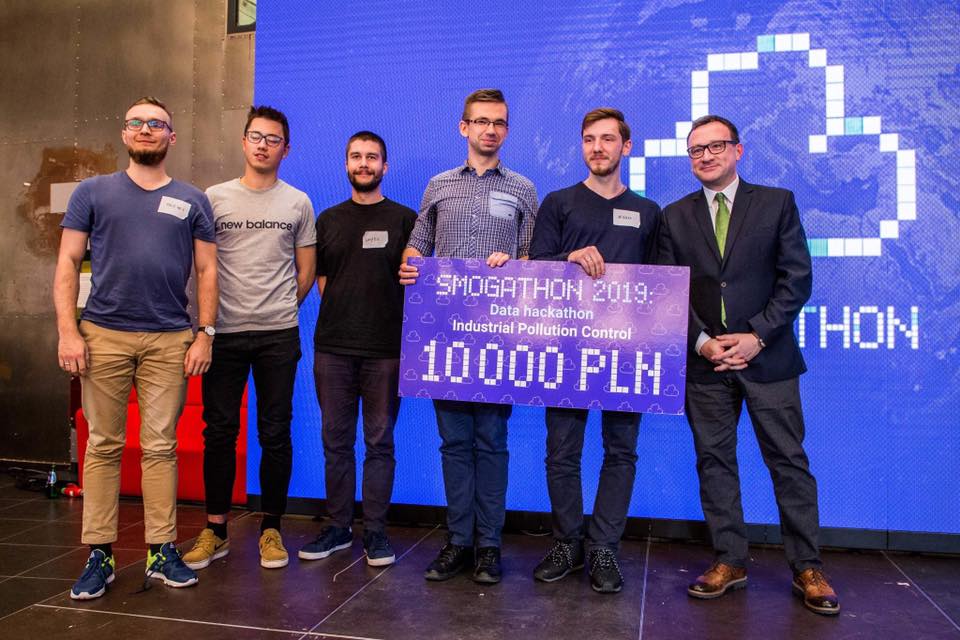
The design of the Internet platform for monitoring industrial pollution was developed by the Qubit team, the winner of a special prize awarded by the Krakow Technology Park during Smogathon 2019. The pilot implementation is carried out by the Krakow Technology Park as part of the SISCODE project.

Work on the platform is conducted in close consultation and cooperation with the Marshal’s Office of the Małopolska Region, as well as the Skawina City and Municipality Office and the Regional Inspectorate of Environmental Protection.

Why is the industrial pollution monitoring system important?

One of the main courses of action to improve air quality listed in the Air Quality Plan for the Małopolska Region is, i. a. reduction of industrial emissions to the environment and environmental education of residents. An efficient system for monitoring industrial pollution will allow us to gain reliable knowledge in this area and to react quickly to incidents which are harmful to the environment.

Which benefits does the new solution offer?

For an inhabitant, it means, above all, easy and convenient access to information on companies located on their territory (ultimately, in the entire Małopolska Region) in the field:

  • air pollution incidents by industrial companies
  • the emission permits held in that year
  • actual emissions
  • access to inspection reports

For an entrepreneur, it is, primarily, an opportunity to simplify the way in which data contained in pollution permits are recorded, to facilitate the process of monitoring pollution levels and to have easy access to historical data.

What does the new portal offer?

In A RESIDENT’S ZONE, the user can see the latest air pollution incidents that are reported through the eco-intervention application and the latest failures reported by local companies.

In the case of accidents reported by companies, you can see the description of the incident by clicking on the “Details” link.

In the LIST OF ENTERPRISES tab, a full list of companies from Skawina municipality is available. After selecting a particular company, we can view the permitted emission levels for that company, as well as check the history of incidents and accidents and substance emission levels in the previous year.

The CONTROL MAP allows us to check and analyse when a given company was controlled by the WIOŚ (Regional Inspectorate for Environmental Protection) and what the conclusions of the control were. The data concern the whole voivodship and are imported from the Public Information Bulletin of the WIOŚ.

ENTERPRISE ZONE enables companies participating in the pilotage to update data from emission permits and to report incidents on an ongoing basis.

The portal is available HERE!

What happens next?

The experience and recommendations from the pilot project will be used by the Marshal’s Office of the Małopolska Region to create a target solution covering all municipalities and companies operating in the Małopolska Region.

This system will be part of the https://powietrze.malopolska.pl website.  

A base called Central Building Emissions Register will be created. In a few months’ time, the owner or manager of the building will be submitting a written declaration to the head of the village council about the heat generating devices.

Fighting smog and energy poverty and improving the energy efficiency of buildings are the primary objectives of the emerging base. Ultimately, this measure is intended to eliminate dust emissions into the air from low-emissions, i.e. from the communal and living sector.

What is CEEB?

Central Building Emissions Inventory (CEEB) is an IT mechanism for identifying sources of low emissions from buildings. The system will collect key information on emission sources in the municipal and commercial sector.

The project assumes that the system will enable the collection of data on the energy condition of buildings. Information on forms of public aid (subsidies, preferential loans) granted for thermal upgrading or replacement of boilers in buildings.

The project assumes that the system will enable the collection of data on the energy condition of buildings. Information on forms of public aid (subsidies, preferential loans) granted for thermal upgrading or replacement of boilers in buildings.

The criterion for the entry of a building into the system will be the strength of the source, regardless of the legal form of use of the building. CEEB will therefore cover not only residential buildings but also public buildings, including small district heating plants or small production plants, provided that the rated thermal input of the fuel source used does not exceed 1 MW

The government explains in an announcement

CEEB is intended to enable ongoing monitoring of information on available funding for air protection projects, including the thermal modernisation of a building or the replacement of old boilers with public funds.

The inventory is planned to cover around 5-6 million buildings, initially 500 000 buildings per year. The general building inventory will be combined with the submission of written declarations on heat and combustion sources – by the end of 2021.

Millions on fire

In Poland, over 80% of single-family buildings are heated with solid fuels. This includes 3 million using technologically outdated boilers for coal and wood, which emit significant amounts of pollutants. Over 70% of single-family houses do not have any thermal insulation or are poorly insulated. For years Poland has had the most polluted air in the entire European Union.

Małopolska inspires!

The Małopolska Region has launched the first building heating inventory database in Poland, which makes it possible to collect information on heating sources in a uniform manner at the voivodship level. The application enables free management of the building heating inventory and updating of data on heating exchanges, thermos modernizations and renewable energy sources used. The application makes it possible to monitor the implementation of the provisions of the Air Quality Plan and the progress of implementation of anti-smog resolutions. The database was made available at the beginning of 2017 to all 182 municipalities of the region. From the beginning of its operation until August 2020, approximately 260,000 Małopolska facilities have been entered into the database. The operation of the database was indicated as “good practice” during the control of the Supreme Audit Office conducted in 2018. The application is available at the following link: http://baza.powietrze.malopolska.pl. The obligation to prepare and update data in the inventory database results from the provisions of the Air Quality Plan for the Małopolska Region.

Currently, the inventory of heating sources in Małopolska, based on data entered in the database, is estimated at about 30%.

Representatives of the Małopolska Region took part in the works on the Central Building Emissions Inventory at the Ministry of Development.

Main Events

  • Due to the COVID-19 pandemic, the implementation of eco-managers’ activities under the LIFE project was limited. Full-time performance of tasks was difficult due to remote work and limitations in accepting clients and organizing events.
  • In July, another public consultation on the air quality plan for the Małopolska region took place. As part of the consultations, an open meeting was organised on 16th July, during which corrective actions presented in the project were introduced.
  • The eco-managers distributed a total of almost 2,000 information and educational materials and provided advice to almost 9,000 inhabitants of Małopolska.

C.1. Eco-managers

Advice and help for residents

In July, the Eco-managers employed under the LIFE programme provided advisory assistance to the inhabitants of Małopolska:

  • 2601 people accepted in the office,
  • 4719 by telephone,
  • 585 in writing or by e-mail,
  • 257 during visits.

There were 92 checks on residents for waste incineration. In 5 cases, infringements were found.

Surveys from residents and applications for funding

Eco-managers were involved in collecting questionnaires from residents and considering applications for funding.

In July:

  • 218 questionnaires were collected from residents interested in receiving funding,
  • 262 applications of residents or entities for funding were considered,
  • 450 agreements were signed with residents or entities for funding and 120 such agreements were settled.

Eco-managers have entered or updated data on 836 buildings in the heating base.

C.2 Centre of Competence

List of low-emission heating devices

The list of low-emission solid-fuel heating appliances meeting eco-design requirements, available at www.powietrze.malopolska.pl, includes a total of 344 boilers and space heaters.

The “Eco-intervention” application

A total of 168 applications were received in July. The application is available on the website https://ekomalopolska.pl/app/ekointerwencja/index.html.

Can be specified:

  • 113 reports on air pollution,
  • 38 illegal waste removal
  • 17 other applications.

The Infoline operated by the Competence Center of the Marshal’s Office has answered over 200 telephone inquiries.

E.2 Local air protection information and education activities

Educational materials on the subject of air protection

The eco managers in the municipalities:

  • prepared 253 leaflets and brochures and 122 posters,
  • They distributed 1367 leaflets and brochures and 217 posters,
  • prepared 160 and distributed 263 other educational and promotional materials (promotional materials, leaflets related to the Clean Air Programme).
Meetings and events

Eco-managers organized meetings and events:

  • 5 competitions for children/young people, in which 141 people took part,
  • 1 meeting in the kindergarten, attended by 6 people (online classes),
  • 5 meetings with residents, attended by 150 people,
  • 24 meetings with local leaders (teleconferences with councillors, mayors) with a total of 358 people,
  • 6 other air protection events, attended by 716 people.

Eco-managers transferred some of their activity to the Internet. They organized various contests and workshops via social networks.

E.3 Creating networks for the exchange of experience with other projects

Public consultations of the Air Quality Plan for the Małopolska Region

In July, we held another public consultation on the air quality plan for the Małopolska Region. The submission of comments to the document was completed on 27th July this year.

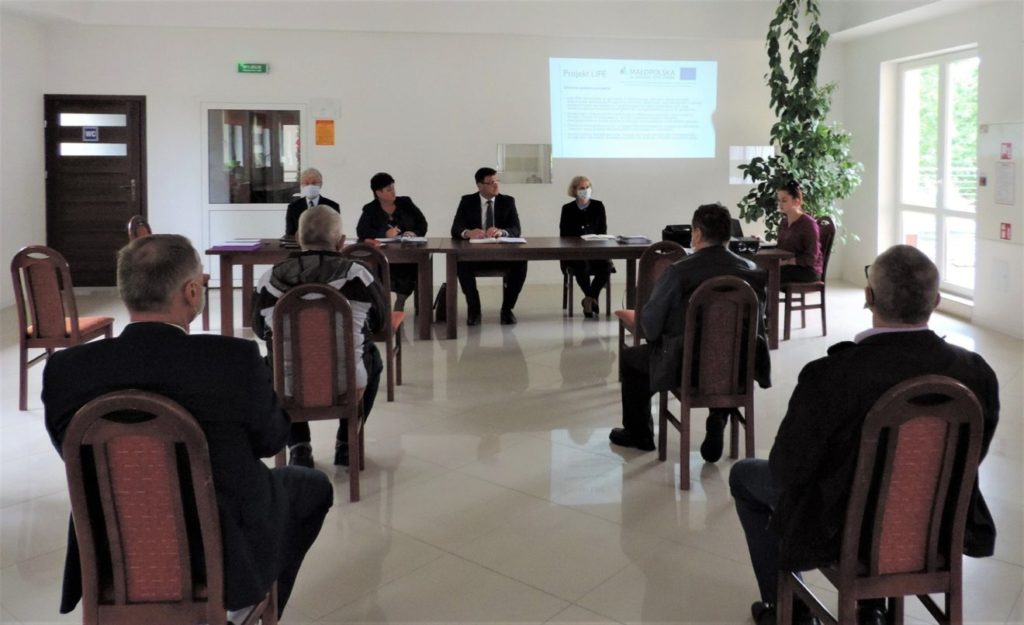
On 16th July, an open consultation meeting was held in the Congress Hall of the Congress Centre of the University of Agriculture. The meeting was attended by 85 people. They were mainly residents, local governments, institutions, entrepreneurs, chambers of agriculture and economy, non-governmental organisations and representatives of universities. During the meeting, the participants were informed about the subject matter of the meeting and the corrective actions of the draft Air Quality Plan for the Małopolska Region were presented. The participants had the opportunity to speak and publicly share their comments and conclusions to the project. Moreover, a link to the on-line transmission was made available for those who could not take part in the event personally. The event was attended by 32 people using the Internet.

Meeting with representatives of the Marshal’s Office of the Opole Region

On 9th July there was a meeting with representatives of the Marshal’s Office of the Opole Region. The aim of the meeting was to present how the LIFE Project is implemented in the Małopolska Region. The Opolskie Voivodeship is preparing to implement its first LIFE project. The project is to help implement a coherent air quality management system in this region.

European Mobility Week 2020

An online information meeting on the European Mobility Week 2020 was held on 17th July. The meeting was attended by representatives of the Centre of Competence, the Rail Strategy and Transport Team and the Ministry of Infrastructure. During the meeting, the EMW coordinator from the Ministry presented basic information and the scope of activities, followed by a discussion about experiences from previous years and suggestions for this year’s event.

A series of webinars #Clean Air Academy. Within the webinar series #Clean Air Academy, another 2 meetings were held in July:

  • 6 July: The importance of ventilation in thermal modernisation of buildings,
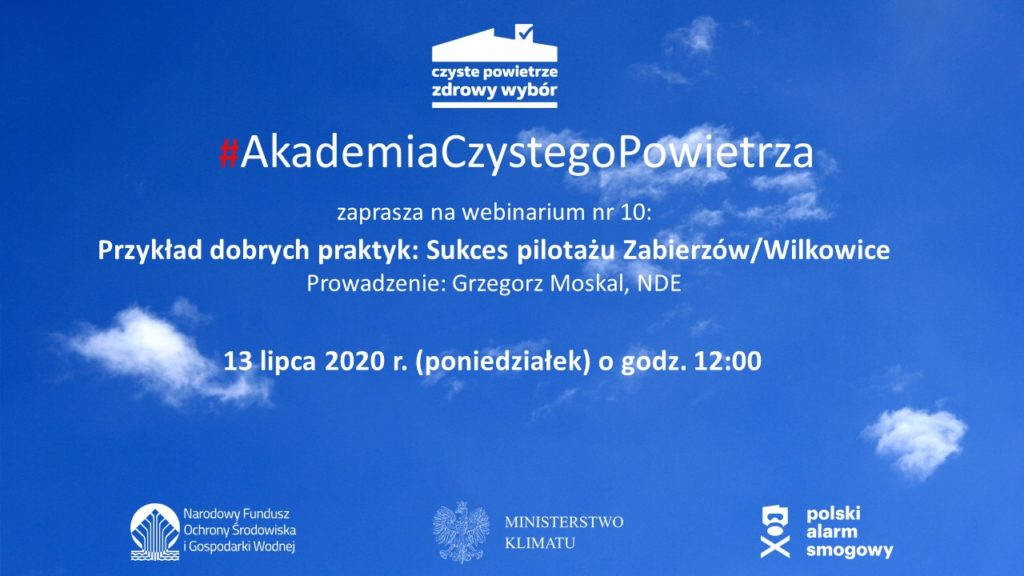
  • 13 July: An example of good practice: The success of the Zabierzów/Wilkowice pilotage.

The meeting was attended by eco-managers and employees of the Competence Centre.

E.4 Promotion of project implementation

In July, the eco-managers prepared:

  • 18 articles in the press,
  • 86 articles and posts on the Internet and community media,
  • 19 times they used other media (e.g. wall newspapers and information boards),

and took part in the media information related to the project:

    2 radio or TV programmes.

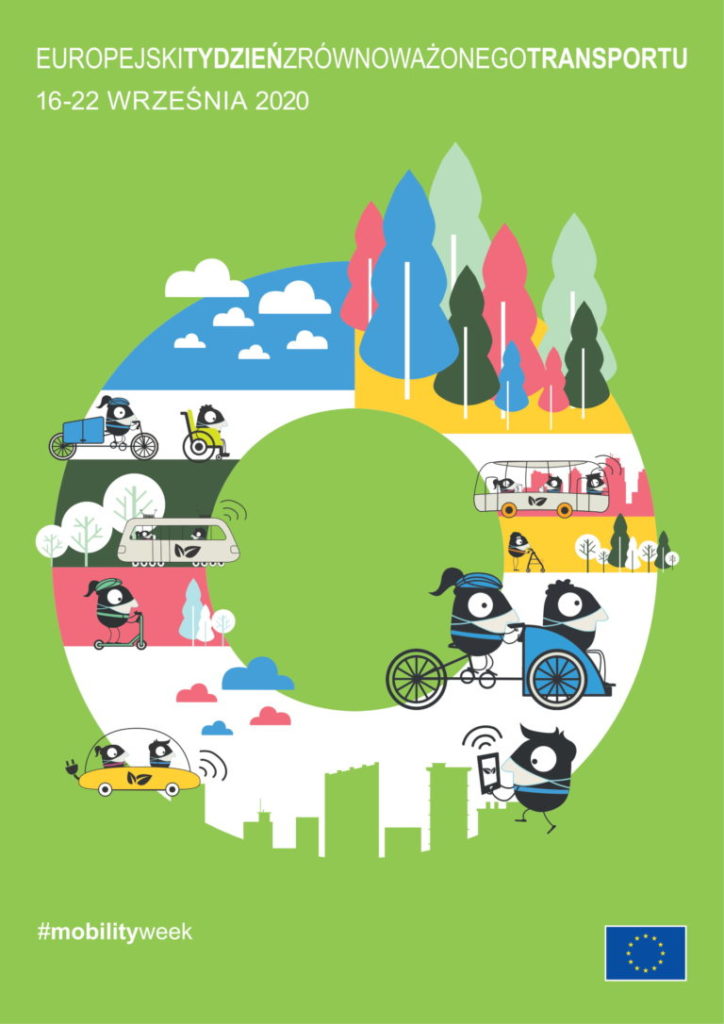
The European Mobility Week is organised every year in mid-September. The aim of the activities is to promote environmentally friendly forms of mobility, such as public transport, cycling, walking and multimodal transport, i.e. combining different modes of transport. This year’s edition of the campaign is held under the slogan “Clean, Shared and Intelligent Mobility”.

What is European Mobility Week?

The European Mobility Week campaign is mainly focused on:

  • encouraging as many people as possible to use alternative forms of transport (public transport, walking or cycling);
  • increasing awareness and informing about the negative consequences of traditional internal combustion transport;
  • creation of a more citizen-friendly city.

Therefore from 16th to 22nd September a number of events connected with the idea of sustainable transport will be held. The last day of the European Sustainable Transport Week, i.e. 22 September will be the International Car Free Day, which is the culmination of the event. On that day in cities there are designated zones reserved exclusively for pedestrian traffic, cycling and public transport.

Join the event!

Municipalities and cities can take an active part in this event. By organising various actions, meetings and undertakings, they can jointly promote sustainable mobility (e.g. cycling, scooters, carpooling, car sharing, railways and public transport) and in this way build conscious attitudes among residents of all ages.

Our voivodship has traditionally joined the activities promoting eco-mobility, e.g. through discounts on rail travel. Additionally, the communes and cities of Małopolska have planned many attractions and educational activities. The great involvement of our region in the European Mobility Week celebrations is a sign of the responsible approach of the authorities and residents to the problem of transport.

More information!

So far more than 60 cities and municipalities from Poland have registered their activities.

We invite other entities to join the campaign and register their events at http://registration.mobilityweek.eu/login.php?lang=pl.

The consultation meeting was held as part of the extension of work on the new Air Quality Plan for the Małopolskie Voivodship and the renewed public consultation. The document was supplemented with conclusions and comments made during the previous opinion of the residents, non-governmental organisations, local governments, enterprises and institutions. The main activities set out in the draft Air Quality Plan consulted during the meeting were presented on the website: The draft of the new Air Quality Plan. (https://powietrze.malopolska.pl/program-ochrony-powietrza/)

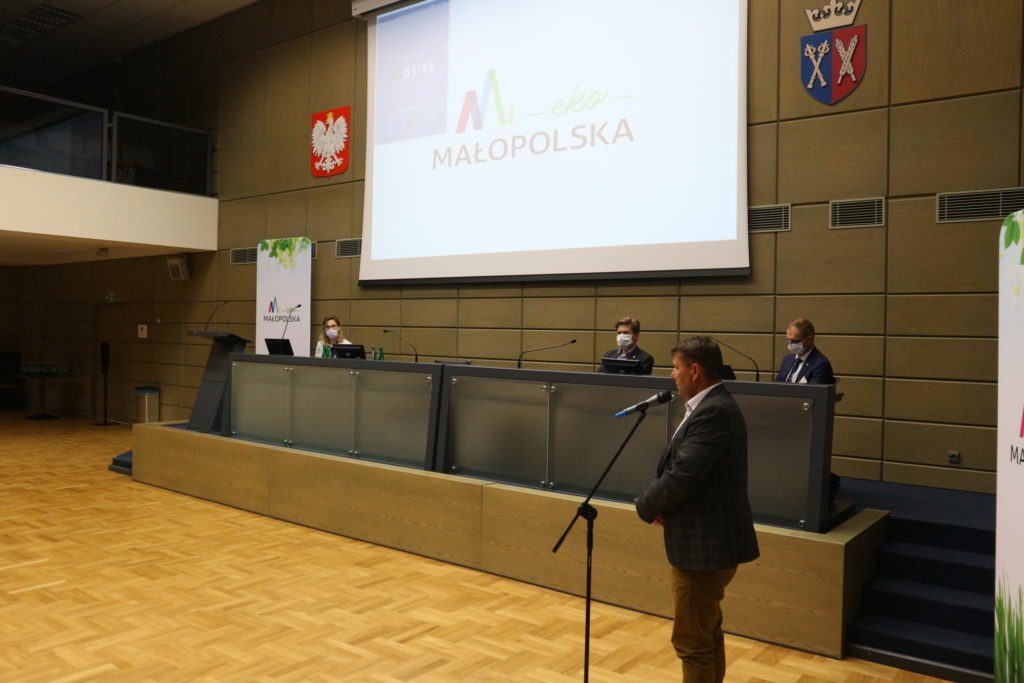
Open consultation meeting

An open consultation meeting was held on 16 July 2020 in the Congress Hall of the Congress Centre of the University of Agriculture in Krakow. It was attended by 85 people. They were mainly residents, local governments, institutions, entrepreneurs, chambers of agriculture and economy, non-governmental organisations and representatives of universities.

The meeting was opened by Tomasz Urynowicz, Deputy Marshal of the Małopolska Region and Piotr Łyczko, Deputy Director of the Environment Department.

This document and, above all, air protection measures, are our priority. I hope that with your activity and ideas we will be able to implement the best possible programme for Małopolska. I know that we need the support of the inhabitants and courageous local authorities. Therefore, together we can achieve an improvement in air quality. Today’s meeting after a long period of break due to coronavirus is an opportunity for us to talk calmly. I hope that with your support we will be able to introduce bold changes in Małopolska

– emphasises Deputy Marshal Tomasz Urynowicz

Then a representative of Atmoterm company gave the participants an introduction to the subject of the meeting and presented corrective actions of the draft Air Quality Plan for the Małopolska Region.

In the next part of the meeting, 31 participants spoke and publicly shared their comments and conclusions to the project.

Online consultation meeting

In addition, a link to the online transmission has been made available for those who were unable to attend the event personally. The event was attended by 32 people via the Internet. For those of you who could not attend the meeting, please find the recording below.

Your opinion is important!

Opinions and comments on the project can be sent by July 27th using the online form available on the website: Consultation of the Air Quality Plan.

You can also submit your comments in writing and verbally to the protocol during office hours. Letters should be sent to the address: Marshal’s Office of the Małopolska Region, Environment Department, Racławicka 56, 30-017 Kraków, with the note “Konsultacje Programu Ochrony Powietrza” (“Consultations of the Air Quality Plan”).

Photo Gallery:

Presentation:

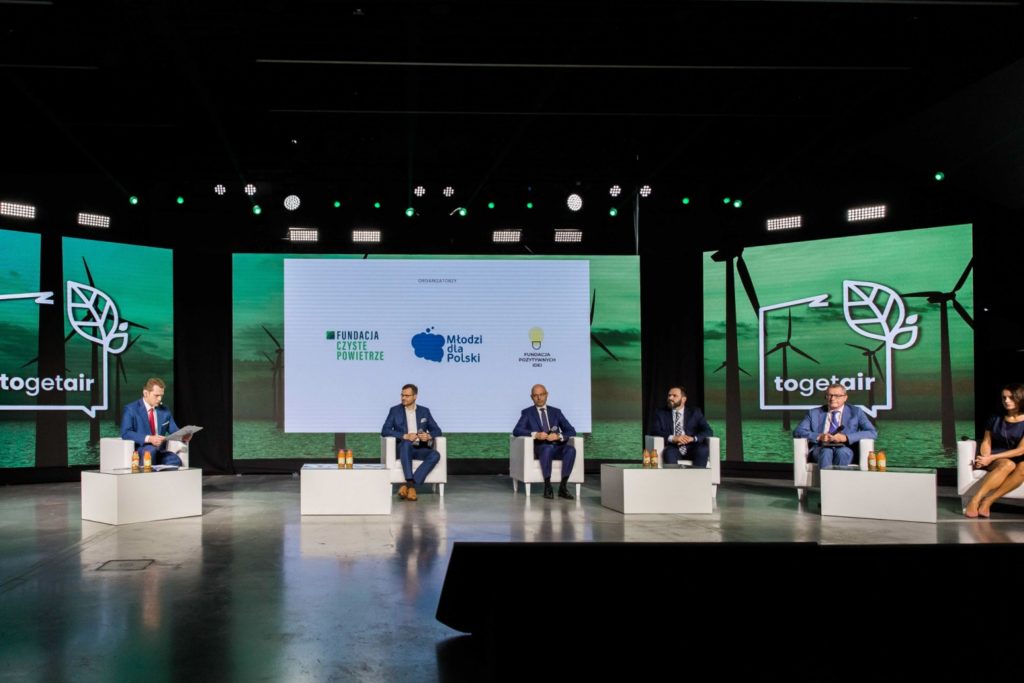
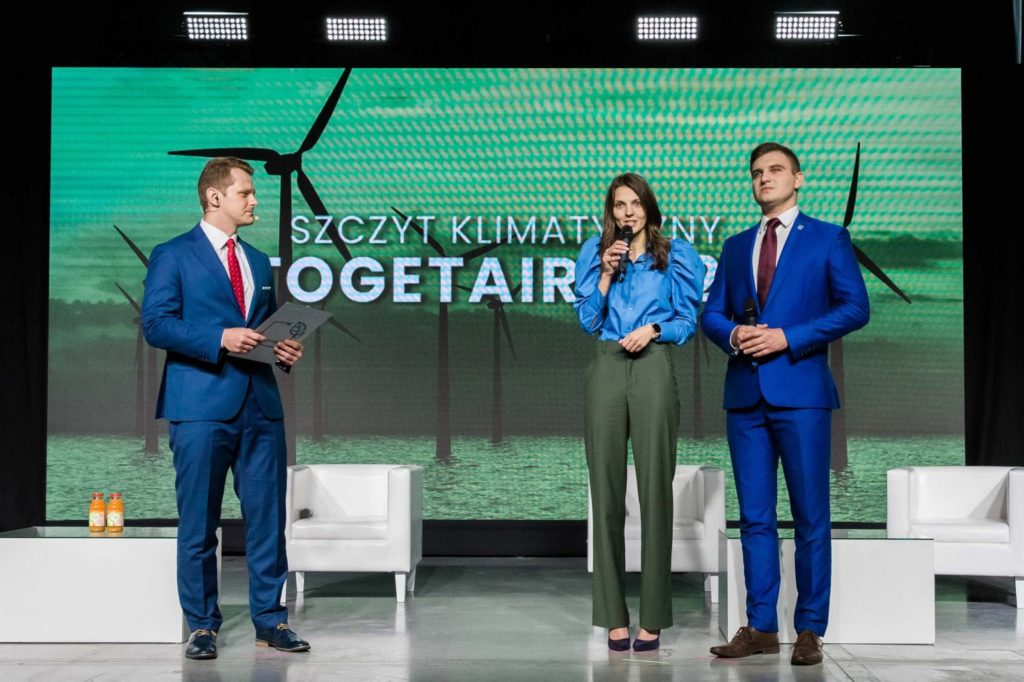
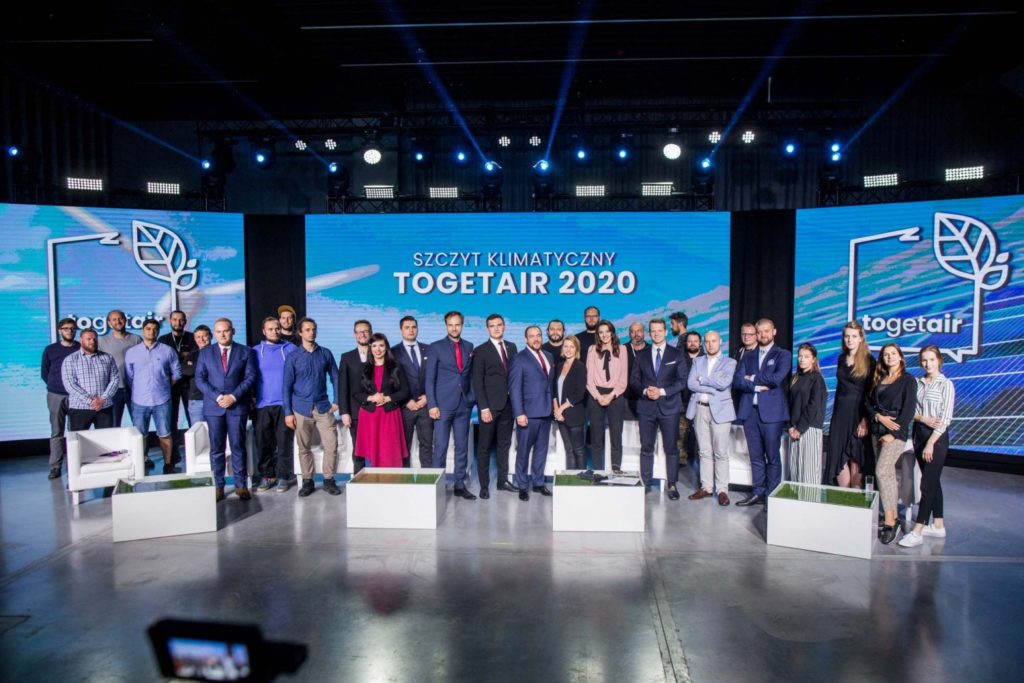
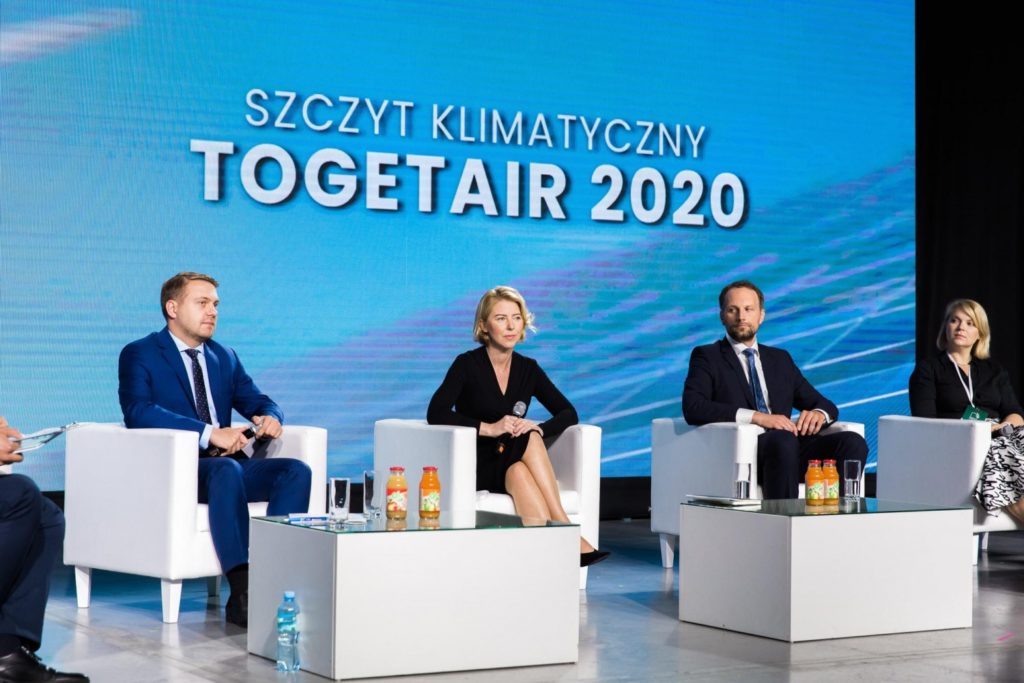
The climate summit this year took place from 22-24 June. At the same time, it became a neutral space for discussion across divisions for many communities. . This was done in order for them to work out their positions and recommendations together to take care of the natural environment.

During the three days of the TOGETAIR Climate Summit in Warsaw’s Praga Koneser Centre 11 thematic debates were held. There were also a number of speeches and industry lectures. In addition, there were three press boxes, during which journalists commented and summarised the conclusions that the panellists worked out during the discussion.

Earth, fire, air, water

The summit discussed issues related to the four elements: earth, fire, air and water. Participants included Prime Minister Mateusz Morawiecki, Deputy Prime Minister and Minister of Development Jadwiga Emilewicz, Minister of Marine Economy and Inland Navigation Marek Gróbarczyk, Climate Minister Michał Kurtyka, and Kamil Wyszkowski from the UN Global Compact.

Other invited guests included the Deputy Marshal of the Małopolska Region, Tomasz Urynowicz.

The issues raised concerned many aspects of energy efficiency:

  • “Poland’s energy mix: between coal, gas, RES”,
  • “Difficult tidying up in a rubbish market”,
  • “Exhaust gases, public transport, transport and fuels of the future”,
  • “The fight against smog – how to modernise Polish construction and eliminate energy poverty” and others.

The Ministry of Climate and the National Fund for Environmental Protection and Water Management are launching three new electromobility programmes, aimed at various beneficiaries, for a total of nearly PLN 150 million. The call for applications for the “Green Car”, “eVAN” and “Koliber” programmes started on 26 June this year.

The ongoing COVID-19 epidemic requires us to start looking for solutions to stimulate the economy. We have the ambition that economic recovery will show new paths for development and growth, green growth, that is why we support the development of electromobility so much. We estimate that the total impact of our three new programmes on the Polish economy is around PLN 700 million.

said Climate Minister Michał Kurtyka.

We should remind that the ‘Green Car‘, ‘eVAN‘ and ‘Koliber‘ are part of a larger Green Investment Plan, which offers a total available funding budget of around PLN 7.8 billion in 2020, and the total impact of these programmes on the economy is over PLN 22 billion.

The National Fund for Environmental Protection and Water Management will subsidise the purchase of electric vans (up to PLN 70,000) and taxis (up to PLN 25,000), which will have the greatest environmental effect, as these cars have the highest annual mileage.

Green car – electric cars for individuals

The aim of the programme

The avoidance of air pollutant emissions by subsidising projects to reduce energy and fuel consumption in transport – by supporting the purchase of purely electric vehicles for private purposes.

The programme provides for the possibility of co-financing undertakings consisting in the purchase of new vehicles of M1 category, referred to in Annex 2 to the Act of 20 June 1997. – Road Traffic Law (Journal of Laws of 2020, item 110, as amended), using only electric energy accumulated through connection to an external power source for driving.

A new vehicle means a brand new vehicle which has not been registered before purchase.

The vehicle purchased under the project may not be used for economic activity within the meaning of EU competition law, including agricultural activity. i.e. it cannot be used to offer goods or services on the market, in particular for the provision of transport services or passenger transport, including occasional transport, and cannot be made available on the market in any other form, and cannot be the subject of lease. The vehicle purchased under the project may not be entered into the register of fixed assets used in business activities.

Closing date for submitting applications

Applications for funding in the form of grants should be submitted from 26.06.2020. – 31.07.2020 but not longer than until the allocation funds are exhausted.

Prepared grant applications should be submitted in an electronic version by the Grant Application Generator (“GWD”) available at http://gwd.nfosigw.gov.pl. 

Recruitment budget

The budget for the implementation of the programme objective is up to PLN 37 500 000. The subsidy will be granted in the form of a grant.

Intensity of co-financing

Up to 15% of the project’s eligible costs, not more than PLN 18 750. The purchase cost (purchase price) of an electric vehicle is eligible. The purchase cost (purchase price) of an electric vehicle may not exceed PLN 125,000.

Beneficiaries

Natural persons

Documents

program_priorytetowy_zielony_samochod.pdf

regulamin_naboru_zielony_samochod.pdf

lista_wymaganych_zalacznikow_zielony_samochod.pdf

wzor_umowy_dotacji_zielony_samochod.pdf

wzor_naklejki.7z

instrukcja_weryfikacji_nazwy_skrytki_uzytkownika_w_systemie_epuap..pdf

eVAN – electric vans and charging points

Call for proposals within the framework of the priority programme “eVAN – co-financing of the purchase of an electric commercial vehicle (N1)”.

The aim of the programme

The programme provides for the possibility of co-financing projects aimed at supporting zero-emission transport:

– purchase/leasing of new electric vehicles using only electrical energy accumulated through connection to an external power source,

– the purchase of a charging point with a power less than or equal to 22 kW.

The term “new electric vehicle” means a vehicle of category N1 as referred to in Annex 2 to the Law of 20 June 1997. – Road Traffic Law (Journal of Laws of 2020, item 110, as amended), which is brand new and which was not registered before purchase/leasing.

Closing date and method of submission

Applications for funding in the form of grants should be submitted in the period from 26.06.2020. – 31.07.2020, however, no longer than until the allocation funds are exhausted

Prepared grant applications should be submitted electronically by the Grant Application Generator (“GWD”) available at http://gwd.nfosigw.gov.pl.

Recruitment budget

The budget for the implementation of the programme objective is up to PLN 70 000 000. The subsidy will be granted in the form of a grant.

Intensity of co-financing

– up to 30% of eligible costs, but not more than PLN 70,000 for the purchase/leasing of electric vehicles (the cost of purchasing a charging point is not included),

– up to 50% of the eligible costs, but not more than PLN 5,000 for the purchase of a charging point up to 22kW.

Beneficiaries

Entrepreneurs within the meaning of the Act of 6 March 2018. Entrepreneurs’ right. (Journal of Laws of 2019, item 1292, as amended).

Documents

program_priorytetowy_-_evan.pdf

regulamin_naboru_wnioskow___evan.pdf

lista_wymaganych_zalacznikow_do_wniosku_o_dofinansowanie_evan.pdf

wytyczne_w_zakresie_kosztow_kwalifikowanych.pdf

umowa_dotacja_krajowa_-_11.02.2020.docx

instrukcja_weryfikacji_nazwy_skrytki_uzytkownika_w_systemie_epuap..pdf

Koliber (Hummingbird)- subsidy for the purchase of taxis

Call for proposals under the priority programme ‘Koliber (Hummingbird) – a taxi good for the climate – pilot’ dedicated to passenger transport operators.

The aim of the programme

The programme provides for the possibility of subsidising projects aimed at supporting zero-emission passenger transport:

– Purchase/leasing new electric vehicles using only electrical energy accumulated through connection to an external power source,

– the purchase and installation of a charging point with a power less than or equal to 22 kW.

New electric vehicle” means a vehicle of category M1 as referred to in Annex 2 to the Law of 20 June 1997. – Road Traffic Law (Journal of Laws of 2020, item 110, as amended), which is brand new and which was not registered before purchase/leasing.

Closing date and method of submission

Applications for funding in the form of grants and loans should be submitted in the period of 26.06.2020. – 31.07.2020, however, no longer than until the allocation funds are exhausted.

Prepared applications separate for an application for a grant and a loan should be submitted in an electronic version by the Generator of Applications for Financing (“GWD”) available at http://gwd.nfosigw.gov.pl.

Recruitment budget

The budget for the implementation of the programme’s objective is up to PLN 40 000 000, of which: 1) for non-returnable forms of co-financing – up to PLN 25,000,000, 2) for returnable forms of co-financing – up to PLN 15,000,000.

Forms of co-financing

The funding will be provided in the form of grants and loans, in accordance with the priority programme.

Intensity of co-financing

Intensity of funding for grants:

co-financing in the form of a subsidy of up to 20% of the eligible costs of the project, but not more than PLN 25 thousand,

The intensity of the funding for the loan:

grant in the form of a loan of up to 100% of the eligible costs, but not more than the difference between the value of the eligible costs of the project and the grant awarded for this project.

Beneficiaries

A micro-entrepreneur, small entrepreneur or medium-sized entrepreneur within the meaning of the Act of March 6, 2018 – Entrepreneurs Law.

Documents

program_priorytetowy_koliber_taxi_dobre_dla_klimatu.pdf

regulamin_naboru_koliber_taxi_dobre_dla_klimatu.pdf

lista_wymaganych_zalacznikow__koliber_taxi_dobre_dla_klimatu.pdf

wytyczne_w_zakresie_kosztow_kwalifikowanych.pdf

umowa_pozyczka_krajowa_11.02.2020.docx

umowa_dotacja_krajowa_-_11.02.2020.docx

instrukcja_weryfikacji_nazwy_skrytki_uzytkownika_w_systemie_epuap..pdf

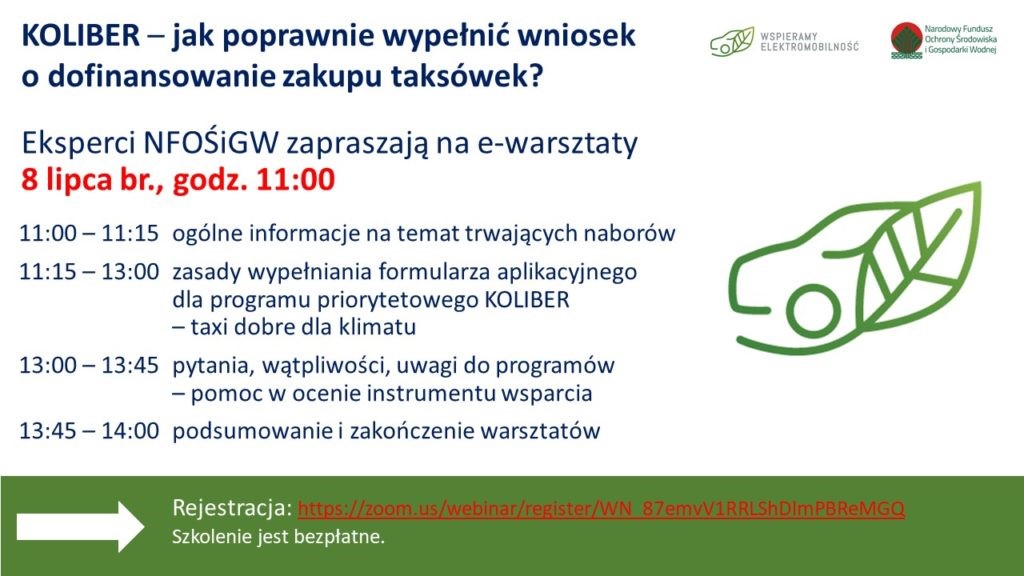
The experts from the National Fund for Environmental Protection and Water Management (NFOŚiGW) invite you to another e-workshop on filling in applications for funding under the calls for proposals for three new electromobility programmes. Register and ask questions about the programme: eVAN, Koliber, Green Car.

Agenda of the meeting on 8 July 2020

11.00 – 11.15 general information on ongoing calls for proposals

11.15 – 13.00 rules for filling in the application form for the priority programme KOLIBER – taxi good for the climate

13.00 – 13.45 Questions, doubts, comments on programmes – assistance in evaluating the support instrument

13.45 – 14.00 – conclusion of the workshop – summary

The training is free of charge.

Registration: https://zoom.us/webinar/register/WN_87emvV1RRLShDlmPBReMGQ

Agenda of the meeting on 10 July at 10:00 a.m.

Register and learn how to fill in the applications.

10.00 – 10.15 general information about the ongoing calls for proposals

10.15 – 11.00 rules for filling in the application form for the eVAN programme – financing the purchase of an electric van (N1)

11.00 – 11.45 rules for filling in the application form for the KOLIBER programme – taxi good for the climate

11.45 – 12.30 rules for filling in the application form for the Green Car programme – co-financing of the purchase of an electric passenger car (M1)

12.30 – 12.45 summary and conclusion of the workshop

08 lipca 2020

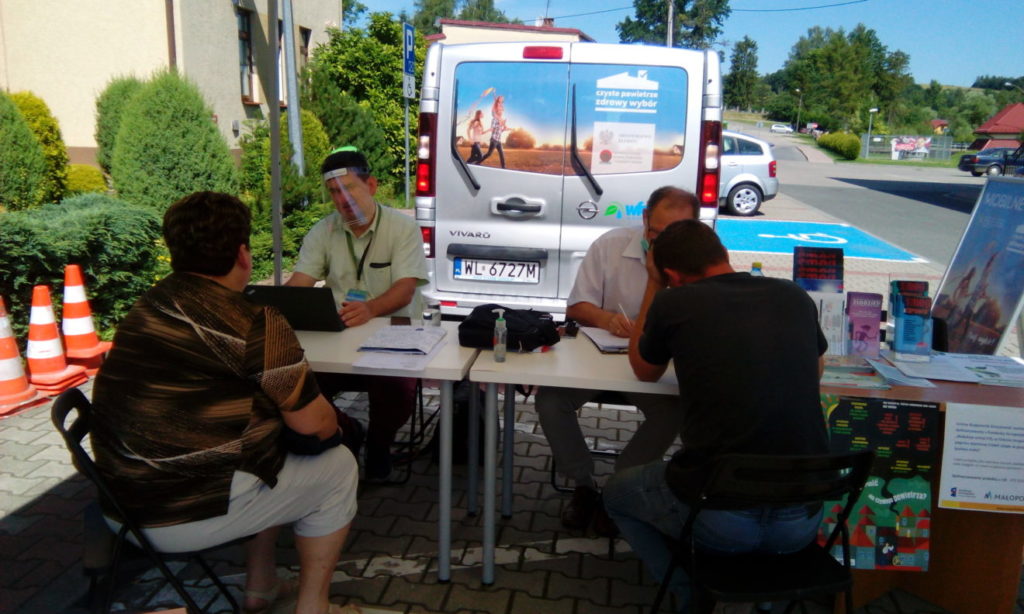
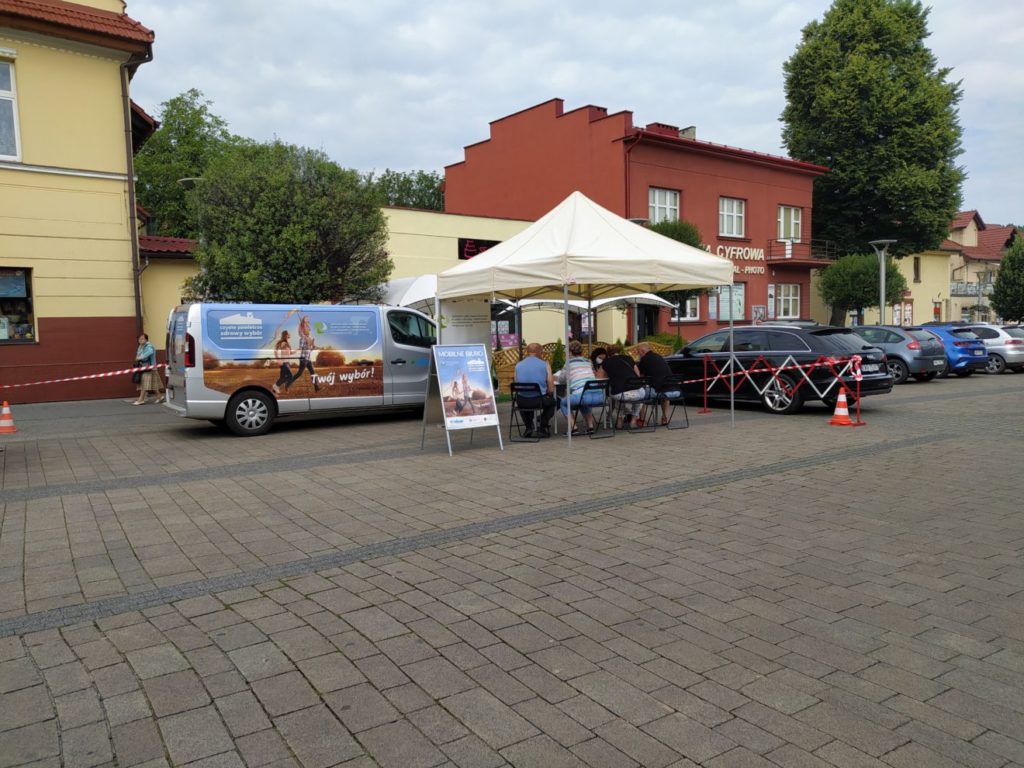
The mobile office of the Clean Air Programme is on the tour! From 6th July this year, meetings, lectures, answers to questions concerning thermomodernisation or replacement of the so-called ” kopciuchów”(smoking stove) started. Experts offer comprehensive assistance in filling in grant applications. The mobile offices of the “Clean Air” Priority Programme will operate until the end of August and will cover over 4000 kilometres!

Live meetings with people who will advise on possible thermomodernisation solutions or show how to fill in the application in the programme are another step towards improving air quality not only in large agglomerations but also in small towns and cities

– said climate minister Michał Kurtyka

As Minister Kurtyka emphasizes, residents are more willing to seek help in their neighbourhood, e.g. in a commune office, than in the remote seat of the Provincial Fund for Environmental Protection and Water Management in the capital of the voivodship.

  “We want to reach the largest possible number of municipalities and the widest possible range of inhabitants. If this pilot holiday project works, we will consider introducing the mobile office of the “Clean Air” programme for good. We are getting signals that there are a lot of people interested in replacing old boilers and thermomodernization of their homes, who would be willing to take advantage of the funding for this purpose, but coming to the headquarters of the Fund in Katowice or our offices in Bielsko-Biała and Częstochowa is often too much burden for them”.

– added Tomasz Bednarek, President of WFOŚiGW in Katowice.

According to Kazimierz Koprowski, President of the Voivodeship Environmental Protection and Water Management Fund in Krakow, the mobile offices of the “Clean Air” programme are a very good initiative which will really bring the residents closer to the subsidies.

The meetings will be safe for the residents, all recommendations of the Main Sanitary Inspectorate will be preserved, such as wearing masks and keeping social distance. Mobile offices will be on their tours throughout the holiday period (until the end of August).

Check when the mobile office will reach your municipality

08.07.2020

Myślenice-hour: 15:00, Urban Planty (Henryka Jordana Street 2)

09.07.2020

Krzeszowice – 10:00 am, Rynek

Wielka Wieś – 13:00, Commune Office (Community Square 1)

You can follow the other dates on the website:

    www.wfos.krakow.pl

    www.wfosigw.katowice.pl

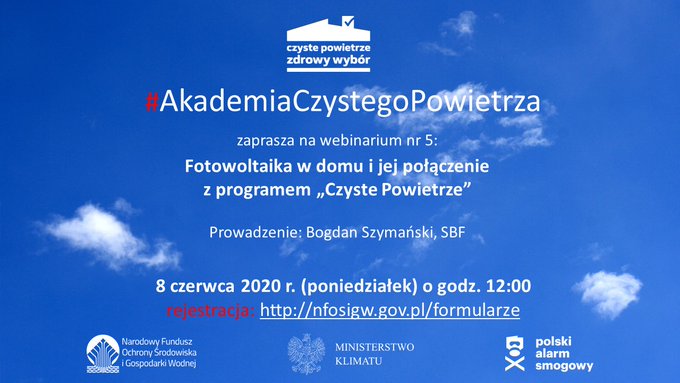
#Clean Air Academy is a series of free webinars for installers, energy consultants and construction companies. Monday’s online meetings started in May. They are a joint initiative of the Ministry of Climate, National Fund for Environmental Protection and Water Management and Polish Smog Alarm.

The next webinar was held on 13 July!

The tenth webinar of the #Clean Air Academy series will take place on 13 July at 12:00.

Grzegorz Moskal (NDE) will talk about good practices of cooperation with local governments in the implementation of the Clean Air programme – on the basis of a pilot project carried out in Zabierzów and Wilkowice.

In order to take part in the training you need to register on the website: http://nfosigw.gov.pl/formularze/. There is a sequence and a limit of (500) applications. Those who do not manage to register will be able to watch them – also free of charge – on the NFOŚiGW YouTube channel.

Main Events

  • The implementation of LIFE project activities has been limited. This is due to the COVID-19 pandemic and the Regulation of the Minister of Health of March 20, 2020 on the declaration of an epidemic in the territory of the Republic of Poland and the resulting restrictions. The work of eco-managers was limited, due to e.g. closure of offices, remote work and no possibility of accepting clients.
  • The European Commission granted funding for the implementation of the integrated project LIFE EKOMAŁOPOLSKA “Implementation of the Regional Action Plan for Climate and Energy.
  • Eco-managers distributed a total of almost 5,000 information and educational materials and provided over 9 thousand. advice to the inhabitants of Małopolska.

C.1. Eco-managers

Advice and assistance to residents

In June, the Eco-managers employed under the LIFE programme provided advisory assistance to the inhabitants of Małopolska in terms of their size:

  • 2398 people admitted to the office,
  • 5880 by telephone,
  • 511 in writing or by e-mail,
  • 453 during visits.

They carried out 105 checks on residents for waste incineration. In 9 cases, violations were found.

Surveys from residents and applications for funding

Eco-managers were involved in collecting questionnaires from residents and considering applications for co-financing.
In June:

  • 491 questionnaires were collected from residents interested in using the subsidy,
  • 259 applications of residents or entities for co-financing were examined,
  • 342 contracts with residents or entities were signed for co-financing and 237 such contracts were settled


The eco-managers have entered or updated data on 1629 buildings in the heating base.

C.2 Centre of Competence

List of low-emission heating devices

The list of low-emission solid-fuel heating appliances meeting eco-design requirements, available at www.powietrze.malopolska.pl, includes a total of 343 boilers and space heaters.

ECOINTERVENTION” application

In June, 188 notifications were accepted. The application is available on the website https://ekomalopolska.pl/app/ekointerwencja/index.html.

It can be specified:

  • 112 reports on air pollution,
  • 69 illegal waste exports,
  • 17 other applications.           

More than 200 telephone calls were answered through the UMWM hotline.

Training for new municipalities of the LIFE project

Seven new communes, which joined this year’s integrated LIFE project “Implementing the Environment Protection Programme for the Małopolska Voivodship – Małopolska in a healthy atmosphere”, took part in a training course specially prepared for them. The training took place on 29 June 2020 in the Marshal’s Office of the Małopolska Region. The event was attended by newly employed eco-managers together with persons responsible for financial service of the project in communes.  During the training, employees of the Competence Centre presented how to supplement technical and financial reports. They presented the activities undertaken within the Project and the effects of its implementation. The training participants gained practical knowledge, which they will be able to use while working in municipal offices.

Training for eco-managers implementing the EKOTEAM and LIFE projects

On June 30, 2020, at the Polish Aviation Museum in Krakow, a training course for eco-managers implementing the ELENA project entitled EkoTeam and new eco-managers implementing the project entitled LIFE – Małopolska in a healthy atmosphere.

During the training, issues related to, among others:

  • with air quality in Małopolska,
  • requirements related to the air protection program and anti-smog resolutions,
  • activities of the LIFE project and its effects – with particular emphasis on activities carried out in the Rzepiennik Strzyżewski commune.

The speaker from the Regional Fund for Environmental Protection and Water Management in Krakow discussed in detail the subsidy program entitled Clean Air. After the speeches, there was a discussion during which all questions and doubts of the participants of the training were discussed.

E.2 Local air protection information and education activities

Educational materials on air protection

The eco-managers in the municipalities:

  • prepared 426 leaflets and brochures and 51 posters,
  • They distributed 4 067 leaflets and brochures and 57 posters,
  • prepared 35 and distributed 465 other educational and promotional materials (promotional materials, leaflets related to the Clean Air Programme).

Meetings and events

The eco-managers organised meetings and events:

  • 2 competitions for children/young people, in which 31 people took part,
  • 2 meetings in schools and kindergartens, attended by 15 people (online classes),
  • 7 meetings with residents, attended by 238 people,
  • 35 meetings with local leaders (teleconferences with councillors, mayors) with a total of 200 people,
  • 3 other air protection events with 51 participants.

The environmental advisors transferred part of their activities to the Internet. Through social networks they organised various competitions and workshops.

E.3. Creating a network for the exchange of experiences with other projects

New integrated project LIFE EKOMAŁOPOLSKA “Implementation of the Regional Action Plan for Climate and Energy”.

The European Commission has granted funds for the implementation of the LIFE EKOMAŁOPOLSKA project. The main activities of the project are extensive work to combat climate change, including a mapping of the potential of renewable energy sources and the creation of a network of climate eco-managers. The total budget of the project is. PLN 70 million, with 60 percent is EU funding, 35 percent. – from the National Fund for Environmental Protection and Water Management, and 5 percent. is the partners’ own contribution. LIFE EKOMAŁOPOLSKA “Implementation of the Regional Action Plan for Climate and Energy” will be implemented by the Małopolskie Voivodeship from January 1, 2021 to December 31, 2030, together with 26 partners. They are: Ministry of Development, Śląskie Voivodeship, AGH University of Science and Technology in Kraków, European Clean Air Center, Kraków, Tarnów, Nowy Sącz and 17 poviats: Bochnia, Brzeg, Chrzanów, Dąbrowski, Gorlice, Kraków, Limanowski, Miechowski, Myślenice, and Nowy Sącz , Nowosądecki, Olkusz, Proszowice, Suski, Tarnow, Wadowicki, Wielicki. Foreign partners of the project are the Wuppertal Institute for Energy, Climate and Environment and the Brandenburg Technical University in Cottbus.

#Clean Air Academy series of webinars

As part of the #AkademiaCzystegoPowietrza series of webinars, another 5 meetings were held in June:

  • June 1: Cost analysis in modernized buildings,
  • June 8: Photovoltaics at home,
  • June 15: Application of heat pumps in existing single-family buildings,
  • June 22: Modernization of a solid fuel boiler house,
  • June 29: The most common mistakes made when modernizing buildings.

The meeting was attended by eco-managers and employees of the Competence Centre.

Project Platform for reporting information on industrial breakdowns

On 1 and 29 June, another working meetings of the Kraków Technology Park, Qubit and representatives of the Competence Centre were held on the winning project of the fifth Smogathon.

E.4 Promotion of project implementation

In June, the Eco-managers prepared:

  • 10 articles in the press,
  • 98 articles and posts on the Internet and community media,
  • 21 other media

and took part in the media information related to the project:

    2 radio or TV programmes.

F.1 Project management

On 17 June 2020, the Marshal’s Office of the Małopolska Region submitted an application for funding from the National Fund for Environmental Protection and Water Management in Krakow for the implementation of the Integrated Project LIFE – Implementation of the Air Protection Programme for the Małopolska Region – Małopolska in a healthy atmosphere. The application was submitted under priority programme 5.6 Interdisciplinary Co-financing of the LIFE Programme in a complementary mode. The applied co-financing from NFOŚiGW is PLN 12 231 708. The aim of the programme is the improvement of the quality of the environment, including the natural one, with the use of funds available by Poland within the LIFE Programme. The application has passed a positive formal assessment.

#Clean Air Academy is a series of free webinars for installers, energy consultants and construction companies. Monday’s online meetings, which started in May, are a joint initiative of the Ministry of Climate, the National Fund for Environmental Protection and Water Management and the Polish Smog Alarm.

Information about the Clean Air Academy

  The idea of webinars was born as a response to the situation triggered by COVID-19, which caused many companies to stop doing business. Through the Clean Air Academy we want to reach a wide range of entities providing services supported by the Clean Air Programme and advising the beneficiaries. The Academy is supposed to raise awareness of the available support for environmentally friendly energy supply solutions for buildings.

  –  says Michał Kurtyka, climate minister.

Another webinar on 6 July!

The ninth webinar in the series #Akademia of Clean Air will take place on the 6th of July at 12:00 p.m. Tomasz Trusewicz (SPW) will speak about the importance of ventilation in the thermal modernisation of buildings.

In order to take part in the training you need to register on the website: http://nfosigw.gov.pl/formularze/. The order and limit of (500) applications applies. Those who do not manage to register for individual meetings will be able to watch them – also free of charge – on the NFOŚiGW YouTube channel.

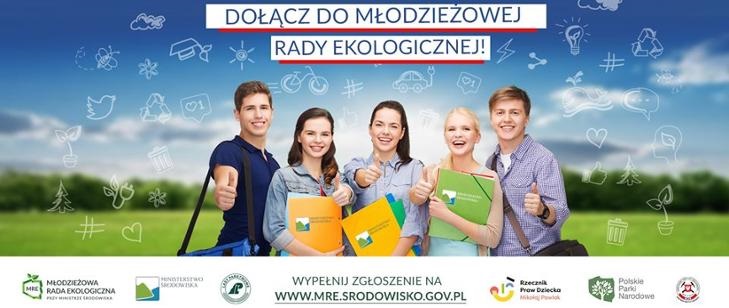
Recruitment for the Youth Ecological Council at the Ministry of the Environment is underway. Children and adolescents will be able to contribute to opinions on pro-ecological activities of the government.

Join the action of the Ministry of Environment!

The call for proposals started on 1 June this year. The Junior Ecological Council will consist of 32 people aged 13 to 21 from all over Poland. The recruitment of candidates is open until 9 September. The first meeting of the Council is also planned for September. 

The voice of the young generation is full of selfless sensitivity and concern for the future, especially when it comes to our national heritage, which is the natural environment. It is worth using this positive energy when searching for pro-ecological solutions for the future The Youth Ecological Council will promote Polish ecological thought and the development of science

–  assures Minister of the Environment Michał Woś

Help save the environment!

The Council will not only have a consultative vote, but will also have its own budget, which will be provided by the project partner, the State Forests. The MRE will also be able to award grants for pro-ecological activities of children and young people. Meetings will take place at least once a quarter. The Council may also meet and act on an “ad hoc” basis in the event of a need to react quickly. The substantive partners of the project include the State Forests, National Parks and the Polish Geological Institute. Mikołaj Pawlak, Children’s Rights Commissioner, has assumed the patronage of the project. 

Think locally, act globally!

The competences of the Youth Environmental Council attached to the Minister of the Environment include expressing opinions on matters covered by the departments of government administration concerning the environment, and in particular, presenting opinions on planned changes in policy, strategy and legislative changes within the scope of the Minister of the Environment’s competence, including proposals for solutions.

Where to look for information?

For more information, please see the following link: mre.srodowisko.gov.pl

The Ordinance of the Minister of Energy of 27 September 2018 on quality requirements for solid fuels, introduced a ban on the sale of slurries of the worst quality for heating installations with a capacity below 1 MW in Poland as of 1 July 2020. These fuels were characterised by high ash and moisture content.

The next step on the way to clean air

In its efforts to improve quality, the Małopolskie Voivodship has introduced a number of regulations concerning fuels. The resolution of the Sejmik of the Małopolska Voivodship of 23 January 2017 introduced a total ban on burning fuels in which the mass share of hard or brown coal with a grain size below 3 mm was over 15%. Additionally, it defined the possibility of burning wood whose humidity did not exceed 20% in its working condition. Such restrictions have been in force in Małopolska since 1 July 2017.

The entry into force of the Regulation of the Minister of Energy on the quality of solid fuels is proof of the rightness of the courageous steps taken by Małopolska. I am very pleased that our regional regulations are reflected in provisions at national level.

 – emphasises Deputy Marshal of Małopolska Tomasz Urynowicz

As a result of the so-called ‘anti-smog resolutions’, changes in national legislation will not constitute additional restrictions for the inhabitants of Małopolska. For three years now, our region has been banning the burning of the worst quality slurries in domestic boilers, cookers or fireplaces. The regional regulations have resulted in the replacement of old heating devices with gas installations, renewable energy sources and highly efficient equipment of Ecodesign standard. Since the introduction of the antismog resolution, over 41,000 old furnaces have been closed down in Małopolska.

Fuel quality is the basis

It seems unavoidable that further standards should be introduced in subsequent years to determine the quality of fuels sold and burned in individual furnaces. It is necessary to regulate standards for coal, which often contains too much sulphur, ash and moisture. It is also important to set standards for the quality of pellets, whose market in Poland is developing intensively. Unfortunately, sometimes in its composition, we can also find pieces of plastic or ground pieces of furniture boards! The voivodship has made an appeal to the Minister of Climate on this matter.

Extensive work on combating climate change, including a map of the potential of renewable energy sources, a network of eco-climatic advisors, information and education activities and building cooperation at various levels of administration – these are the main assumptions of the new integrated project LIFE EKOMAŁOPOLSKA “Implementation of the Regional Action Plan for Climate and Energy”. The Małopolska Region will implement it from EU funds, together with 26 partners from the world of science and local governments.

We have just received information from the European Commission about the allocation of funds for LIFE EKOMAŁOPOLSKA. The total budget of the project is 16.4 million EUR (about 70 million PLN). 60% is EU funding, 35% is EU funding. – The National Fund for Environmental Protection and Water Management, and 5% is the partners’ own contribution,’ said Marshal Witold Kozłowski at a press conference on 30th June this year.

It is worth stressing that this is the second LIFE project run by Małopolska. So far no one in Europe has implemented two integrated projects, and only three such projects will be carried out in Poland and two of them in our region,

added Deputy Marshal of Małopolska Tomasz Urynowicz.

LIFE EKOMAŁOPOLSKA “Implementation of the Regional Action Plan for Climate and Energy

LIFE EKOMAŁOPOLSKA “Implementation of the Regional Action Plan for Climate and Energy” will be implemented by the Małopolska Region from 1 January 2021 to 31 December 2030 together with 26 partners. These are the partners: Ministry of Development, Silesian Voivodeship, AGH University of Science and Technology in Cracow, European Clean Air Centre, Cracow, Tarnów, Nowy Sącz and 17 poviats: Bocheński, Brzeski, Chrzanowski, Dąbrowski, Gorlicki, Cracow, Limanowski, Miechowski, Myślenicki, Nowotarski, Nowosądecki, Olkuski, Powowicki, Suski, Tarnów, Wadowicki, Wielicki. Foreign partners of the project are the Institute for Energy, Climate and Environment in Wuppertal and the Brandenburg Technical University in Cottbus.

One of the most important objectives of the project is to prepare scenarios for the reduction of greenhouse gas emissions for Małopolska by 2030 and 2050. These documents will set the directions for the Regional Action Plan for Climate and Energy. No less important will be to map the local potential of renewable energy sources for Małopolska and Silesia. An interactive map of the RES potential will be created with a calculator for selecting the appropriate installation.

The LIFE EKOMAŁOPOLSKA project will also allow for the preparation of investment projects for support under the Just Transition Fund, the creation of a network of climate advisors in county structures, training for installers, designers and construction supervision staff, as well as information and education campaigns devoted to the issues of counteracting and adapting to climate change and building cooperation at various levels of administration (government, regional and local).

LIFE MAŁOPOLSKA “Implementation of the air protection programme for the Małopolskie Voivodeship – Małopolska in a healthy atmosphere”

The Małopolska Region has already successfully implemented one integrated LIFE project: “Implementation of the Air Protection Programme for the Małopolska Region – Małopolska in a healthy atmosphere”. The project is carried out from October 2015 to December 2023, and its aim is to integrate activities aimed at improving air quality in Małopolska.

On 30 June 2020, the Polish Aviation Museum in Krakow held a training course for eco-managers implementing the ELENA project called EcoTeam and new eco-managers implementing the LIFE – Małopolska project in a healthy atmosphere.

The conference was opened by Tomasz Urynowicz, Deputy Marshal of the Małopolska Region and Tomasz Pietrusiak, Deputy Director of the Environment Department.

I am very pleased that together with us you will change the world, improve the air and climate, and fight for the most important civilisation challenges for Małopolska and for the residents of Małopolska. Małopolska wants to be a leader in environmental change. I am glad that you are with us!

 – emphasises Deputy Marshal Tomasz Urynowicz

What is the EcoTeam project?

The Cracow Metropolis Association has started the implementation of the EcoTeam project financed by the ELENA project. The aim of the project is to create a network of 44 eco-managers in Krakow and neighbouring municipalities. The total budget of this task is over PLN 12 million. The work of the eco-managers employed in the project will focus on advising and helping the residents. They will also contribute to the implementation of investments aimed at increasing the energy efficiency of buildings. It will serve to increase the use of renewable energy sources and improve air quality in the municipalities near Krakow. The activities of all municipalities have been coordinated within the project, which will allow for more effective implementation of the provisions of the Air Protection Program for the Małopolska Region. It is estimated that the advice of eco-managers for the improvement of air quality, including assistance in submitting applications to the Clean Air Program is about EUR 48 million.

What was the training about?

The training was also dedicated to 7 new municipalities that joined the LIFE project on 1 January 2020. The workshops were attended by 60 participants. During the training, issues related to air quality in Małopolska, requirements related to the air protection programme and anti-smog resolutions were presented, as well as the activities of the LIFE project and its effects – with particular emphasis on activities carried out in the Rzepiennik Strzyżewski commune. Also of key importance was Mr Mariusz Sałęga’s speech from the Regional Fund for Environmental Protection and Water Management in Krakow, who discussed in detail the grant programme entitled Clean Air.

The speeches were followed by a discussion during which all questions and doubts of the participants were discussed.

Cooperation is the way to success!

The effects of the work of eco-managers operating in the Małopolskie Voivodship have shown how great benefit for the commune is to employ people responsible for the implementation of air quality improvement strategies at the local level. The ELENA project is an opportunity to expand the network of eco-managers and efficiently raise funds for investments and their implementation. Moreover, it is in line with the assumptions of the new Air Protection Program, which will soon be subject to further consultations.