New rules for the sale of coal and wood boilers

From 12 March 2019 comes into force ordinance of the Minister of Entrepreneurship and Technology, which changes provisions on the requirements for solid fuel boilers. The main changes are the elimination of loopholes that allowed some boiler manufacturers to bypass previous regulations.

Elimination of loopholes

From 1 October 2017, a ban on the sale of boilers which do not meet the emission standards of class 5 in accordance with PN EN 303-5: 2012 is valid throughout Poland. Boilers that were manufactured before this date could still be sold until 30 June 2018.

The 2017 regulation did not cover boilers intended for preparing domestic hot water and for burning non-wood biomass (eg straw, grains, seeds, nut shells). In practice, some boiler manufacturers used these exemptions to bypass regulations. They marked their coal-fired boilers as intended for preparing hot water or for burning seeds or nut shells.

These practices are unlawful from today. The sale of these boilers is subject to the same emission regulations and standards as coal and wood boilers for heating.

The second major change in the regulation is the extension of the definition of placing on the market. Previously, it only included making the product available on the market for the first time. From now on, the regulations also apply to resale, rental or sale via the Internet.

Clarification of boiler requirements

The amendment to the ordinance clarified the manner of confirming the boiler’s compliance with the emission and efficiency requirements. This must be done by an accredited testing laboratory in accordance with the European standard.

The Regulation also introduced additional requirements:

  • In boilers with an automatic fuel feeding it is forbidden to use construction elements allowing for manual feeding. Not only the “emergency grate”, but also the so-called “water grate” and other such solutions.
  • It has been clarified that for boilers designed for the combustion of several types of fuels, emission and efficiency requirements must be met for each of them.
  • Boilers with manual fuel feeding should be operated with a storage tank. Its minimum capacity is specified in the PN-EN 303-5: 2012 standard.
  • Boiler equipment with exhaust gas treatment systems (eg electro-filters) should be an integral part of the boiler construction. This should be confirmed by tests allowing the boiler to be placed on the market and used.
  • The instruction manual and the boiler’s type plate should contain information on the type and quality parameters of the fuel recommended by the manufacturer.

Regulation and anti-smog resolution for Małopolska

In the case of the Małopolska Region, from 1 July 2017, the anti-smog resolution applies. It prohibits the operation of new solid fuel boilers that do not meet the ecodesign requirements. However, in Kraków from 1 September 2019, a total ban on burning solid fuels will come into force.

When buying a new coal or biomass boiler, first of all, the requirements of local law should be followed. The purchase and use of a class 5 boiler that does not meet the ecodesign requirements is inconsistent with the requirements of the anti-smog regulation for Małopolska. It is therefore threatened with a fine. In Małopolska, it is also not allowed to use new boilers without an automatic fuel feeder (the exception is only for gasifying boilers).

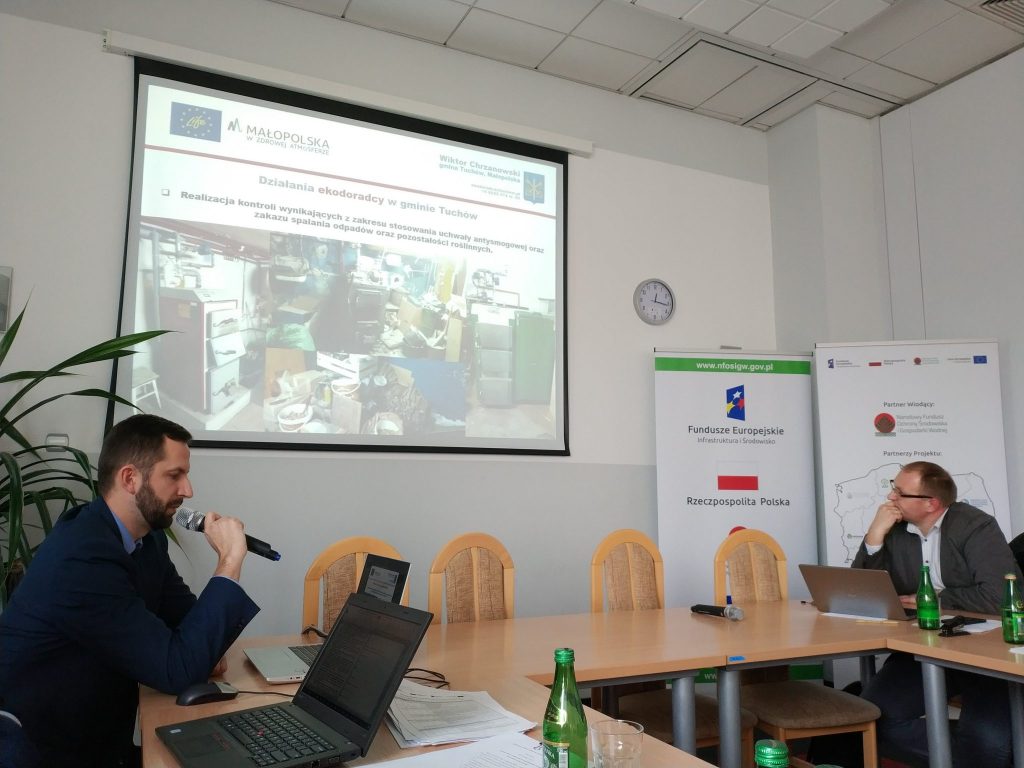
Representatives of the Marshal’s Office of the Malopolska Region and the municipalities of Tuchów and Skawina shared their experiences on the implementation of the LIFE integrated project. At the meeting on 6 February at the National Fund for Environmental Protection and Water Management they presented the project activities to the representatives of the Ministry of Enterprise and Technology, energy advisers from the National Fund and Regional Funds.

The purpose of the meeting was to present the principles of the STOP SMOG Program addressed to people affected by energy poverty. Participants of the meeting discussed the possibilities of supporting municipal activities in the preparation and implementation of projects from the STOP SMOG Program.

Activities undertaken as part of the LIFE project were presented by Wiktor Chrzanowski, Deputy Mayor of Tuchów and Tomasz Ożóg, Deputy Mayor of Skawina. They also pointed to the possibilities of supporting municipal activities by energy advisers from the Regional Fund.

The LIFE-IP MALOPOLSKA project provides direct assistance in preparing applications for the STOP SMOG Program. The Tuchów municipality is preparing the model Municipal Low-Emission Plan as part of the LIFE project. It will be developed in cooperation with other municipalities. Ecomanagers are also involved in helping people affected by energy poverty.

On Friday, 14 December 2018 at the AK Museum (Wita Stwosza 12, Kraków) will be a workshop for employees of municipalities in the scope of preparation of the terms of reference (ToR) for renewable energy installations (heat pumps, solar collectors, photovoltaic panels).

The workshop will be conducted by specialists from the Center of Sustainable Development and Energy Conservation “Miękinia”, Polish Heat Pump Development and Technology (PORT PC) and the Photovoltaic Industry Association.

Workshop program

9:00 – 9:15 Beginning of the workshops

9:15 – 10:45 Workshops on the preparation of the ToR for central heating systems for buildings – heat pumps (Center for Sustainable Development and Energy Conservation “Miękinia”, Polish Organization for Heat Pump Technology Development)

10:45 – 11:00 Coffee break

11:00-12:30 Workshops in the field of preparation of ToR for hot utility water systems – domestic hot water heat pump and solar collectors (Polish Organization for Heat Pump Technology Development)

12:30 – 13:00 Lunch

13:00 – 14:30 Workshops on the preparation of ToR for systems for obtaining electricity – photovoltaic panels (Center for Sustainable Development and Observed Energy “Miękinia”, Photovoltaic Industry Association)

14:30 – 15:00 Summary of the workshops

Due to the limited list of places, registration is required.

If you have additional questions, please contact Ms Justyna Mazurkiewicz ([email protected], phone: 12 37 96 083).

Workshops are carried out as part of the LIFE integrated project “Implementation of the air quality plan for the Małopolska Region – Małopolska in a healthy atmosphere”, aimed at improving air quality in the region (action E.3 – “Creating a network for exchanging experiences with other projects”).

1800 air purifiers for hospital children’s wards, kindergartens, nurseries and toddler clubs 

The action, which was inaugurated on 3rd September this year in Borek Szlachecki, has just ended. The Małopolska hospital children’s wards, kindergartens, nurseries and toddler clubs have been equipped with modern air purifiers. These devices are an ad hoc solution aimed at improving the air quality in the rooms in which children reside for a long time.

“Children, but also parents, are transferred in addition to the purifier – knowledge of what the threat is smog and that all the inhabitants of Małopolska have to take action to change this situation” – emphasized Jacek Krupa, Marshal of the Malopolska Region.

1800 air purifiers were purchased as part of the LIFE project entitled: ” Implementation of the air quality plan for the Małopolska Region – Małopolska in a healthy atmosphere“. The total cost of the project is 1,058,400 PLN. Institutions to which the devices came did not participate in the costs.

Educational actions in each institution

Each facility that received a purifier, declared an educational campaign for children and their parents in the area of ​​air quality. Preschoolers prepared a delightful artistic program, choreography and the whole setting of the event. The performances abounded in various kinds of games and substantive talks. The main motive of all events was of course the care for air quality. All performances, thanks to the creativity of parents and educators, were distinguished by their ingenuity and commitment.

 “Meetings with children give a lot of joy and satisfaction. Young people absorb knowledge like a sponge and do not negate scientific research. They assume that air pollution is harmful and we should fight this negative phenomenon. Visits to kindergartens always combine with emotions. The educational campaign surprised with the enormous involvement of children and their ecological awareness” – Kamila Pakuła – eco-manager from Gorlice sums up the educational campaigns.

Purifiers have reached both private and public kindergartens and nurseries. Almost all municipalities in Małopolska have joined this initiative. In many local governments this caused a domino effect. Obtaining a purifier motivated local governments, parents and other entities to continue this campaign and persuaded them to buy more devices.

“Self-governments are becoming more actively involved in the fight against low emissions. We subsidize the replacement of old heating devices and conduct information campaigns. Air purifiers in kindergartens is one of the activities that also has an educational dimension. 24 devices have been added to our facilities, but we encourage private investors to join this action and fund additional equipment” notes Tomasz Ożóg, Deputy Mayor of Skawina.

The summary of the action and reports from the educational meetings can be followed on municipalities’ websites, as well as on social media.

Priceless health of the youngest

How did parents of children and kindergarten workers react to air cleaners? The latter recognize the usefulness of the deviceThe device is easy to use and each one has an instructional video.

“The cleaner will be wandering from the hall to the kindergarten room and I hope that this example will encourage sponsors or parents to buy another one so that permanently one cleaner will be in every room” – says Małgorzata Jaśtal-Balcewicz, director of the educational institutions in Borek Szlachecki.

Parents, on the other hand, appreciate not only the fact that for a few hours a day their children will breathe clean air, but also that the device is completely safe. It was equipped with a parental control button.

 “I am glad that in the winter, when smog especially affects the youngest, my son will be able to breathe clean air for several hours a day. This is very important to me, because the well-being of my child and his health are the most important for me” – emphasizes Katarzyna Czech from Mników.

 Why air cleaners?

Purifiers are adapted to the needs of a typical kindergarten room. They are able to filter all air in the room twice in an hour. In addition, they are equipped with high-class HEPA filters that capture dust and substances harmful to health and allergens. As a result, the youngest have a chance to avoid the smog season and health problems associated with polluted air.

Andrzej Guła – from the Krakow Smog Alert in an interview for Radio Krakow, found it justified to purchase purifiers for educational institutions by the Marshal’s Office: “When there is a high concentration of particulate matter, it also gets into the rooms and as long as we do not eliminate the most polluting coal boilers, we have to deal with these long, smoggy autumn-winter days with other methods”.

Often exceeding the permissible level of pollution reaches even 500% of the norm, so the indoor air is also harmful to health. An air purifier is an effective, though temporary measure to fight with smog.

Purifiers also went to medical facilities. The youngest patients of children’s wards in five hospitals in Małopolska will benefit from them. For years, internists and pulmonologists have been paying attention to the increasing number of allergies and illnesses associated with contaminated air. 

We must all make sure that the air is better. I believe that everyone should be educated – from kindergarten to universities of the third century. Children are our future. Meanwhile, children and the elderly are particularly exposed to smog. In Małopolska, we have several times more children with allergies than in the so-called green areas “- emphasizes Anna Prokop-Staszecka, Chief Executive of the John Paul II Specialist Hospital in Krakow.

The cleaners have been installed in the rooms where children are staying. In addition, educational materials were also provided, such as: job cards and books along with information brochures on the topic of smog. They contain information on the causes of smog formation, the consequences of breathing polluted air, as well as ways to counteract the creation of low emissions.

Promotion of educational action

Several hundred materials relating to the informational and educational campaign conducted by the Małopolska Region appeared in the press and on the Internet. In addition, in the Małopolska Railways and POLREGIO, a film promoting air protection and information boards about the distribution of purifiers was displayed for two months. Radio Kraków conducted a promotional campaign on the air of the radio station. Numerous interviews with eco-managers, doctors, scientists and local leaders were carried out. As part of the action, there was organized contests for listeners, in which prizes were energy-saving sets and air purifiers. The action was very popular.

Measure was implemented as part of the LIFE integrated project “Implementation of the air quality plan for the Małopolska Region – Małopolska in a healthy atmosphere”.

[easy_image_gallery gallery=”623″]

From 6th November 2018, on the basis of a resolution adopted by the Małopolska Management Board, the Regulations of the List of low-emission boilers and heaters for solid fuels changed.

The change introduced includes:

  • Boilers on the list should meet not only the ecodesign requirements, but also the requirements of the Ordinance of the Minister of Development and Finance of 1 August 2017 on the requirements for solid fuel boilers.
  • Clarification that laboratory tests for emissions must relate to each product. This means that in the case of devices occurring in several variants of rated power, each of them should be tested by an accredited unit.
  • Publication of full reports on laboratory tests of boilers or space heaters.
  • Obligation to provide and publish a scan or image of the nameplate of the heating device.

In the case of heating devices entered on the list before 6 November 2018, the applicant or manufacturer of the device has to complete the documentation until 31 January 2019 . All you have to do is sign and submit a new application for entry on the list and a scan or image of the nameplate. You do not have to re-submit the rest of the documentation. Failure to complete the application will result in deleting the device from the list.

New applications

In the case of new device calls, it is necessary to send to email [email protected]:

  • Scan of the completed and signed application for entry on the list.
  • Electronic version or scan of technical documentation and instructions for installers and users of the heating device,
  • A scan of the full test report for each fuel envisaged for use, confirming that the ecodesign requirements have been met,
  • Scan or image of the nameplate of the heating device,
  • One photo or graphic depicting a heating device.

The new regulations and application for entry on the list are available at: Ecodesign solid fuel boilers and space heaters.

The entry on the list is free. Preceded by the verification of documentation by experts. Experts represent accredited testing laboratories for heating devices: Institute for Chemical Processing of Coal in Zabrze, Institute of Power Engineering – Research Institute in Warsaw, Office of Technical Inspection in Warsaw, Oil and Gas Institute – National Research Institute in Krakow, and scientific units: AGH University of Science and Technology and Polish Academy of Sciences.

Ecodesign solid fuel boilers and space heaters

Already more than 200 devices on the list

The list of low-emission boilers and heaters for solid fuels is maintained by the Department of the Environment of the Marshal’s Office of the Małopolska Region since 2016. Currently, it already includes 206 devices that meet the ecodesign requirements, including 178 boilers and 28 space heaters.

The list is voluntary. However, it is a valuable source of information for municipalities and residents of which devices meet the requirements of the anti-smog resolution for Małopolska and grant programs. All current subsidy programs for exchanging heating devices (Clean Air, RPO, PONE) require that installed solid fuel boilers must meet the ecodesign requirements.

On 26 October at the Department of European Funds at the Marshal Office in Krakow, the first meeting opening a series of workshops devoted to co-financing projects in the field of the use of renewable energy sources (RES) took place. The workshop is intended for Leaders of projects selected to receive funding under the Regional Operational Program for the Małopolska Region for 2014-2020 – Measure 4.1. Increasing of the use of renewable energy sources, Sub-measure 4.1.1 – Development of infrastructure for the production of energy from renewable sources.

During the first meeting, workshops were carried out to prepare the terms of reference for hot water systems (heat pumps and solar panels), central heating systems for buildings (heat pumps and biomass boilers) and systems for electricity (photovoltaic panels).

The meeting was led by specialists from the Center for Sustainable Development and Energy Conservation “Miękinia”, Polish Heat Pump Development and Technology Organization (PORT PC) and the Photovoltaic Industry Association.

The next meeting will take place on 9 November at the AK Museum in Krakow. It will be devoted to the installation of heat pumps and solar panels.

The workshop was organized as part of the implementation of the LIFE integrated project “Implementation of the air quality plan for the Małopolska Region – Małopolska in a healthy atmosphere”.

We have summarized the effects of the actions in Małopolska Region in the fight against smog in 2017. The prepared document contains information on the effects of local government activities. The entities showed activities that directly or indirectly affected the improvement of air quality in Małopolska, presented, among others, achieved environmental effects and expenses incurred.

Liquidation of coal furnaces and boilers

On 1 July 2017, an anti-smog resolution for the Małopolska region, adopted by the Assembly of the Małopolska Region, entered into force. It prohibited the use of new boilers and fireplaces that do not meet the ecodesign requirements, the use of coal sludge and flotoconcentrates, and biomass with a moisture content above 20%. At the same time, a transitional anti-smog resolution for Krakow came into force, which introduced a ban on the burning of poor quality coal and moist biomass.

In 2017, a total of 10,081 boilers for solid fuels were liquidated in Małopolska. In recent years, the scale of liquidation of boilers has been systematically  growing  – in 2017 there were 37% more than in 2016, 127% more compared to 2015 and three times more than in 2014. Among the exchanges of low-efficiency fuel devices, for gas heating (72%) and  new solid fuel boilers (19%) dominated.


Investments in this area were carried out in 87 municipalities from the Małopolska region, while in 2016 only in 48 municipalities (81% increase). Municipalities in which the largest number of devices were liquidated were: Kraków (6,114), Miechów (459), Tarnów (183), Skawina (179) and Zabierzów (135).

Map: Number of coal furnaces and boilers liquidated in 2017 in the Małopolska municipalities.

A total of over  28 km of new heating networks were build, to which nearly 600 new heat consumers were connected and nearly 220 km of new gas networks with a connection of almost 30,000 new gas recipients. Also in 771 buildings thermal renovation was completed and 1,446 new renewable energy sources were installed.

Activities in the area of ​​low emission reduction undertaken by municipalities and poviats allowed in 2017 to reduce the emission of PM10 by 280.9 Mg and PM2,5 by 246.2 Mg. The emission of benzo(a)pyrene has been reduced by 144 kg.

Controls and educational activities

83 municipalities have taken measures to control the incineration of waste by residents. In 2017, a total of 16,200 inspections were carried out in which 1,200 non-compliance (7.2% of all controls) were detected. The fines were imposed in the total amount of 79,000 PLN and 44 cases were referred to the court.

In 73 communes, inspections were carried out to comply with the requirements of the anti-smog resolution. In total, nearly 11,000 controls were conducted resulting in over 300 cases of non-compliance with the resolution. In the majority of municipalities, controls in the scope of compliance with anti-smog resolutions were carried out together with controls on the incineration of waste or plant residues.

Map: Number of waste incineration inspections carried out in 2017 in the Małopolska municipalities.

In the municipalities and poviats of the Małopolska Region, a total of 1,100 actions or educational campaigns in the field of air protection were organized, in which 400,000 participants took part.

83 municipalities have prepared and updated a database of contacts to schools and health centers in order to provide notifications from poviat crisis management centers about the occurrence of high levels of pollution. 121 municipalities and 14 poviats declared that they publish on the website announcements about high air pollution.

Reduction of emissions from transport

Municipalities in Małopolska also undertook activities in the field of reducing transport emissions. The most important of them are:

  • new Park & ​​Ride car park has been opened for use in Krakow (Kurdwanów).
  • 14 municipalities carried out 634 inspections of vehicles leaving the construction site. In addition, 12 municipalities conduct regular washing of major roads at least once a week, and 7 municipalities and 2 poviats every 2 weeks.
  • A total of 123 low-emission urban transport vehicles were purchased , including 99 in Kraków itself.
  • In total, around 130 km of new bicycle paths were build in Małopolska, and 16 municipalities carried out campaigns promoting the use of bicycles for transport.
  • Poviats conducted  453 inspections of vehicle diagnostic stations. 94 cases of irregularities in the field of emission tests or technical condition of the vehicle were detected during the inspection.

Costs of activities in the field of air protection

The total cost of implementation of activities related to the implementation of the Air Quality Plan in 2017 amounted to 770.4 million PLN. Including:

  • 119.6 million PLN for the liquidation of old heating devices,
  • 84.5 million PLN for the expansion and modernization of heating networks,
  • 131.8 million PLN for thermal modernization of buildings,
  • 25.7 million PLN for investments in renewable energy sources,
  • 174.2 million PLN for repairs and hardening of road surfaces,
  • 5.8 million PLN for improving the organization of car traffic in cities,
  • 164.9 million PLN for the development of public transport.

Change in the level of pollutants in the air

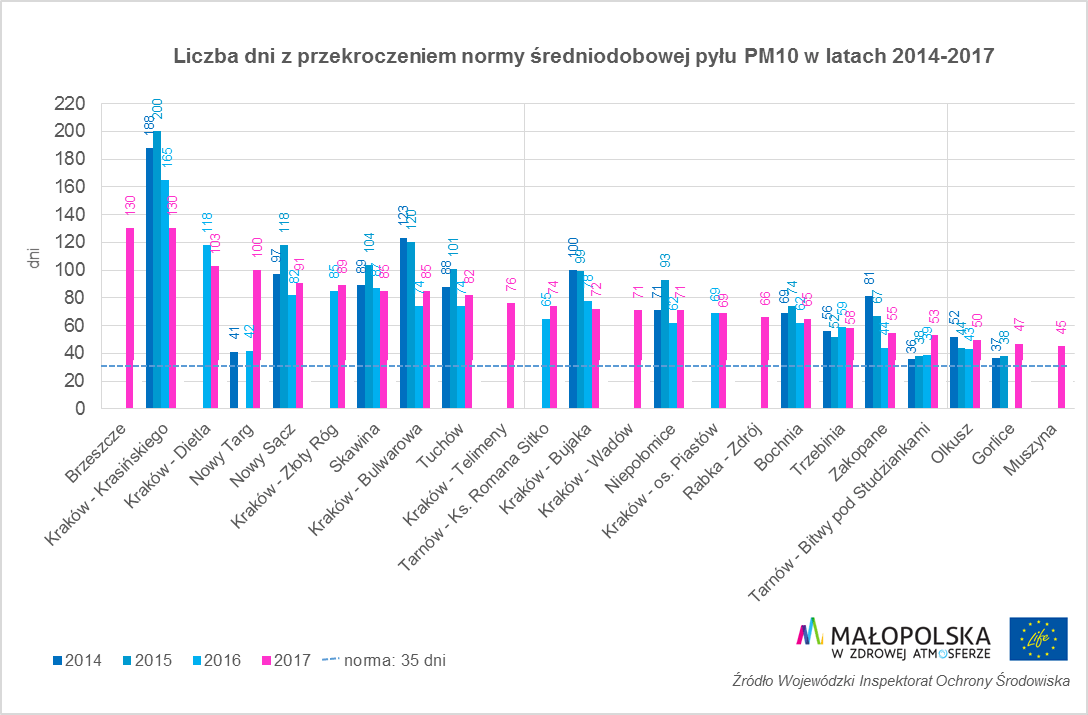
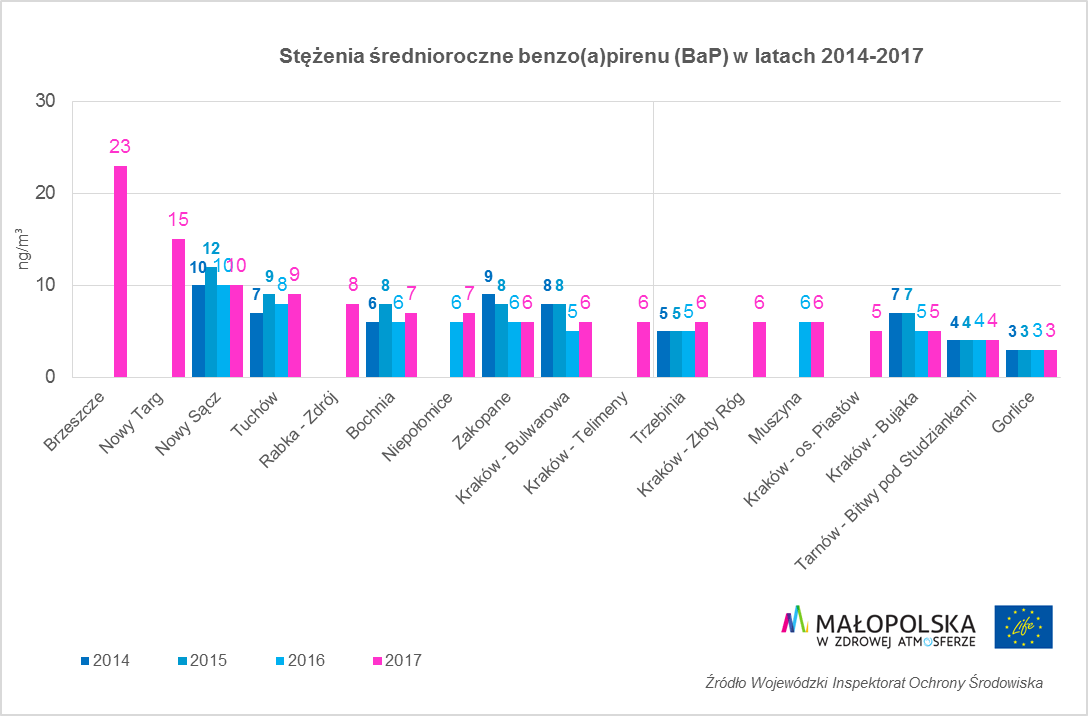
Air quality in Małopolska in 2017 did not change significantly compared to the previous year. The average annual concentrations of PM10 and PM2.5 were comparable to last year’s values. According to the air quality assessment performed by the Provincial Inspectorate for Environmental Protection in Kraków, exceeding the admissible value of PM10 and the target level of benzo(a)pyrene occurred in all zones of the Małopolska Region.

Liczba dni z przekroczeniem poziomu PM10 2017
The number of days exceeding the daily level of PM10 in 2017.
Poziomy benzo(a)pirenu 2017
Average annual concentrations of benzo(a)pyrene in 2017.

Measurements have shown that the worst air quality in Małopolska occurred at measuring stations in:

  • Brzeszcze (the highest in Małopolska: the number of days exceeding the permissible concentration of PM10 daily average: 130 days, average annual concentration of PM10: 64 μg/m³, average annual concentration of benzo(a)pyrene: 23 ng/m³),
  • Krakow, Al. Krasińskiego (the number of days exceeding the permissible concentration of PM10 daily average: 130 days, average annual concentration of PM10: 55 μg/m³, the highest annual average concentration of nitrogen dioxide: 61 μg/m³),
  • Krakow, ul. Dietla (number of days exceeding the permissible concentration of PM10 daily average: 103 days, average annual concentration of PM10: 49 μg/m³, annual average concentration of nitrogen dioxide: 42 μg/m³),
  • Nowy Targ (number of days exceeding the permissible concentration of PM10 daily average: 100 days, average annual concentration of PM10: 47 μg/m³, average annual concentration of benzo(a)pyrene: 14.6 ng/m³, the highest annual average concentration of sulfur dioxide: 14.5 μg/m³),
  • Nowy Sącz (number of days exceeding the permissible concentration of PM10 daily average: 91 days, average annual concentration of PM10: 43 μg/m³, average annual concentration of benzo(a)pyrene: 10.0 ng/m³).
Check also the effects of the implementation of the Air Quality Plan for the Małopolska Region in previous years:

The summary has been prepared on the basis of reports prepared by all municipalities and poviats of the Małopolska Region, data obtained from the inventory database for heating buildings in Małopolska (as at 24/10/2018) and the annual Air Quality Assessment for the Małopolska Region. The report was prepared as part of activity D.1. “Monitoring of the effects of the implementation of the Air Quality Plan for the Małopolska Region” as part of the project “Implementation of the Air Quality Plan for the Małopolska Region – Małopolska in a healthy atmosphere “, LIFE-IP MALOPOLSKA, LIFE14 IPE/PL/021 co-financed from the LIFE program of the European Union.

From 4 November 2018, coal available for sale must meet the quality requirements introduced by the ordinance of the Minister of Energy. This means the end of uncontrolled sales of very poor quality coal. Each customer will also receive reliable information on the actual quality parameters of the coal he buys.

From 12 September 2018, the sale of coal sludge and flotoconcentrates has been banned throughout Poland. It was introduced through amendment to the Act on the system of monitoring and controlling the quality of fuels. It is also forbidden to add coal sludge and flotoconcentrates to other fuels. Now the ban on sales also included coal with very low calorific value and high content of ash, sulfur or moisture. At the same time, the Act obliged the Minister of Energy to review the introduced coal quality standards every two years. The results of the review are to be the basis for tightening standards in the future.

The quality of coal authorized for sale

Detailed parameters of the coal authorized for sale have been specified in the Regulation of the Minister of Energy on quality requirements for solid fuels.

“Billet”, “cube” and “nut” coal must have a calorific value of at least 22 MJ/kg, an ash content of no more than 12% and a sulfur content up to 1.7%. On the other hand, “pea coal” may have a slightly lower calorific value – minimum 21 MJ / kg. The ash content should not exceed 14% and the sulfur content can reach up to 1.7%.

In the case of coal marked as “eco-pea coal” and “coal eco-fines”, acceptable parameters are more stringent. The calorific value should be at least 24 MJ / kg, the ash content cannot exceed 12% and sulfur content 1.2%. “Coal eco-fines” also meets the requirements imposed by the anti-smog resolution in Małopolska. The grain content up to 3 mm cannot exceed 15%.

In the transitional period until 30 June 2020, the Minister of Energy also allowed sales of coal fines with inferior parameters. Its calorific value may amount to 18 MJ/kg, ash content 28% and sulfur 1.7%. This type of fuel, however, does not meet the requirements of the anti-smog resolution for Małopolska because of the high content of 0-1 mm fraction (up to 30%). In Małopolska, from 1 July 2017, the combustion of coal with a content of 0-3 mm fraction over 15% is forbidden and threatened with a ticket of 500 PLN or a fine of up to 5,000 PLN.

The sale of lignite will only be legal until 1 June 2020. After this period, it will only be possible to sale brown coal after thermal processing.

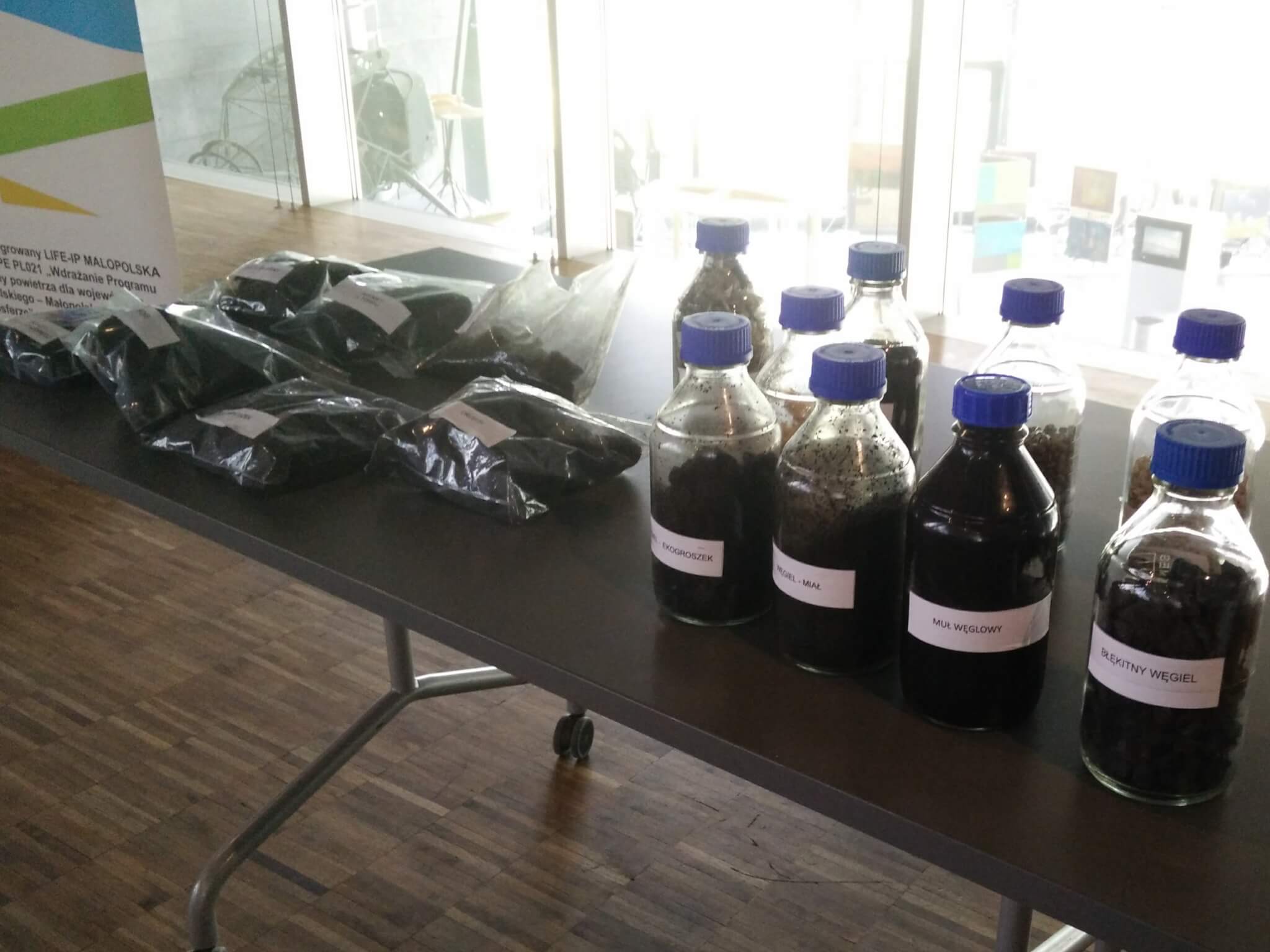
próbki, węgiel, kontrole
Training on monitoring compliance with the anti-smog resolution for Małopolska – fuel samples.

In Małopolska coal fines are forbidden

The anti-smog resolution for Małopolska introduces additional restrictions on the parameters of coal authorized for combustion. It is allowed to burn coals, which in accordance with the new ordinance of the Minister of Energy have been marked as “billets”, “cubes”, “nuts”, “peas”, “eco-peas” and “eco-fines”. On the other hand, the resolution prohibits the combustion of coal marked as “fines” as well as coal sludge and flotoconcentrates.

In the case of Krakow, until 31 August 2019, only coals marked as “billets”, “cubes”, “nuts”, “peas” and “eco-peas” may be burned. But their quality parameters must be stricter than allowed by the ordinance of the Minister of Energy. The minimum calorific value is 26 MJ/kg, the maximum ash content is 10%, sulfur is 0.8% and the share of grains up to 5 mm cannot exceed 5%.

Coal quality certificate

The Act on the system of monitoring and controlling the quality of fuels introduced the obligation to use the fuel quality certificate. The seller is obliged to provide a copy of the certificate confirmed for compliance with the original to each customer.

The model of the quality certificate for solid fuels was defined by the Minister of Energy in the regulation of 27 September 2018. This regulation also entered into force on 4 November 2018.

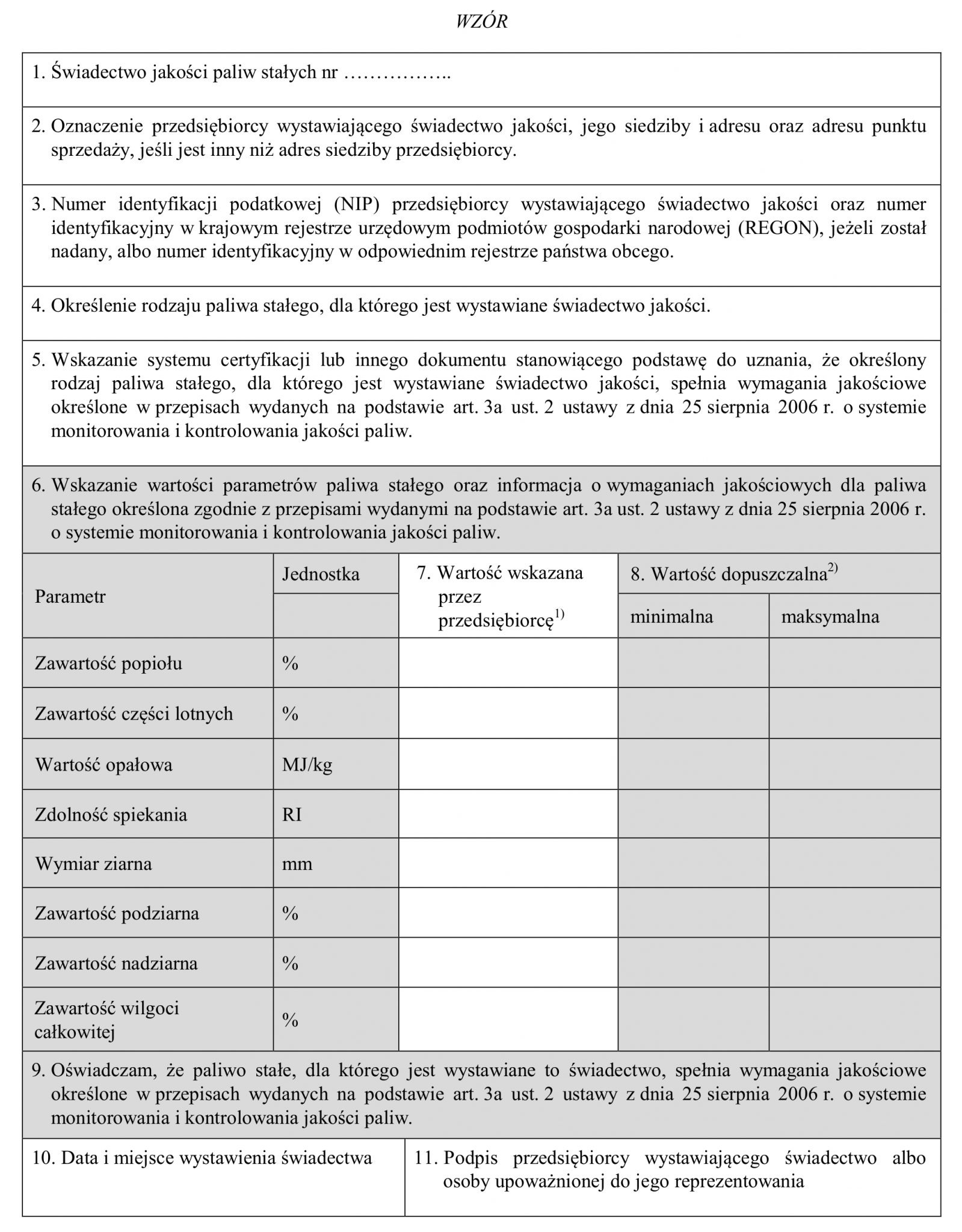
The coal quality certificate should contain the actual parameter values ​​for the batch of fuel sold and their comparison with the values ​​specified in the regulation. As a result, the customer can be sure of the quality of the fuel he receives. The certificate should also show the date of its issue and signature of the person representing the entrepreneur.

When buying coal, pay attention to its actual quality parameters – item No. 7 on the coal quality certificate. Compare these values ​​with the recommendations of the manufacturer of the boiler, in which the coal will be burnt. These requirements should be included in the instructions for use of the device. Thanks to the use of coal adapted to the boiler, you will avoid failures and possible problems with the guarantee.

Świadectwo jakości węgla
Model of coal quality certificate

Reporting of infringements

The Trade Inspection is responsible for controlling the sellers and distributors of coal. During the inspection, the inspector may request access to documents regarding the origin and quality of fuel and take samples for testing. If it is determined that the sold coal does not meet the quality requirements, the seller is subject to a fine of 50,000 to 500,000 PLN. If the seller does not give the buyer a copy of the coal quality certificate or the coal parameters contained therein are inconsistent with the actual state, he may receive a penalty from 10,000 up to 100,000 PLN or be imprisoned for up to 3 years.

Contact details of the Trade Inspection in Małopolska

Provincial Inspectorate of Trade Inspection in Kraków
31-752 Kraków, ul. Ujastek 1
tel. 12 448 10 30
[email protected]

Delegment of the Provincial Inspectorate of Trade Inspection in Nowy Sącz
33-300 Nowy Sącz, ul. Jagiellońska 52
tel. 18 444 24 08
[email protected]

Delegment of the Provincial Inspectorate of Trade Inspection in Tarnów
33-100 Tarnów, Al. Solidarity 5-9
tel. 14,696 extension no. 3355, 3356, 3357, 3358, 3359
[email protected]

New entitlements for municipal guard officers

The municipal guards gained new powers to impose fines for breaking the anti-smog resolutions. Amendment of the Regulation of the Minister of Internal Affairs and Administration regarding offenses for which municipal guards are entitled to impose fines by way of a penalty ticket, entered into force on 1 November 2018. It introduced the possibility of imposing fines by way of a penalty ticket for offenses specified in art. 334 of the Environmental Protection Law.

Art. 334. Who does not comply with the restrictions, orders or prohibitions laid down in the resolution of the regional assembly adopted on the basis of art. 96, is subject to a fine.

This means that it is possible to enforce the requirements set out in the resolutions of the Małopolska Regional Assembly adopted on the basis of art. 96 of the Environmental Protection Law:

The amount of the mandate can be up to 500 PLN. The case may also be directed to the court, which may impose a fine of up to  5,000 PLN.

Inspections of compliance with anti-smog resolutions may also be carried out by Police officers (Article 1 item 2 point 4 of the Police Act) and employees of the city or municipality office. In this case, personal authorization is required from the municipality mayor (Article 379 (2) of the Environmental Protection Act).

For what violations can you be fined?

In the case of Krakow residents, from 1 July 2017, the following types of smoking are forbidden:

  • coal or brown coal with a grain size of 0-5 mm or with a calorific value below 26 MJ/kg or ash content above 10% or sulfur content above 0.8%,
  • wood and other biomass with humidity above 20%.

However, from 1 September 2019, the burning ban will cover all solid fuels, including coal and wood.

Inhabitants of the remaining Małopolska region from 1 July 2017 were prohibited by:

  • combustion of coal with a grain size of 0-3 mm,
  • burning wood and other biomass with a moisture content above 20%,
  • use of new boilers and fireplaces that do not meet the ecodesign requirements in terms of pollutant emissions and energy efficiency.

From 1 January 2023, the operating ban will cover all non-class boilers and fireplaces with thermal efficiency below 80%. Four years later, the use of class 3 and 4 boilers will also be banned.

Anti-smog resolution

Documents verified during the inspection

Persons who operate boilers, furnaces or fireplaces, are obliged to show during the inspection documents confirming compliance with the provisions of the anti-smog resolution. These are:

  1. Documents confirming the parameters of the coal used, eg certificate of coal quality, invoice containing information about the parameters of purchased coal. The buyer has the right to request this document from the fuel seller.
  2. Documents confirming that the heating device meets the requirements for emissions and efficiency (eg technical documentation of the device, instructions for use or test report).

In case of doubt, the inspectors have the right to take fuel samples for testing. They can also carry out on-site wood moisture testing using a hygrometer.

Training in conducting control over the anti-smog resolution requirements

In June 2017, the Marshal’s Office of the Małopolska Region conducted training for employees of municipal offices and officers of municipal guards in Małopolska. The training was conducted by WIOŚ experts in Krakow, IChPW in Zabrze, INiG in Krakow, City Guard of the City of Krakow and the Frank Bold Foundation. In addition to discussing the requirements of the anti-smog resolution, they also included the presentation of:

  • types of boilers and fireplaces for which limitations have been introduced,
  • types of fuels for which a ban has been imposed,
  • legal and practical aspects of conducting control.

The employees of the municipalities also received the model documents: authorization for inspection, notification of inspection, application for punishment.

In 2017, the municipalities in Małopolska carried out a total of nearly 11,000 inspections of compliance with restrictions resulting from the provisions of anti-smog resolutions. The auditors detected more than 300 cases of infringements. From November 2018, in such cases it will be possible to impose criminal fines of up to 500 PLN.

On the Clean Air Day, children from all of Małopolska will write a letter to their neighbor, in which, using the power of argument, they will convince him to change the source of heating to ecological.
We encourage schools, parents and all those organizing activities for children to actively participate in the action!

We provide you with a letter template for your neighbor. The children’s task is to write a letter, the aim of which will be to persuade the neighbor to change the source of heating to be more ecological. Children should try to convince the addressee only through the positive aspects of such a change.

Pictures of ready letters should be sent to [email protected] with the title “Letter to neighbor”. The most interesting works will be presented on our website: powietrze.malopolska.pl and we will award with a small gift.

The action lasts until the end of November!

An event on Facebook

DG NEAR of the European Commission and the Ministry of Environment of the Slovak Republic organised multi-country workshop on air pollution from household heating under the EC TAIEX (Technical assistance and Information Exchange) programme on 2 to 3 July 2018 in Bratislava.

The workshop was attended by representatives of 13 Member States (Slovakia, Czech Republic, Poland, Hungary, Bulgaria, Lithuania, Latvia, Estonia, Denmark, Great Britain, Ireland, Belgium, Germany). The goal of the workshop was to give environmental ministries and authorities the opportunity to exchange knowledge and experience on effective measures and good practices aiming at reducing emissions from domestic heating via regulatory approaches, incentives, awareness raising campaigns and other measures.

The event was also an opportunity to present the activities and effects of the LIFE-IP MALOPOLSKA project. Jana Matejovičová from Slovak Hydro-meteorological Institute presented emission inventory and regional air quality modeling prepared as part of LIFE project. Piotr Łyczko from Marshal Office of the Malopolska Region presented Polish experiences and activities in five areas:

  • Achievements and challenges in reducing emissions from domestic heating.
  • Promotion of low emission boilers and stoves.
  • Incentivising the phasing out of high emission boilers and stoves.
  • Changing citizens’ behaviour to reduce emissions from boilers and stoves.
  • Inspections of domestic boilers and stoves.

Improving air quality has a high priority for the Slovak authorities. The workshop was attended by high-ranking representatives of the Ministry of the Environment, but also other institutions: SHMI, The Union of Towns and Cities of Slovakia, NGOs, gas suppliers. Bratislava will also host the next European Clean Air Forum in 2019.

Check: Event details on TAIEX website

The LIFE integrated project implemented in Małopolska was presented at the international conference Saltsjobaden VI held on 18-20 March 2018 in Gothenburg, Sweden.

The conference was organized by the Swedish Environmental Protection Agency and IVL Swedish Environmental Research Institute. Almost 200 experts from national and international organizations took part, including the Swedish Minister of the Environment, representatives of the WHO, the European Commission, the United Nations Environment Programme (UNEP) and the UN Convention on Long-Range Transboundary Air Pollution (CLRTAP).

During the “Clean Air – Sectors and Solutions” workshop, the experience of Małopolska with the introduction of restrictions on the use of solid fuels and anti-smog resolutions was presented. At the “Clean Air for the Cities” workshop, the assumptions and effects of the LIFE integrated project were presented, especially the work of ecomanagers in the cities and municipalities.

[easy_image_gallery gallery=”866″]

Dear Sir or Madam,

the Eco-Managers employed under the LIFE project have been operating among their local communities for over a year. During this period of time, they provided advice and help to thousands of residents, visited dozens of schools and organized hundreds of meetings. With a view to ensuring high quality of help provided by Eco-Managers, we would like to know how you assess their work. We value your opinion and the information provided on the basis of the survey will help us better meet your needs in the future. Having the above in mind, we kindly ask you to complete the survey, it will enable your assessment of the individual areas of the activities of the Eco-Managers.

Thank you for your time!

The survey is anonymous and your assessment is very important to us!

Ankieta Ekodoradcy

At smog.edu.pl, you can find an educational portal for children and teenagers prepared by the Krakow Smog Alert. The portal was developed in response to the expectations of parents and teachers who were looking for materials that could support education about the effects and sources of air pollution.

The portal contains sections for children of all ages, teenagers and teachers. The latter, it will help, among other things, save time and diversify lessons. There are, among others, ready-made lesson plans, work sheets, educational games, audiobooks and educational videos. Care was also taken to ensure that young people could acquire information in an attractive and interesting way, and to show how to care for the environment, and especially for the air we all breathe.

Parents and teachers are people who are particularly interested in the impact of smog on our daily lives and how to protect themselves against it and prevent it from being generated. Educational materials and teaching aids that could help in getting to know the subject are available in the form of a portal where everyone will find what they need. The change in attitudes among the youngest will bring not only the effects visible in the coming years, but it can also be effective “here and now”. There are situations when children who became familiar with the problem of smog outside their home explained to their parents that they should give up the so-called smolders and not throw garbage into their furnaces.

This is another interesting “smog” project aimed at children. Not much earlier, the book “Smok na smog” (“Smog holdup”) was released, which, in cooperation with the Polish Smog Alert, was prepared by the “Znak” publishing house.

The portal was implemented as part of the action “E.2. Local information and education activities in the field of air protection” of the LIFE integrated project “Implementation of Air Quality Plan for the Malopolska Region – Malopolska in a healthy atmosphere.” LIFE14/IPE/PL/021 / LIFE IP MALOPOLSKA.

The obligatory Air Quality Plan for the Malopolska Region imposes the obligation of the municipalities from the territory of the Malopolska Region to prepare and update the inventory of heat sources on the territory of the municipality, taking into account, among others, sources whose exchange has been co-financed or, for example, information obtained during the audit.

At the beginning of 2017, the Self-Government of the Malopolska Region made a tool available to conduct such an inventory to municipalities. At the same time, this tool is used to collect reports on the implementation of investment activities involving the elimination of old, low-efficiency heating appliances for solid fuels, thermo-modernization of residential or public buildings and the used renewable energy sources.

From 12 to 15 December this year, the Marshal’s Office of the Malopolska Region conducted a workshop training on the service of the subject database for municipal employees. The training consisted in a theoretical and a practical part, and was organized primarily to improve current reporting, obtain correct and representative data provided by municipalities in order to monitor the implementation of corrective measures on an ongoing basis. 119 municipalities from the Malopolska Region and representatives of the Regional Inspectorate for Environmental Protection in Krakow and the Regional Fund for Environmental Protection and Water Management in Krakow participated in the training.

During the training, emission indicators used to assess the ecological effect were presented to municipalities. It is recommended that municipalities apply these indicators when developing their own strategic documents, e.g. in low-emission economy plans, thanks to which, consistency with the Air Quality Plan for the Malopolska Region and reporting resulting from it will be maintained. In addition, the training participants were informed about the way in which the Regional Inspectorate of Environmental Protection in Krakow carried out inspections in 2018 with respect to the implementation of the Air Quality Plan for Malopolska Region.

The video competition ‘I LIVE GREEN’, organised by the European Environment Agency (EEA) and its partner network, invites all Europeans to show their creativity and to share their actions to help the environment. The best videos will receive a cash prize.

What we eat and buy, how we move around or heat our homes, and many other big and small choices have an impact on the environment and our health. In the ‘I LIVE GREEN’ video competition, Europeans can share their green actions through short videos, vote for the best clips, and inspire others to do even more.

While you can take green actions in almost any area of your life, ‘I LIVE GREEN’ focuses on four topics:

  • Sustainable food
  • Clean air
  • Clean water
  • Minimal waste

Check the competition rules and how to participate on the ‘I LIVE GREEN’ page.

Timetable

Prizes

The winners in each category (Sustainable food, Clean air, Clean water, and Minimal waste) will be awarded a cash prize of EUR 1000. The Public Choice Award, chosen through the online vote, is EUR 500.

As part of the integrated LIFE Malopolska Project under the implementation of the “Air Quality Plan for the Malopolska Region – Malopolska in a healthy atmosphere”, on-line classes were held using the Malopolska Educational Cloud on November 24 this year. The topic of the lesson concerned the broadly understood “energy efficiency”. The lecture was conducted by Eng. Michał Kaczmarczyk, PhD from the AGH University of Science and Technology in Krakow.

The main idea of these activities was to raise the awareness of young people in relation to the responsible and conscious use of electricity, heat, water and transport in the aspect of environmental protection, with particular emphasis on reducing low emission. During Friday classes, issues related to energy efficiency were discussed, including the legal acts in force in Poland, issues related to thermal management of buildings, technical solutions in the field of construction and central heating installations, energy audits and energy performance certificates for buildings.

The classes were conducted as part of the implementation of the action “E.2. Local educational and information campaign promoting clean air” of the integrated LIFE project “Implementation of Air Quality Plan for Malopolska Region – Malopolska in a Healthy Atmosphere / LIFE-IP MALOPOLSKA / LIFE14/IPE/PL 021.

On November 27 this year, an international Global Clean Air Summit conference was held, co-organized by the Malopolska Region, a Smogathon, and a Krakow Smog Alert. This unique event brought together people who are interested in taking action to fight smog from around the world. The event was crowned by the Smogathon final gala – an international competition that supports technological ideas for combating air pollution. From among the projects submitted to this year’s edition, 12 were qualified to the Krakow final. Six best ideas were presented during the gala. The winning start-up – Artveoli Inc. – was awarded 100 thousand dollars for further development, including 25,000 dollars for its development and 75 thousand dollars for the implementation of the idea in Krakow, for the design of air panels resembling paintings. The design of air panels changing carbon dioxide into oxygen was also granted a special prize in the amount of PLN 50,000.

On November 20-21 this year in Dobczyce workshops for Eco-Managers took place, organized as a part of the execution of the LIFE Integrated Project for the Malopolska Region. The workshops concerned the possibility of financing investments in the PPP (Public-Private Partnership) and ESCO (Energy Saving Company) formulas, the substantive supervision over the course of the training was carried out by the National Energy Conservation Agency (KAPE).

On the first day, the workshop consisted of three parts. The first part was an introductory lecture on the subject of investment financing in the PPP formula. During the second part, investments executed in the PPP formula, i.e. an incineration plant in Poznan and a courthouse in Nowy Sącz, were discussed. During the third part of the workshop, Eco-Managers identified investments in their municipalities that could be executed in the PPP formula with the elaboration of guidelines for the selection of a private partner with the identification of risks and ways to reduce them.

The second day was also divided into three parts. The first part was an introductory lecture on the subject of investment financing in the ESCO formula, followed by examples of some executed investments. During the workshop part, Eco-Managers, basing on the audit received, prepared the provisions of a contract with a potential ESCO company, and then, being divided into groups, negotiated its terms.

The workshop was conducted by: Mr. Jerzy Ćwięk, an entrepreneur with 30 years of experience in energy efficiency, Mr. Arkadiusz Węglarz – an advisor to the Management Board of KAPE for low-emission economy, Mrs. Anna Bolewska – Sroka – a legal advisor, Mr. Dariusz Koc, the Managing Director of the Energy Efficiency Division KAPE and Mrs. Antonina Kaniszewska, the Head of the Low-Emission Economy Department at KAPE.

The trainings were conducted as part of the implementation of the action “C.2. Competence center” of the LIFE integrated project “Implementation of Air Quality Plan for Malopolska Region – Malopolska in a Healthy Atmosphere”/ LIFE-IP MALOPOLSKA / LIFE14/IPE/PL/021.

The effects of the activities of the Małopolska Region and local governments in the fight against smog in 2016 have been summarized. The first effects of actions have already achieved:

    • 7300 old boilers, were removed;
    • thermomodernization of 480 buildings, were done.  These facilities are not only cheaper to maintain, but also more environmentally friendly;
    • €160 milion invested in municipalities including €24 milion for old boilers replacement, were invested;
    • 120 new low emission public transport vehicles, were purchased (mostly for Krakow);
    • the municipalities built 77km new bicycle paths , which complements the project of the Malopolska Region – VeloMalopolska. Under the project at the end of 2017 we will have a total of 310 km of cycle routes;
    • the number of inhabitants who use eco-friendly heating methods is also growing. Only in 2016 there were 6800 new gas consumers and 270 new connections to the heating network;
    • municipalities have also been strongly involved in waste incineration controls.  In 2016, 6600 inspections were carried out. In over a thousand control cases, violations were found.

Report summarising the implementation of the Małopolska Air Quality Plan

The fight for clean air is a battle that will take to come for last several years. The Malopolska Provincial Office will support the further exchange of furnaces in Malopolska Region – in the regional operational program, we allocate a total of PLN295 million for this purpose, thanks to which over 26.5 thousand obsolete coal-fired boilers will be replaced.

We also encourage you to view a short summary of the activities of the Małopolska Region in the field of air protection:

Assessment of implementation of the effects of the implementation of the Air Quality Plan was carried out within the implementation of the action D.1. “Monitoring the effects of the implementation of Małopolska Air Quality Plan” of the “Implementation of Air Quality Plan for Małopolska Region – Małopolska in a healthy atmosphere” European Union LIFE integrated project.