AAQD Directive on Air Quality – What Does It Change for Residents?
The European Union is tightening air quality regulations in order to more effectively combat smog and pollution. Will the solutions implemented under the Anti-smog resolution be sufficient to meet the new requirements? What do the new rules mean for residents of the Malopolska Region?
New Standards – Towards Better Health
It is concern for health that is the main reason behind the tightening of EU air quality standards. Pollutants such as Particulate Matter (PM2.5) increase the risk of lung diseases, asthma, heart attacks, and strokes, and consequently contribute to higher mortality. That is why the European Union has decided to lower existing limits and encourage Member States to take more intensive action to improve air quality.
The new standards resulting from the AAQD (Ambient Air Quality Directive) are expected to apply from 2030. They introduce stricter limits for the most harmful pollutants – primarily Particulate Matter (PM2.5 and PM10), generated by fuel combustion, and nitrogen dioxide emitted by road transport.
A major challenge will be reducing PM2.5 concentrations. The current EU annual limit is 25 µg/m³, but under the new rules it will be reduced to 10 µg/m³. This represents a significant tightening, although it is still less strict than the World Health Organization guidelines, which recommend a level of 5 µg/m³. A similar situation applies to PM10. The new EU standard will be 20 µg/m³, while WHO recommends 15 µg/m³.
The European Union recognises the scale of the challenges faced by local governments, which is why the adopted limits are intended as a further step towards cleaner air rather than final target values.
Air Quality in the Malopolska Region
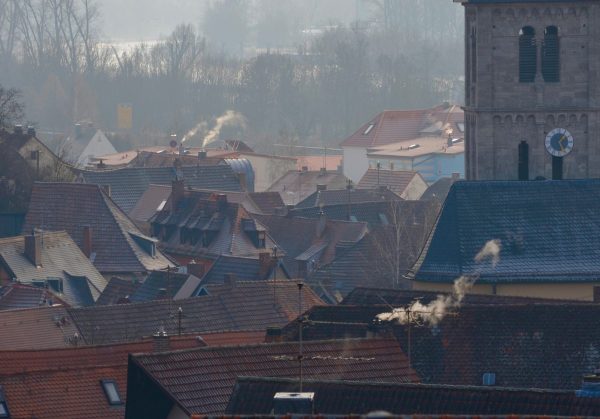
The situation in the Malopolska Region is gradually improving; however, achieving the new air quality standards will require further intensification of efforts related to replacing heating sources. The residential and household sector is responsible for nearly 92% of Particulate Matter (PM2.5) emissions and almost 99% of benzo(a)pyrene emissions in the region.
The scale of the challenge is illustrated by 2025 data. Average annual PM2.5 concentrations at monitoring stations in the Malopolska Region ranged from 15 to 21 µg/m³, while the new EU standard from 2030 will be 10 µg/m³. This means that currently none of the monitoring stations in the region meet the future requirements.
PM10 also remains a concern. Current regulations allow a maximum of 35 days per year with exceedances of the daily limit. The new directive will reduce this threshold to 18 days. According to current data, two-thirds of monitoring stations in the Malopolska Region do not meet the new requirements.
The most serious problem, however, remains the high concentration of benzo(a)pyrene in PM10, recorded in as many as 160 municipalities in the region. Values ranged from 0.6 to 6.8 ng/m³, i.e. from 60% to 680% of the permissible level. Benzo(a)pyrene is a particularly hazardous substance – according to medical experts, it can cause cancer, negatively affect fertility, and disrupt fetal development during the prenatal period.
The Anti-smog Resolution Is Still in Force
The Malopolska Region was the first region in Poland to adopt an Anti-smog resolution. The regulations have been in force since 2017 and gradually eliminate old coal and wood-fired stoves. The oldest out-of-class boilers, known as “smog boilers,” were required to be replaced by the end of April 2024. Class 3 and 4 boilers may be used only until the end of 2026.
In the long term, only low-emission heating sources that meet applicable standards will remain in use. This means that outside Krakow, heating with wood or coal is still permitted, but only in appropriate boilers and stoves with high emission standards. Separate regulations apply in Krakow, where a complete ban on burning coal and wood has been in force since 2019.
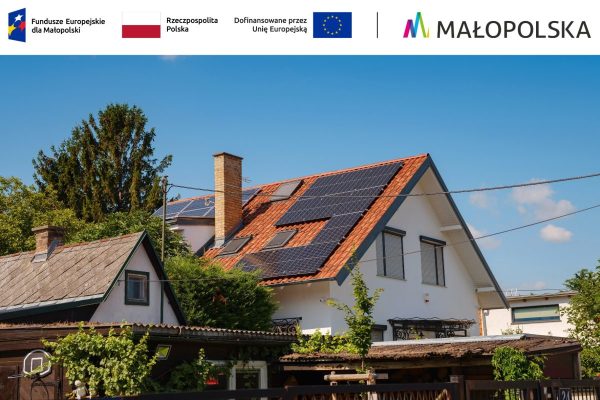
Many homeowners have chosen to install gas boilers, heat pumps, or connect to district heating networks. For most residents, these new solutions have proven not only healthier but also cheaper in everyday operation.
Replace Your Boiler with the Help of an Ecomenager
Data shows that replacing old heating systems leads to a real improvement in air quality, and further investments in this area are necessary – especially in light of new EU standards.
For many residents, however, the decision to change their heating system is still not easy. It requires both knowledge of available technologies and appropriate financing. That is why Ecomenagers operate in municipalities across the Malopolska Region. These specialists help select the best heating source for a specific building, taking into account residents’ individual needs and financial capabilities. They also indicate available funding opportunities, including those from the Czyste Powietrze programme.
Thanks to funding from the European Funds for Małopolska 2021–2027, as many as 129 municipalities have received support for employing Ecomenagers.
Support from Ecomenagers is free of charge. It is worth arranging a meeting to learn about available options. Detailed information and addresses of advisory points are available on the website: https://powietrze.malopolska.pl/en/ecomanagers/
Air Quality in Cities
Road transport remains one of the main sources of nitrogen dioxide emissions. In the Malopolska Region, nearly 38% of NOx emissions come from road transport.
If air quality standards continue to be exceeded, it will require intensified action in the development of public transport, including the replacement of vehicle fleets with zero- or low-emission alternatives, the expansion of tram networks, new bus connections, and investments in the development of suburban rail systems.
Education and Local Action
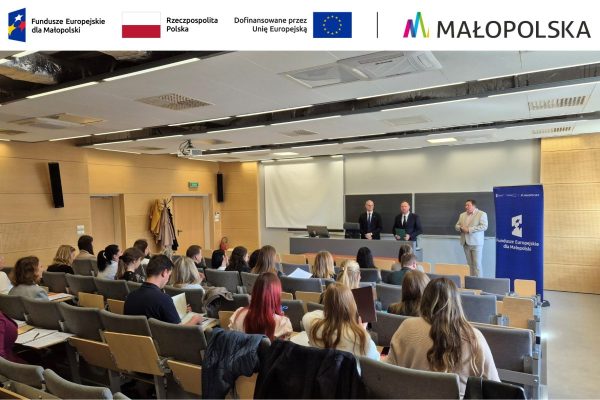
Efforts to improve air quality will also be increasingly implemented at the local level. The Malopolska Region is carrying out the project “Support for the Energy Transition of Municipalities in the Malopolska Region”, co-financed by the European Funds for Małopolska 2021–2027. The project strengthens advisory and educational activities and supports the implementation of solutions that improve air quality.
All these initiatives share one common goal – improving the quality of life and health of residents in the region.
Campaign co-financed by the European Union