

Better stay at home during smog episodes

The research carried out was aimed at finding out and showing how air pollution outside affects the quality of indoor air. Data was collected in 11 locations in and around Krakow. Measurements were carried out in each of them within 4 to 14 days. The results of them show that, during smog episodes, it is generally better to stay in closed rooms rather than outside, but concentrations still significantly exceed the level which is safe for our health. The exception are those buildings where fireplaces are used. There, concentrations of indoor pollution can be higher than outside.

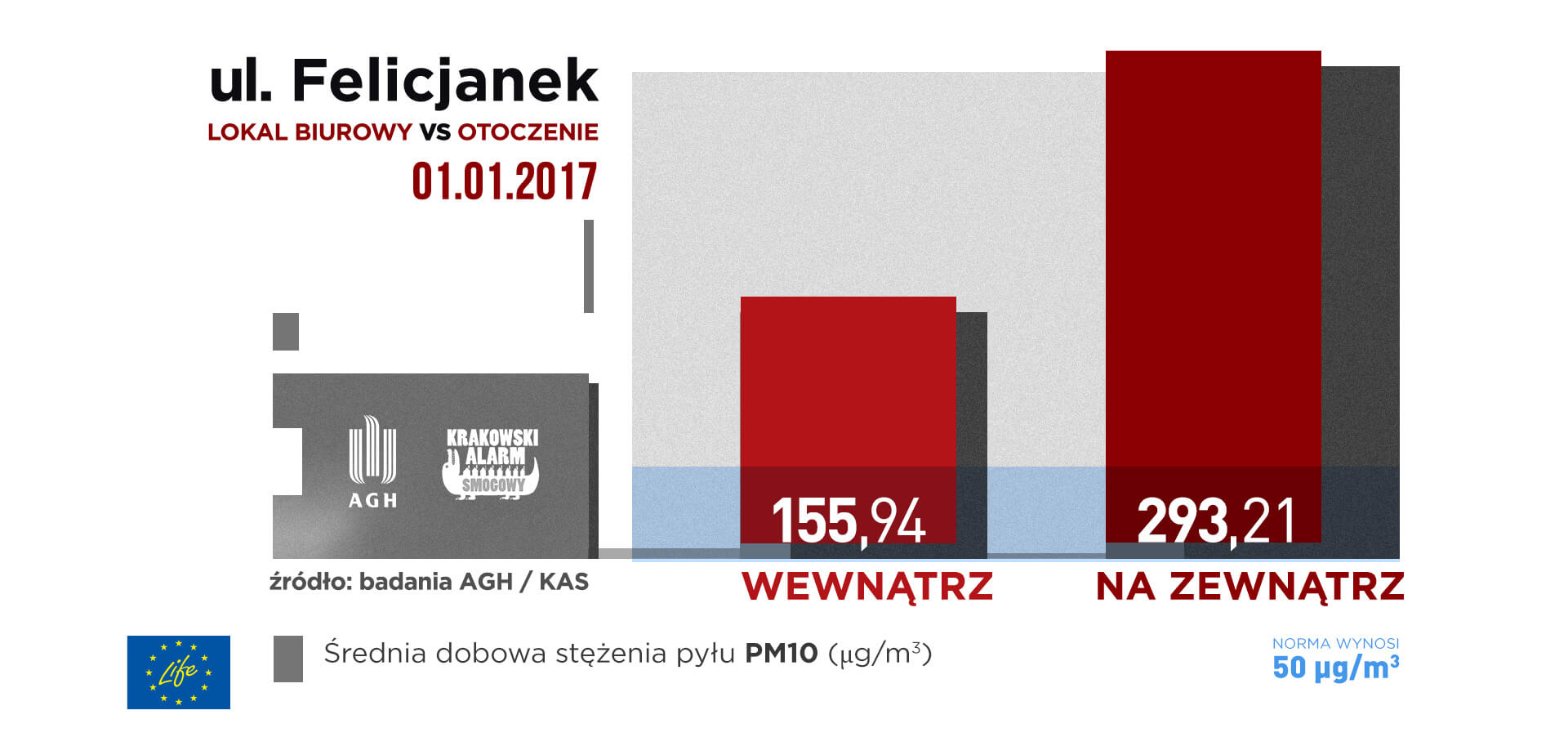
One of the locations where air quality was tested was Felicjanek Street in Krakow. There, the sensors were placed inside an office space and on a balcony belonging to it. During the whole measurement, the inside concentrations were on average lower by 47% than outside.

Sample differences – representative of the measurements registered at the time – are illustrated in the following graphic.
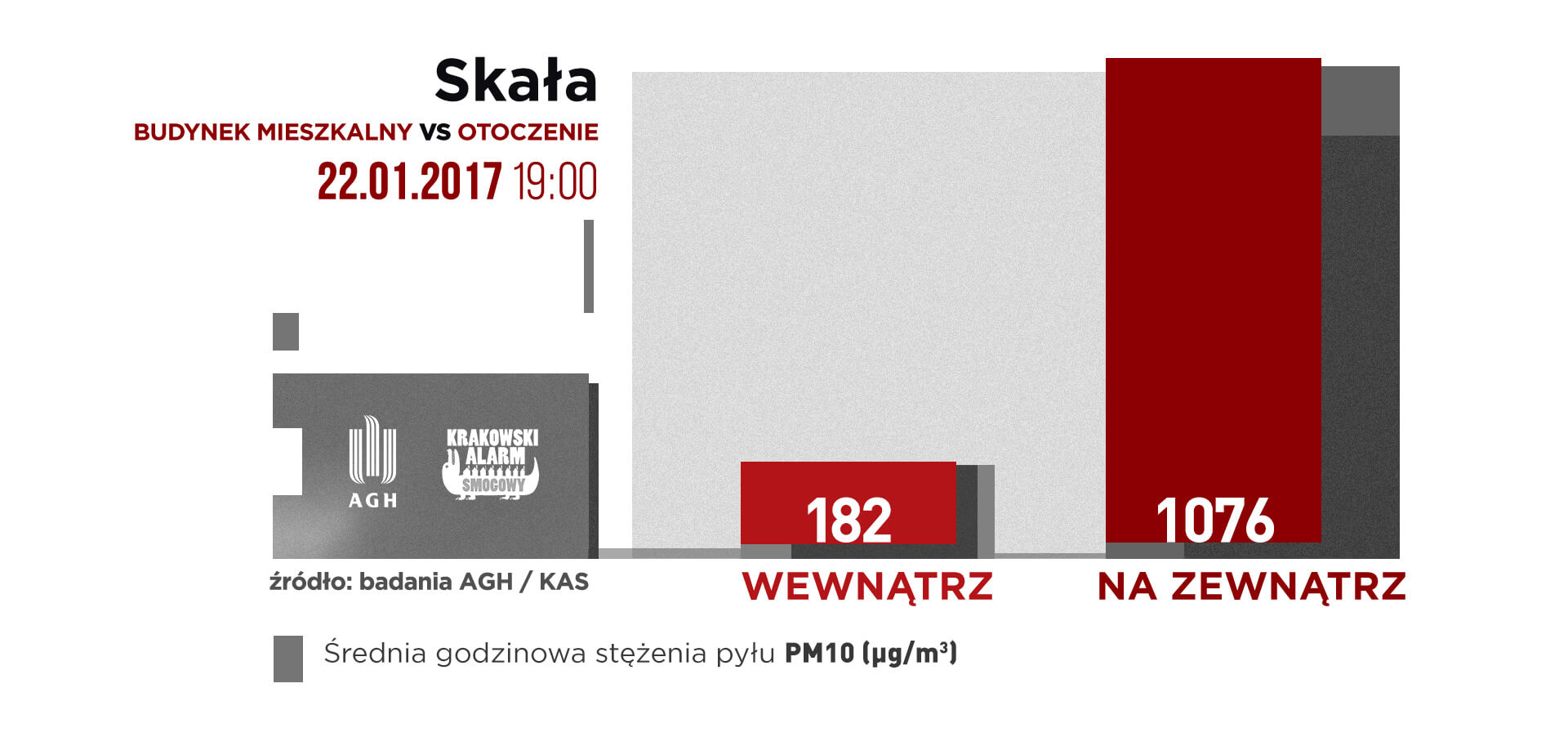
The research was also carried out in Skała, located in the Malopolska Region, known for its air quality problems. Here, the reduction ratio was very high and amounted to 68%, on average. The specific conditions of a place where instantaneous concentrations of pollutants in the air can exceed 1000 μg / m³ allowed to observe that, in such situations, staying inside enabled the avoidance of breathing such critically-contaminated air. It is also worth noting that it does not provide protection against smog as such, because concentrations inside can still exceed the permissible limits several times and reach a level that in many countries causes the announcement of a smog alert.

Graphic # 2 shows one of the registered smog peaks.
Graphic # 3 shows daily average of 25.01.2017.
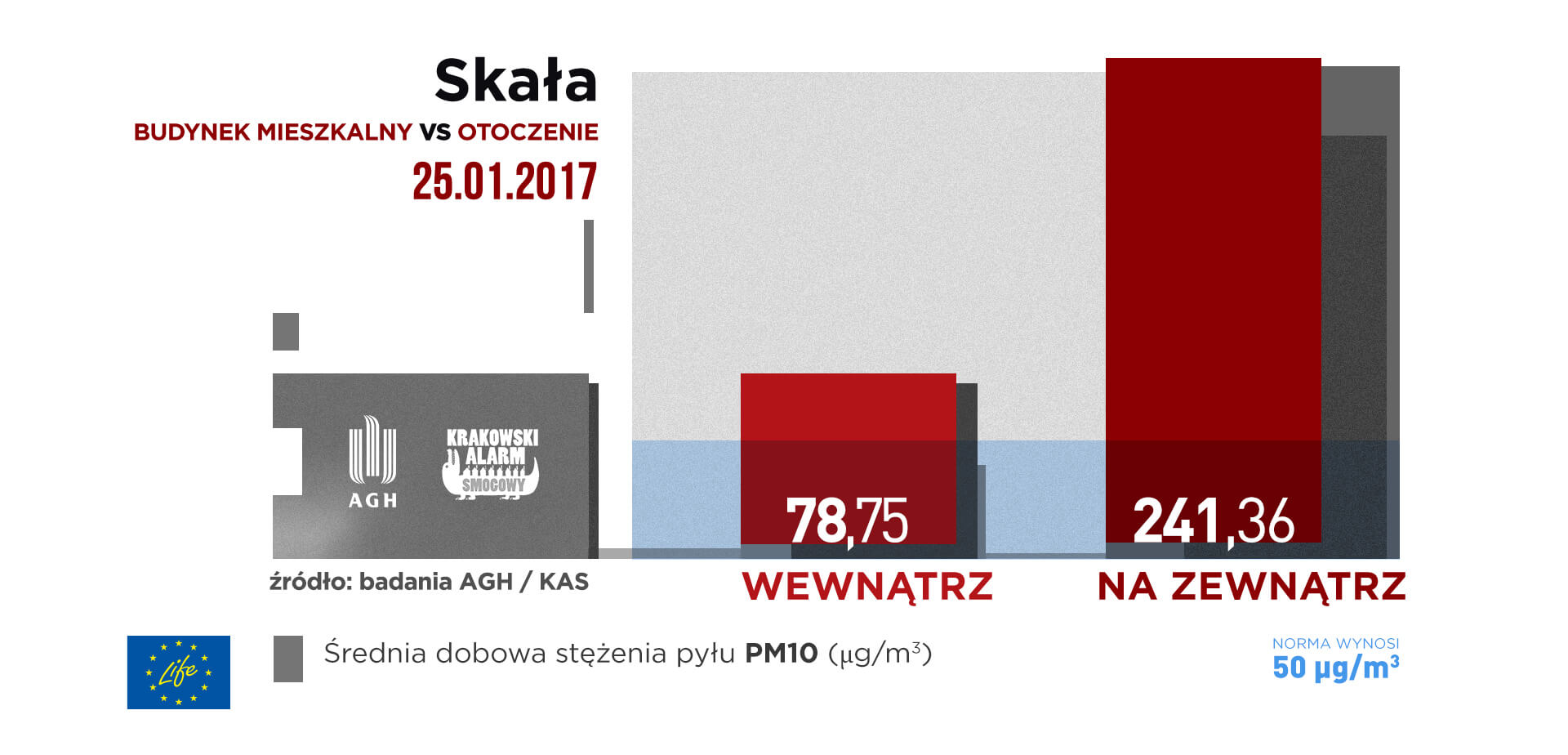
 

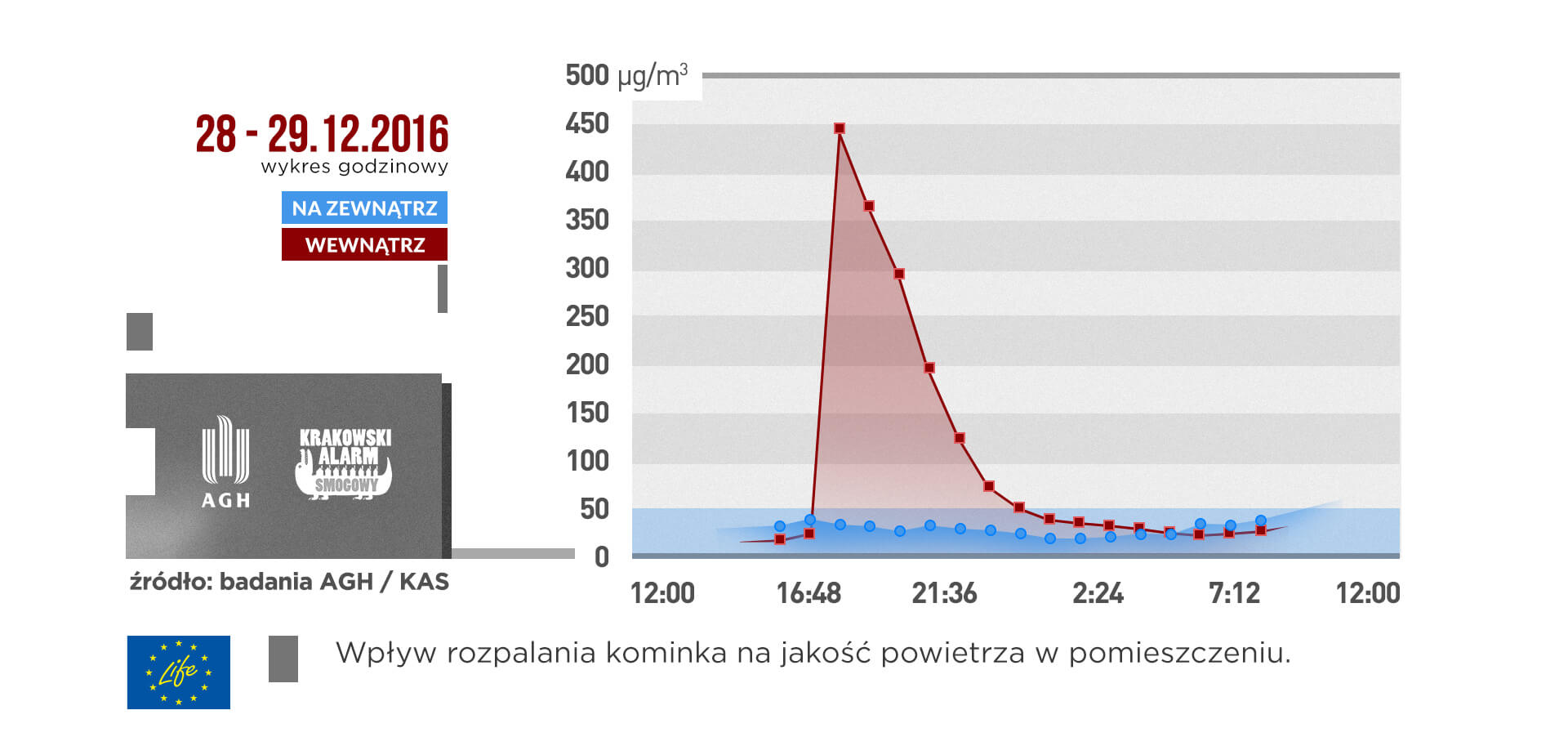
These were not the highest concentrations recorded during the measurement – the greatest daily average inside was 139 μg for PM10 dust per m³ of air. A fireplace was used in the building, however, unlike in another location, there was no significant impact of its use on the air quality. In Zarzyce Wielkie, the measurements were also carried out in a building equipped with a fireplace, it was used, but in a different manner than in Skała – it was fired mainly in the evening, which allowed to observe the rapid changes that accompanied it. Hourly indoor concentrations could significantly exceed 400 μg / m³ of PM10 dust, despite the fact that the air quality outside at the same time was within the normal range.
 

Coefficient of the reduction of PM10 dust content in the air
Location Reduction of PM10 indoors
Krakow – Kazimierza Wierzyńskiego 70%
Zarzyce Wielkie 44%
Jaroszowiec 32%
Krakow – Felicjanek 47%
Skała 68%
Krakow – Strzelców 61%
Wadowice – location 1 56%
Wadowice – location 2 59%
Kościelisko – location 1 42%
Kościelisko – location 2a 22%
Kościelisko – location 2b 38%
Balice 53%

On the basis of the measurements carried out, it can be stated that indoor dust concentrations resulting from the entry of dust from the outside are on average 50% lower than the concentrations outside. The value of concentration reduction depends very much on the condition of the given building and on the type of ventilation. It can be assumed that airing rooms has a positive effect on improving indoor air quality only in cases where outdoor concentrations have decreased sharply and are significantly lower than indoor dust concentrations.

The authors of the report are Eng. Jakub Bartyzel, PhD, and Eng. Katarzyna Smoleń from the Faculty of Physics and Applied Computer Science, AGH.

The research was carried out under the action C.2 “Competence Center” of the LIFE integrated project entitled “Implementation of the Air Quality Plan in Malopolska Region – Malopolska in a Healthy Atmosphere”, supported by the LIFE Program of the European Union  (“/ LIFE-IP MALOPOLSKA / LIFE14/IPE/PL/021).
A new European Air Quality Index, launched by the European Environment Agency (EEA) and the European Commission, allows users to check the current air quality across Europe’s cities and regions.

The EEA and the European Commission’s new online service, the European Air Quality Index, provides information on the current air quality situation based on measurements from more than 2 000 air quality monitoring stations across Europe.

The Index consists of an interactive map that shows the local air quality situation at station level, based on five key pollutants that harm people’s health and the environment: particulate matter (PM2,5 and PM10), ground-level ozone (O3), nitrogen dioxide (NO2) and sulphur dioxide (SO2).

Users can zoom in or search for any town or region in Europe to check the overall air quality and measurements per key pollutant. The Index shows an overall rating for each monitoring station, marked by a coloured dot on the map, corresponding to the worst rating for any of the five pollutants.

The new European Air Quality Index gives citizens an easy way to access information on their local air quality, which can have a direct impact on their health. European Union legislation sets air quality standards for both the short-term (hourly/daily) and long-term (annual). The European Air Quality Index indicates the short-term air quality situation at each of the more than 2 000 monitoring stations across Europe. The Index therefore does not reflect the long-term (annual) air quality situation, which may differ significantly.

For a year, residents of 55 municipalities in Małopolska can rely on professional support of 60 Ecomanagers, employed under the project – LIFE IP MALOPOLSKA. They help not only in completing applications for co-financing project for replacement of old solid fuel boilers, but also carry out advisory based on thermographic measurement of 1000 buildings. Over the last 12 months, the experts organized 1300 meetings attended by 24000 residents in Malopolska.  Ekodoradcy in schools and kindergartens explain to students the impact on air quality is burning garbage or bad fuel.  They organised 300 workshops in schools for 15000 children and youth. Ecomanagers support in assessing the condition of private and communal buildings, with advisory based on thermographic measurement of 1000 buildings.

LIFE project experts have to control of furnaces, checking that the residents do not burn in furnaces garbages. In last year 680 inspections was conducted. This is an important source of information, because a lot of Małopolska municipalities do not have a City Guards or municipal guards. Ecomanagers was also involved in the research of air quality conducted with the use of dust measuring devices, which was organized this year, among others in municipalities: Czernichów, Limanowa, Gołcza, Wolbrom, Wadowice, Gdów, Liszki and Tuchów.

Ekodoradcy LIFE

The emplozment of Ecomanagers was carried out within the implementation of the action C.1. “Eco-Managers” of the “Implementation of Air Quality Plan for Małopolska Region – Małopolska in a healthy atmosphere” European Union LIFE integrated project.

On 8th November 2017, the Marshal’s Office of the Malopolska Region representative, invited by the European Comission, took part in side-event “EU steps up on climate finance: LIFE Programme”, organised in Bonn.

Five different projects have been invited to the LIFE Programme side-event at COP23, with very broad scope of those projects including developing ambitious air quality policies and low-carbon development strategies, through to the dissemination of evaluation tools and skills for risk prevention and boosting smart farming techniques to raising public awareness on the urgency of climate action.

During the event, results of the LIFE programme were presented by LIFE WZROST, LIFE BEEF CARBON, LIFE DERRIS, LIFE MAXIMISER and LIFE-IP MALOPOLSKA, which were presented by Tomasz Pietrusiak, Deputy Director of the Environment Department at the Marshal’s Office of the Malopolska Region.

During the debate about the LIFE project achievements and challenges, Facebook live streamig was organised.

Sharing experiences with other LIFE projects is part of E.3 activity “Creating a platform for experience sharing with stakeholders and networking with other projects” of the “Implementation of Air Quality Plan for Małopolska Region – Małopolska in a healthy atmosphere” European Union LIFE integrated project.


Małopolska Region in cooperation with two leading Polish antismog organizations: Smogathon and the Polish Smog Alert co-organizes the Global Clean Air Summit conference.The aim of the conference is an international cooperation with regions or states which  are struggling with similar air pollution problems, as well as the exchange of experience with countries which on the base of their own achievements could help others to work out an effective strategy against these threats. The conference will be held in four parallel thematic blocks: policy, health, business and technology in the presence of experts, doctors, entrepreneurs and government representatives at national, regional and local levels.

You are cordially invited to participate in the Global Clean Air Summit conference, which will take place on November 27, 2017 in ICE Krakow Congress Centre (st. Marii Konopnickiej 17, 30-302 Kraków, Poland) between 10:00 a.m. and 5:15 p.m.

You are especially welcome to attend at the thematic block “POLICY”, which will be attended by the European Commission Representatives – Francois Wakenhut (Acting Director of the Quality of Life Directorate, Directorate-General for Environment), Erich Unterwurzacher (Director, Directorate-General for Regional and Urban Policy) and Jadwiga Emilewicz (Undersecretary of State, Ministry of Economic Development). Detailed information about the conference can be found on the website.

“POLICY” block agenda

Get your free entry ticket until 24 November 2017.

The conference is organised within the framework of the E.3 activity “Creating a platform for experience sharing with stakeholders and networking with other projects” of the “Implementation of Air Quality Plan for Małopolska Region – Małopolska in a healthy atmosphere” European Union LIFE integrated project.

On Monday (2 October 2017), the air quality control was started to be carried out by the European Court of Auditors began in Poland. The audit is aimed at reviewing the projects implemented for the air quality improvement and financed by the European Commission.

From 3 to 6 October. The audit is being conducted in the Malopolska Region. The following projects are subject to review:

  1. “Implementation of Air Quality Plan for Małopolska Region – Małopolska in a healthy atmosphere” integrated project
  2. Low emission program for the city of Krakow
  3. Thermomodernization of educational buildings in the Municipality of Krakow
  4. Integrated public transport in the Krakow agglomeration – 2nd stage
  5. Construction of flue gas NOx system for boilers no. 3 and 4 in EDF Polska SA Branch No. 1 in Krakow

On the first day of the audit, the strategy for air quality improvement for the Malopolska Region – the air quality plan for the Malopolska Region, financial support for the regional energy policy from the ROP MR for 2014-2020, the activities of the Voivodeship Inspectorate for Environmental Protection in Krakow within the inspections conducted in municipalities were discussed. At the end of the day, the ECA inspectors visited the measurement station located at Karsińskiego Avenue and the National Reference and Calibration Laboratory of the Chief Inspectorate for Environmental Protection.

On the second day of the audit, the objectives and assumptions of the “Implementation of Air Quality Plan for Małopolska Region – Małopolska in a healthy atmosphere” LIFE integrated project were presented together with the results of the implementation of the program. The employees hired within the framework of the Eco-Adviser project, from the municipalities of Gdów, Wolbrom Wadowice and Zakopane, presented their actions taken locally in terms of improving air quality. The activities in the LIFE project were also presented by the City of Krakow and the Krakow Smog Alert. It is worth recalling that the LIFE-IP MALOPOLSKA project was positively evaluated by the European Commission and considered the best of the 39 integrated projects reported from the European Union.

During the meetings, the barriers to the successful implementation of activities were repeatedly pointed out, including the lack of legislation regulating the quality parameters of solid fuels allowed for the sale to individuals, specifying the procedures for controlling the emissions from operating boilers for solid fuels or regulations enabling the implementation of restricted emission zones in urban centers. Attention was also paid to the suspension at national level of co-financing for the replacement of heating appliances (the KAWKA program) and for the thermomodernization of single-family buildings (the RYŚ program).

At the same time, the Supreme Chamber of Control launched the control over the planning, implementation and monitoring of the activities of the Marshal’s Office of the Malopolska Region aimed at achieving the required air quality in the voivodship.

The Malopolska Region has for many years been innovating in the Polish scale within its competence, which has been aimed at improving the air quality and living conditions of the inhabitants. However, the lack of support at the national level means that the effectiveness of the measures taken is limited and the possibility of achieving rapid improvements in the air quality in the region is threatened.

Let’s recall that the European Court of Auditors is an independent external controller of the European Commission. It is responsible for monitoring the correct collection and use of EU funds and helps to improve the EU financial management. The ECA’s audit in Poland shall last until 6 October 2017. The audit is coordinated by the Ministry of the Environment. Similar controls are being carried out in Germany, Belgium, Italy, the Czech Republic and Bulgaria.

On 3 October 2017, the Regional Administrative Court issued a ruling on four complaints submitted for the resolution of the Malopolska Region Parliament regarding the introduction of restrictions and prohibitions in the area of the Malopolska Region regarding the operation of fuel combustion installations.

The complaints of two companies operating in the field of coal distribution were rejected due to the lack of the proof of the violation of their legal interest. The provisions of the resolution do not limit their economic freedom and do not prohibit the sale of heating appliances or solid fuels.

In the case of the complaints from two natural persons who use non-class solid fuel boilers for heating, the complaints have been considered and dismissed. The ruling confirmed that the anti-smog resolution for the Malopolska Region was legally adopted and meets the requirements of Article 96 of the Environmental Protection Law. The court emphasized that regional self-governments can adopt restrictions on the operation of installations and the use of fuels when poor air quality requires such actions. The resolution implements the constitutional right of citizens to live in a clean environment and to protect their health. The legislation in the Malopolska Region has also been recognized as complying with the EU regulations as they implement the European requirements for air quality improvement.

The anti-smog resolution for the Malopolska Region entered into force on 1 July 2017 and introduced a ban on the use of coal sludges and flotation concentrates and wood with a moisture content greater than 20%, and a ban on the use of new boilers and fireplaces that do not meet the EU ecodesign standards. Residents of the Malopolska Region have to replace existing boilers that do not meet the emission standards by the end of 2022 and by the end of 2026 in the case of the operation of boilers class 3 or 4.

Anti-smog resolutions were also adopted in the Silesia and Opole Regions, while work on the preparation of similar regulations is taking place in the following regions: Dolnośląskie, Mazowieckie, Łódzkie and Wielkopolska.

Information about the anti-smog resolution

Picture: Marcin Hałat, Wikipedia Commons

On June 12th 2017, as a part of the LIFE IP “Implementation of Air Quality Plan for Małopolska Region – Małopolska in a healthy atmosphere” there was organized an online lesson for high schools about the air pollution. The lesson was held online using the “Małopolska Educational Cloud”, which is an innovative information and communication platform, allowing to conduct interactive classes by universities and secondary schools of Małopolska. The lesson was focused on the basic information about the air pollution and smog. The main theme blocks of the lesson were:

    • What is the smog and how is it formed?
    • What are the effects of exposure to the smog?
    • How to fight against the air pollution?

The lecture, taught by Professor Piotr Kleczkowski from the University of Science and Technology in Krakow, was heard by students of 10 high schools from the Małopolska Region:

  1. Liceum Ogólnokształcące im. Marii Skłodowskiej-Curie w Andrychowie (Maria Skłodowska-Curie High School in Andrychów),
  2. II Liceum Ogólnokształcące w Zespole  Szkół Ogólnokształcących Nr 2 im. Hetmana Jana Tarnowskiego w Tarnowie (Hetman Jan Tarnowski 2nd High School in Tarnów),
  3. Liceum Ogólnokształcące w Powiatowym Zespole Nr 1 Szkół Ogólnokształcących im. Stanisława Konarskiego w Oświęcimiu (Stanisław Konarski 1st High School in Oświęcim),
  4. I Liceum Ogólnokształcące im. Bartłomieja Nowodworskiego w Krakowie (Bartłomiej Nowodworski 1st High School in Krakow),
  5. I Liceum Ogólnokształcące im. Stanisława Staszica w Chrzanowie (Stanisław Staszic 1st High School in Chrzanów),
  6. Zespół Szkół Chemicznych im. Marii Skłodowskiej-Curie w Krakowie (Maria Skłodowska-Curie Chemical Schools Complex in Krakow),
  7. Zespół Szkół Łączności im. Obrońców Poczty Polskiej w Gdańsku w Krakowie (Defenders of the Polish Post in Gdańsk Schools Complex of Connection in Krakow,
  8. Zespół Szkół Ekonomicznych im. Jana Pawła II w Gorlicach (John Paul II Economic School Complex in Krakow),
  9. Zespół Szkół Ponadgimnazjalnych im. W. Witosa w Nawojowej (W. Witos Upper Secondary School in Nawojowa),
  10. Zespół Szkół Ponadgimnazjalnych im. Józefa Piłsudskiego w Zakliczynie (Józef Piłsudski Upper Secondary School in Zakliczyn).

The main idea of these activities was to raise awareness among young people about the dangers of smog. Such classes are an excellent source of information about the air quality and an incentive to actively participate in the fight against the air pollution. The awareness of each inhabitant of Malopolska is another step towards improving the quality of the air we breathe.

The lesson was carried out within the implementation of the action E.2. “ Local education and information campaign to promote clean air ”of the LIFE IP “Implementation of Air Quality Plan for Małopolska Region – Małopolska in a healthy atmosphere” / LIFE-IP MALOPOLSKA / LIFE14 IPE EN 021.

At the end of January, a particulate matter measuring device was installed on the Wadowice market, in line with the Integrated Project “Implementation of the Air Quality Plan for the Malopolska Region – Malopolska in a healthy atmosphere”. The results of the measurements show that the air in the city during the heating season is of very bad quality.

In the last week of January, the average PM10 concentration in Wadowice was 289 ug / m3. In the same period, in Krakow, fighting against massive smog, the average was lower by almost 100 ug / m3 and was 198 ug / m3. The results recorded in both cities significantly exceeded the standards and reached a level that is dangerous to human health.

The air was also of poor quality in February. The air in Wadowice was below the permissible level of contamination in April – after the end of the heating season. During the measurements, a total of 50 days was recorded that exceeded the daily standard for PM10 concentrations – all during the heating season. The Polish levels of the need for informing and alerting about smog have been exceeded many times, despite the fact that they are very high. The first (200 μg / m3) was exceeded for seven days, while the second (300 μg / m3) for six. Twice, the daily average exceeded 400 ug / m3, reaching 800% of the limit.

Detailed information on the results of the measurements can be found in the following presentation.

Summary of the measurement results in Wadowice

Actions aimed at air quality improvement undertaken by Wadowice

The Malopolska Region is not alone in the fight for clean air in the region. Once again, the efforts of our region have been recognized internationally. Following the LIFE project, the Malopolska Region has now become a partner of the World Bank and the European Commission in the implementation of the “Catching-up Regions” project which aims at helping to eliminate smog.

Within the project, the Malopolska Region has been already visited by the World Bank experts: Ashok Sarkar and Anand Subbiah. In order to better understand the problem of smog, they visited several municipalities in the region: Wadowice, Jordanów and Maków Podhalański. They also talked with the representatives of the Provincial Fund for Environmental Protection and Water Management in Krakow. This week, experts will be going to the Silesian Region. Currently, the World Bank representatives will be carrying out an analysis of legal requirements and whether the Malopolska Region will be able to introduce additional tools that will enable the modernization of single-family houses.  They will also estimate the need for additional support, taking into account the demographics, conditions of the region and the characteristics of individual buildings.

The solutions developed in the Malopolska Region to improve the energy efficiency of buildings will also, in the future, be available to other regions in Poland.

The “Catching-up Regions” program (formerly, Lagging Regions) is targeted at the less developed regions of the EU. It is a research and advisory program. So far, two regions have participated in the project: Świętokrzyskie and Podkarpackie. In their case, the main axis of cooperation was economic development and business support. Now the project has been joined by the Silesian and Malopolska Regions – regions that face the problem of polluted air and take the furthest action in the fight against smog.

As of July 1, 2017, the provisions of the anti-smog resolution for the Malopolska Region enter into force, and the ban on the burning of coal and coal fossils and biomass with a moisture content greater than 20% will begin, while all of the newly installed boilers, ovens and fireplaces should meet ecodesign requirements for emissions and energy efficiency. Monitoring compliance with the requirements of the resolution belongs to the tasks of the municipalities, that should be carried out by municipal police and municipal guards or the employees of municipal offices.

In order to prepare the municipality to the control and enforcement of the requirements of the resolution, on 13 and 14 June 2017, the Marshal’s Office of the Malopolska Region organized a training for the employees of all of the municipalities in the Malopolska Region and representatives of the municipal police and municipal guards. The training included technical issues related to the design and requirements of boilers and room heaters, ways of identifying mules and fleets, sampling of fuel, and legal issues related to the preparation of inspection authorizations and the procedure for carrying it out. The lectures were conducted by specialists from the Institute of Chemical Processing of Coal in Zabrze, Oil and Gas Institute in Krakow and a legal advisor from the Frank Bold Foundation. The experience of conducting individual household inspections was also shared by representatives of the City Guards of the City of Krakow. On the other hand, the Voivodship Inspector for Environmental Protection in Krakow has provided information on the monitoring of compliance by municipalities with the obligations resulting from the Air Quality Plan.

Topics of the training

  • Requirements of the anti-smog resolution for the Malopolska Region – Tomasz Pietrusiak, Deputy Director of the Environment Department at the Marshal’s Office of the Malopolska Region.
  • Inspections of the municipalities implementing the Air Quality Plan – Ryszard Listwan, Deputy of the Malopolska Voivodship Inspector for Environmental Protection.
  • Overview of the types of installations for which restrictions were introduced – Katarzyna Matuszek, Head of the Laboratory of Combustion Technology and Power Engineering at the Institute of Chemical Processing of Coal in Zabrze,
    • presentation of differences between automatic and manual boilers,
    • presentation of automatic boilers (various types, e.g. with screw, drawer feeders),
    • presentation of the difference between boilers meeting the requirements of EN 303-5:2012 and ecodesign,
    • types and verification (reading, interpretation) of documents confirming that the heating devices used meet the requirements of EN 303-5:2012 or ecodesign,
    • presentation of the ways of illegal construction of boilers, assembly of additional elements in boilers,
    • indication of the possibility of recognizing whether boilers have an emergency grate,
    • presentation of examples of abnormal operation of boilers, indication of bad habits, practices in this regard,
    • discussing the issue of the obligation to undertake chimney sweeps and the negative effects of the lack of chimney sweeping.
  • Overview of the type of fuels for which prohibition was applied – Łukasz Smędowski, head of the Laboratory of Fuel and Activated Carbon at the Institute of Chemical Processing of Coal in Zabrze,
    • presentation of an organoleptic method of the identification of mules and fleets – presentation of samples,
    • presentation of the coal grain testing procedure – indication of guidelines on how to take a sample, where to send a sample for testing,
    • presentation of the documents required for the sale of carbon, documents confirming the fuel parameters (quality certificates, confirmation of the parameters on invoices),
    • review the carbon certificates along with the way of reading the information contained therein.
  • Overview of the scope covering the use of fireplaces – Robert Wojtowicz, head of the Laboratory of Gas and Heating Equipment Research in the Oil and Gas Institute – State Research Institute in Krakow,
    • overview of open and closed fireplaces, free standing heaters, types and differences between them,
    • presentation of ecodesign requirements for fireplaces,
    • types and verification of the documents confirming that the fireplace used complies with ecodesign requirements, reading and interpretation of documents,
    • wood moisture testing and measurement presentation with a moisture meter.
  • Practical aspect of conducting inspections – Andrzej Ryś, head of the Department of Waste Control, City Guards of the City of Krakow.
  • Legal aspect of conducting inspections – Miłosz Jakubowski, a legal advisor at the Frank Bold Foundation,
    • practical presentation of the procedure and experience of conducting fuel combustion control, as exemplified by the city of Cracow,
    • presentation of the scope of inspections,
    • issuing authorizations for inspections,
    • possibility of sampling ash for analysis,
    • drawing up an inspection report,
    • addressing applications for punishment to the court,
    • amounts of financial penalties.

Teaching materials

Requirements of the anti-smog resolution for the Malopolska Region

Requirements for solid fuel boilers

Requirements for solid fuels

Requirements for fireplaces and heaters

Practical aspects of inspections

Legal aspects of inspections

Model inspection authorization

Model inspection notice

Model application for a punishment

Training was organised within LIFE-IP MALOPOLSKA / LIFE14 IPE PL 021 with the contribution of the LIFE Programme of the European Union.

On June 5-6, 2017, the 13th Polish Symposium will be held in the series “Krakow Meetings with INSPIRE” concerning “Air quality – from measurements to presentation” in the Malopolska Garden of Art, 12 Rajska, 31-124 Krakow.

This year’s symposium is devoted entirely to the issues related to air quality management, pollution modeling and measurement, and the role of geoinformation in air quality analyses.

All information related to the organization of the Symposium is available on the website www.inspire.krakow.pl.

You are invited to participate.

The organizers:

Malopolska Region,
City of Krakow,
Voivode of the Malopolska Region,
Stanisław Staszic AGH University of Science and Technology in Krakow
District Geodetic and Cartographic Company in Krakow Sp. z o. o.

The Małopolska Regional Assembly adopted a resolution dated April 24, 2017 on the introduction of bans concerning the scope of the operation of installations in which fuel burning takes place in the area of the Krakow municipality in the period from 1 July 2017 to 31 August 2019. As a result, from July 1, 2017, it will not be possible to heat houses and flats using low-quality coal in Krakow. It applies to:

  • fuels in which the mass fraction of hard coal or lignite of particle size 0-5 mm is greater than 5%,
  • fuels containing hard coal or lignite with at least one of the following parameters: calorific value below 26 MJ / kg, ash content greater than 10%, sulfur content greater than 0.8%,
  • fuels containing biomass with operational moisture content greater than 20%.

The regulations will apply for about two years. On September 1, 2019, a total ban on coal burning in the area of the municipality of Krakow comes into force.

Resolution No. XXXV/527/17 of the Sejmik of the Malopolska Region of April 24, 2017 on the introduction in the area of the municipality of Krakow, during the period from 1 July 2017 to 31 August 2019, bans on the operation of installations in which fuels are burned.

The Institute for Chemical Processing of Coal in Zabrze, having an accredited laboratory for solid fuel boilers, has measured the actual effects of the use of the top-down burning method on the emission of particulate matter and benzo (a) pyrene in the combustion of coal and wood. The study included 4 different boilers with manual fuel feed and one goat-type heater in which both coal and wood were burned.

The study has shown that the “top-down” burning method has unpredictable effects on the amount of pollutant emissions. Its use does not in any case translate into the reduction of pollutant emissions into the air. In many trials there were no significant decreases, and on the contrary, there was an increase in particulate matter and benzo (a) pyrene emissions, both for coal and wood.

In none of the trials conducted, no pollutant emissions comparable to the emission criteria for Class 5 or Ecodesign and even Class 3 were obtained. The best result was obtained for a boiler that was specifically designed for use in top burning – 127.9 mg / m³ for coal and 104.6 mg / m³ for wood. In the case of the “top-down” burning method in conventional boilers, the measured particulate matter emission was from 297.3 to 547.0 mg / m³ for coal burning and from 181.8 to 396.0 mg / m³ for wood burning. The standard for boilers meeting ecodesign requirements is 40 mg / m³.

Using the “top-down” burning method in boilers that are not designed for this purpose can significantly increase the risk of boiler explosion, chipping or faster wear of the device. The study has shown that it can significantly increase the heat load of the combustion chamber, change the temperature and pressure distribution in relation to design values, and lead to rapid combustion reactions (explosive combustion).  Each user purchasing a heating device should operate the device according to the manufacturer’s instructions for use. Other use can pose a danger to the health and life of the user and cause the failure or loss of the warranty granted for the boiler.

The study was commissioned by the Krakow Smog Alert within the implementation of the integrated project LIFE-IP MALOPOLSKA co-financed by the LIFE program of the European Union.

Short report on the IChPW research

Presentation of the report


Below, there are also the tests carried out by the City Office of Gliwice carried out with the use of particulate matter analyzer and the traditional “top-down” burning method of a boiler used in a household’s boiler room:

The Polish Chamber of Ecology and the Foundation for Energy Efficiency organize a competition for boilers up to 50kW, it aims at promoting the most energy efficient and the most environmentally-friendly devices. The call for entries is from 1 March to 31 August 2017. The competition can be participated by the manufacturers and distributors of solid fuel boilers up to 50 kW for installation in individual and communal buildings.

Details of the competition are provided on the website: http://www.pie.pl/topten.html

Residents of the Malopolska Region point out that not all of the boilers meeting the Class 5 requirements according to the PN-EN 303-5:2012 standard also meet the requirements of the Ecodesign so, in the case of the newly installed devices, they will not be able to apply in the Malopolska Region from July 1, 2017. We strongly recommend that you checked with the boiler manufacturer or the vendor if the boiler meets the Ecodesign requirements. A list of devices meeting the requirements can also be found on the website: powietrze.malopolska.pl/ekoprojekt

You are cordially invited to participate in the debate Clean air game which will take place on April 3, 2017, at the International Cultural Center in Krakow, Main Market Square 25. The meeting starts at 10:30 am.

The issues included:

  • How to fight Smog: inform and educate, scare and punish?
  • Civic initiatives: how to oneself fight for clean air?
  • Smog paragraphs: How can regulations help us?
  • Coal and wood versus district heating network and renewable energy sources
  • Can local governments stand to fight for clean air?
  • European funds support the fight against smog
  • Ecomanagers in municipalities: how do they help the people?

Clean air game debate program

Invitations to participation in the debate were directed those actively participating in civic anti-smog movements, representatives of local government administration, municipal police and people from the scientific world.

The meeting will be conducted by the editor Zbigniew Bartuś.

The debate will be the second in the series of the meetings entitles Malopolska Region. We create the future – dedicated to the key areas of the region’s development.

The debate is co-organized by the Malopolska Region (the Malopolska Regional Development Observatory) and Polska Press Sp. z o. o., the Publisher of Gazeta Krakowska.

For more information, please visit our website www.obserwatorium.malopolska.pl.

You should send your application for participation in the debate to the email address: [email protected].

If you have questions, please contact the staff of the Observatory (telephone number: 12 29 90 829 or 12 29 90 692, mail: [email protected]).

The Malopolska in a healthy atmosphere conference – the elimination of low emission and the modernization of district heating in the context of the requirements of the MCP directive took place on March 3, 2017 at the AGH Center for Energy, 36 Czarnowiejska in Krakow.

The conference was attended by the representatives of a number of national and international HEIs, including the Polish Chamber of Commerce, the Regulatory Assistance Project, the heating companies in the Malopolska and Silesian Regions and the representatives of science.

There were more than 60 targets: the representatives of self-governments and district heating, the managers of heating systems (especially those based on solid fuels), ecomanagers and interested institutions.

The conference consisted of 3 parts:

  • A session presenting the strategic problems
  • A discussion panel entitled: MCP Directive and the vision of heating in 2030.
  • A technological session

During the session devoted to formal and strategic issues, the following spoke:

Janusz Cieszyński, Head of SMEs Department of the Ministry of Development, – Measures for the Heating Sector in Poland

Bogusław Regulski, Bogusław Regulski, the Vice President of the Polish Chamber of Commerce – Strategic Challenges for District Heating in the Context of the MCP Directive

Tomasz Pietrusiak, Deputy Director of the Environment Department, the Marshal’s Office of the Malopolska Region – Air Quality Plan for the Malopolska Region.

Wojciech Ignacok, the President of the Management Board of Geotermia Podhalańska – Experiences of Connecting Single-family Houses to the District Heating Networks of PEC Geotermia Podhalańska SA.

Jan Rączka, Regulatory Assistance Project – The Heating Sector in Poland – Conditions and Prospects.

The main point of the conference was the discussion panel on the MCP Directive and the vision of the heating sector in 2030. The introduction to the panel was the presentation by Janusz Mazur concerning the results of the research of district heating companies in the Malopolska Region.

Janusz Mazur – Strategic dilemmas of small and medium heating systems in the Malopolska Region – review of research results

The main discussion issue of this panel:

  • The heating sector and low emissions;
  • Limits of small remotely-operated systems;
  • Directions of changes – clean coal, cogeneration, flue gas cleaning or gas atomization?; –
  • Directions and opportunities for the development of the heating sector in small and medium cities – HUW, single-family houses,
  • Adsorption Chill – A Real Market or a Solution for the Next Generation?
  • Energy Efficient Heating System in big cities and the “handicapped” systems in the poviats of Poland,
  • Master Plans for the heating sector.

The panel conducted by Janusz Mazur was participated by:

  • Mateusz Klinowski, PhD, Mayor of the City of Wadowice,
  • Bogusław Regulski, Vice-President of the Polish Chamber of Commerce,
  • Jacek Boroń – President of the Management Board of Węglokoks Energia,
  • Edward Wypych – President of the Management Board of KZGM in Proszowice,
  • Andrzej Guła – President of the Krakow Smog Alert.

The last thematic block of the conference concerned the technological issues presented by the scientists of the AGH University of Science and Technology in Cracow and the Institute of Building Emission Certification:

Wojciech Nowak – Activities Planned by the AGH Center for Energy in support of air quality projects

Jan Górski – Market Offer for Small and Medium Cogeneration Systems in the Context of the Needs of the Heating Industry

Adolf Mirowski, PhD, the Institute of Building Emission Certification – The Role of Systemic Heating in the Fight against Low Emission of Pollutants

The issues discussed many times during the discussion included, among others:

  • There is a need for appropriate regulation at the national level to assist local governments in the fight against low emissions and to support heating companies, especially in small towns.
  • The formal – legal conditions for heating companies operating in heat and power plants in large cities (the so-called energy-efficient district heating systems) are much more advantageous than those for own heating facilities in small and medium-sized towns.
  • There is a need for the heating sector companies to carry out technological restructuring in order to comply with the requirements of the MCP Directive as well as provisions of the energy law concerning energy-efficient district heating system.
  • The MCP Directive is not a threat to the industry, but it can result in a slight increase in the prices of the heating plants that require modernization.
  • The heating sector can be an important partner in low emission reduction processes. Rapid legislative measures are needed to simplify construction procedures for linear investments (the “corridor law”) as well as improving the regulatory procedures for tariffs, removing public aid restrictions, or extending connection obligations.
  • There is a need for developing the ecological awareness of the public and promoting low-emission systemic heating as the ways to solve smog problems.
  • An effective fight against low emissions requires parallel actions aimed at reducing energy poverty.

A broader summary of the conference will be available in the closing report of the project which will primarily include research results and summaries (qualitative and quantitative) as well as recommendations based on the analysis of research and hearings during the panel discussion at the conference.

The conference was organized jointly by the Marshal’s Office of the Malopolska Region, the AGH Center for Energy and the Krakow Smog Alert and the Institute of Environmental Economics which initiated and commissioned qualitative and quantitative research carried out by Janusz Mazur, an expert in the heating sector.

On July 1, 2017, an anti-smog resolution will begin to be binding for the entire region. This means that all of the inhabitants of the Malopolska Region will have to adapt to its regulations. This also applies to people living in Krakow – the anti-smog resolution for this city will begin to apply from September 1, 2019, but now the regional self-government is working on the so-called transitional anti-smog resolution for Krakow. The public consultation of the regulations is due to take effect from 1 July 2017 until the first anti-smog resolution for Krakow (September 1, 2019). What do the regulations mean in practice? See what will change.

Anti-smog ABC

The Management Board of the Malopolska Region approved the transitional anti-smog resolution for Krakow. The document envisages the ban on the use of low-quality coal for heating houses and flats from 1 July 2017. These regulations apply to the area of the municipality of Krakow and will remain in force until the full ban on coal burning until the end of August 2019.

The draft resolution prohibits the use of low-quality fuels that release the most toxic compounds and particulate matter into the atmosphere. This means that one will not be able to use the following to heat houses:

  1. fuels in which the mass fraction of hard coal or lignite of particle size 0-5 mm is greater than 5%,
  2. fuels containing hard coal or lignite that meet at least one of the following parameters in the operating condition:
    • calorific value below 26 MJ / kg,
    • ash content greater than 10%,
    • sulfur content greater than 0.8%;
  3. fuels containing biomass with moisture content in the operating condition greater than 20%.

The regulations will remain in force until the entry into force of the antismog resolution for Krakow from 2016 which introduced a total ban on burning coal and wood in ovens, boilers and fireplaces from September 1, 2019.

Currently, the new regulations are undergoing the public consultation – their final shape will also be influenced by residents, NGOs and city authorities. Consultations will last until the end of March, and then, if everything is according to the plan, it will be possible for the Sejmik of the Region to vote in late April.

Project of the transitional anti-smog resolution for Krakow

The comparative measurement of PM10 sensors has been officially started. The organizer of the action is the Malopolska Region, in cooperation with the Chief Inspectorate for Environmental Protection, the Provincial Inspectorate for Environmental Protection in Krakow, the AGH University of Science and Technology in Krakow, the Rabka-Zdrój Municipality and the Krakow Smog Alert Association. The purpose of the action is to verify and evaluate the reliability of the widely available measurement devices by comparing the results obtained with the results obtained using the reference measurement method of the Chief Inspectorate of Environmental Inspection. The measurements have been being carried out from 18 February at the measurement station in Rabka-Zdrój and will last until June 15th. The comparative action will end with a study report that will be published and widely accessible to municipalities and residents. The measurements take place within the integrated LIFE Malopolska project, supported by the LIFE program of the European Union.

Invitations to participate in the measurements were addressed to all of the leading companies offering PM10 meters. The challenge of verifying their equipment was taken by 5 of them – Envimet Services, Solutions for Technology, Elkomp Jacek Kediołek, TETABIT and Warsaw University of Technology. The report summarizing the measurement results will be prepared by scientists from the AGH University of Science and Technology together with the experts of the Chief Inspectorate for Environmental Protection.

Rules of the Comparative Measurements
